September 18, 2026
1,000th HeadCell® System Protects One of Utah’s Largest Wastewater Infrastructure Investments
Project Information
Project:
Salt Lake City Water Reclamation Facility (SLCWRF) Project
Location:
Salt Lake City, Utah
Owner:
Salt Lake City Department of Public Utilities
Design Flow:
48 MGD (182 MLD) Average / 117 MGD (443 MLD) Peak
Oldcastle Infrastructure Equipment
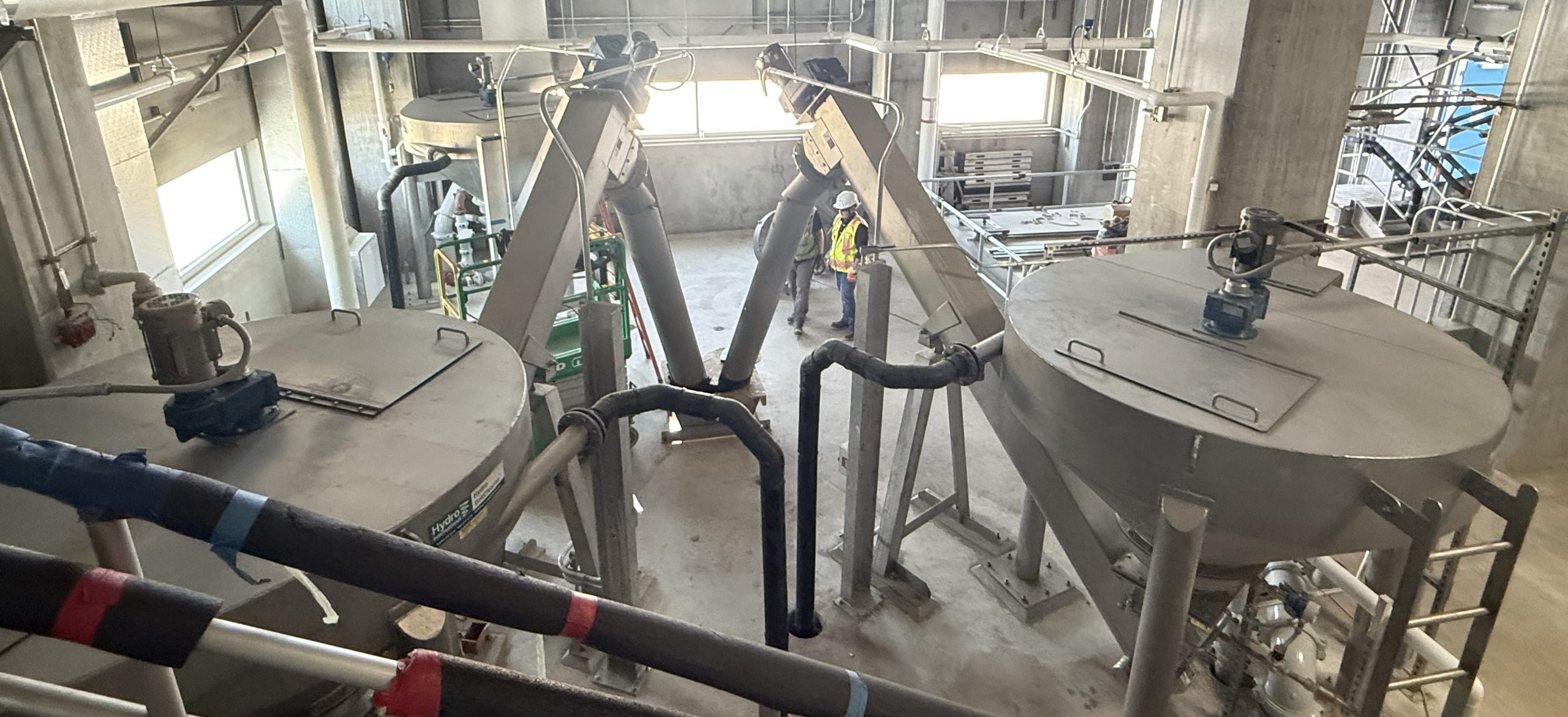
- Three 12′ (3.7 m) Twelve-Tray HeadCell® Advanced Grit Separation Systems
- Three Hydro GritCleanse® Fluidized Bed Grit Washing & Dewatering Systems
Project Background
The Salt Lake City Water Reclamation Facility Replacement Project is the largest public works project in the history of the Salt Lake City Department of Public Utilities and one of Utah’s most significant wastewater infrastructure investments. As the city’s only wastewater treatment facility, the new Water Reclamation Facility (WRF) will serve more than 200,000 residents while providing a modern treatment platform designed to meet evolving regulatory requirements and support future growth.
Replacing a plant that has operated for more than 50 years, the new facility is designed to treat an average of 48 MGD, with peak capacity up to 117 MGD. Constructed adjacent to the existing plant, the project incorporates advanced treatment technologies including Biological Nutrient Removal (BNR), phosphorus and nitrogen removal, UV disinfection, solids processing, chemical feed systems, and modern headworks infrastructure.
The Challenge
Salt Lake City faced the challenge of replacing an aging treatment facility while maintaining uninterrupted operations, complying with increasingly stringent nutrient discharge regulations, and delivering a treatment platform capable of supporting future growth.
A key component of the project was developing an effective grit management strategy. Wastewater entering the facility contains abrasive inorganic materials such as sand, gravel, glass, and other dense solids that can accelerate wear on pumps, mixers, aeration equipment, piping, and solids handling systems. Grit that passes through the headworks can accumulate in downstream processes, reducing treatment volume, increasing maintenance requirements, and negatively impacting performance.
Effective grit removal was essential to:
- Protect critical treatment equipment from premature wear.
- Maintain performance of the Biological Nutrient Removal (BNR) processes.
- Maintain performance of the Biosolids Management System.
- Reduce long-term maintenance and lifecycle costs.
- Prevent grit accumulation in tanks and process basins.
- Support reliable, efficient plant operation.
The Solution
To provide reliable, long-term grit management, Salt Lake City selected an Oldcastle Advanced Grit Management® solution consisting of three HeadCell® stacked tray grit separators paired with three Hydro GritCleanse® Fluidized Bed Grit Washing & Dewatering Systems.
The HeadCell® technology was selected for its ability to remove fine grit particles across a wide range of operating conditions and decades of proven performance. Each of the three HeadCell units has a hydraulic capacity of 46.1 MGD while removing grit ≥ 106 micron at 23.1 MGD.
Captured grit is processed through the Hydro GritCleanse® systems, where it is washed and dewatered to separate organic matter from inorganic solids. The process produces a clean, low-organic grit product that reduces odors, minimizes disposal costs, and improves solids handling efficiency.
Together, the systems provide an integrated pretreatment solution that preserves treatment capacity, improves process stability, reduces maintenance requirements, and supports reliable long-term operation.
Results
The HeadCell® and Hydro GritCleanse® systems provide a critical layer of pretreatment by removing abrasive inorganic material before it can impact downstream operations. This proactive approach helps reduce equipment wear, minimize maintenance requirements, preserve treatment capacity, and support long-term asset reliability.
Effective grit management also enhances the performance of the facility’s advanced BNR processes, supporting compliance with stringent phosphorus and nutrient discharge requirements while maintaining treatment efficiency.
As Salt Lake City’s only wastewater treatment facility, the new WRF represents a generational investment in environmental stewardship and community resilience. By combining advanced treatment technologies with effective grit management, the facility is positioned to protect the Jordan River and the greater Great Salt Lake watershed while providing reliable treatment capacity for future growth.
Project Milestone:
As Oldcastle Infrastructure’s 1,000th HeadCell® installation, the Salt Lake City WRF project marks a significant milestone for a technology trusted by utilities around the world to reduce lifecycle costs, improve process reliability, and protect critical wastewater infrastructure.