June 16, 2026
BioPod™ delivers large-scale underground green stormwater infrastructure
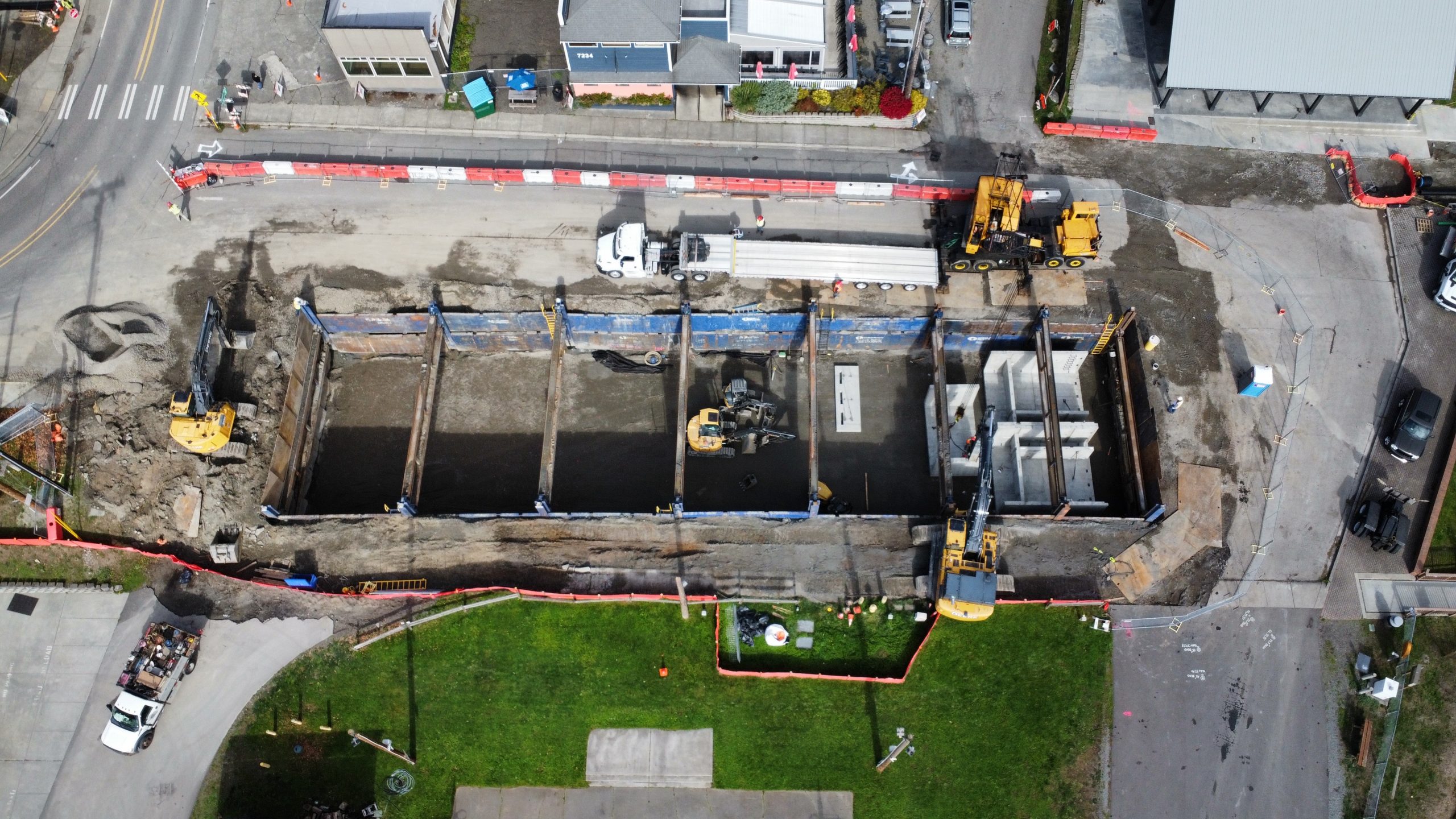
BioPod™ helps Kitsap County, WA, keep pollution out of Puget Sound while preserving sensitive surface land.
Background
The Suquamish Regional Stormwater Facility represents a landmark application of large-scale underground green stormwater infrastructure designed to deliver high-performance stormwater treatment while preserving valuable community land.
Located in Suquamish, Washington, the project brings together Kitsap County, the Suquamish Tribe (People of the Salt Water), HD Fowler, and Oldcastle Infrastructure in a highly collaborative effort to protect water quality discharging directly into Puget Sound.
Faced with significant hydraulic demands, strict regulatory requirements, and a limited surface footprint, the project required a solution capable of managing both water quality and peak flows without impacting land usability above ground.
Challenges
The facility was designed to address runoff from a 182-acre drainage area, discharging directly to a highly sensitive receiving water.
Key challenges included:
- Treating large water quality flows while also managing peak storm events
- Preserving culturally sensitive surface land for community use
- Meeting WSDOT bridge inspection and vehicle loading standards
- Designing for seismic stability
- Accommodating a 2.5-foot finished grade change within the system
- Delivering and installing a highly customized system within an aggressive project timeline
Traditional surface-based solutions would have required a much larger footprint, making them impractical for this site.
Solution: Underground Green Stormwater Infrastructure
To meet these constraints, as part of the $4.2M project the team selected a custom underground BioPod™ green stormwater infrastructure system, transitioning the application from a surface installation to a fully below-grade configuration.
The system comprised:
- A 30 ft by 154 ft underground BioPod green infrastructure system
- Designed water quality flow rate of 12.6 cfs
- Peak flow bypass capacity of 17.0 cfs
- 3,400 sq ft of StormMix™ media surface area
- A 5.5 ft overflow weir to manage bypass flows
- A three-sided precast concrete trench box structure with variable internal heights
By moving the system underground, the project preserved surface land use while delivering robust stormwater treatment capacity.
Collaborative Engineering Approach
A defining feature of the project was the level of engineering collaboration involved. Our stormwater solutions engineering team worked closely with the engineer of record to:
- Develop conceptual system layouts
- Perform system sizing and hydraulic calculations
- Design peak flow bypass routing
- Size underdrains and internal flow control features
- Configure and validate the precast structural system
Our expert team supported the project through six submittal revisions, providing full calculation packages, PE-stamped documentation, specifications, and conceptual details throughout design development.
When changes to WSDOT Bridge Inspection Standards forced a late-stage 90% plan change requiring dimensional adjustments, our precast concrete production capabilities allowed the team to pivot quickly, avoiding schedule delays and maintaining regulatory compliance.
Nearing final design, minor changes were made to the trench width, expanding it from a 14’ 11” section to a 15’ section. While this change may seem minor, implementing it greatly enhanced production flow and ensured that the tight installation timeline was met.
Structural Engineering and Constructability
Given the system’s size, loading requirements, and seismic considerations, a three-sided trench box structure was selected as the optimal solution.
To ensure a safe, effective design, our structural engineering team performed detailed analysis using advanced modeling tools to evaluate seismic racking, WSDOT vehicle live loads, ASTM C890 loading criteria, surcharge, dead and live loading requirements per ASTM C890. Midway through the system, internal heights transitioned from 7.5 ft to 10 ft, requiring a custom-fabricated headwall to bridge the elevation change.
By fabricating this transition offsite locally in precast concrete rather than relying on cast-in-place construction, the team significantly reduced installation time and eliminated on-site curing delays.
Maintenance-Driven Design
Long-term operation and maintenance were a central design consideration, especially for a green infrastructure system of this scale. Key maintenance features include:
- 36” access openings over each individual media cell
- 24” access openings over outlet structures and shear gates
- More than 30 total access points across the system
- Integrated ladder rungs cast directly into trench box walls
- Orifice controls to regulate treatment flows
- Shear gates enabling full system dewatering for inspection or repair
These features allow maintenance crews to safely and efficiently access every portion of the system without specialized equipment—reducing lifecycle costs and simplifying long-term stewardship.
Production, Delivery, and Installation
All precast components were manufactured at our Auburn, WA facility, located approximately 70 miles from the job site, which was an important factor in meeting the accelerated schedule.
Precast concrete production included:
- 32 trench box sections
- 32 top slabs with integrated access openings
- 18 internal walls
- 20 baffle walls
- Numerous riser and transition components
In addition, we supplied 1,150 ft of 8” slotted PVC pipe to convey the flow from the media bays to the outlet bay, as well as 244 tons of StormMix™ media, 80 tons of drain rock, and 564 cu ft of mulch.
Installation sequencing was carefully coordinated using detailed scheduling and drawings, allowing for continuous delivery and streamlined placement. Prefabricated keyways enabled rapid installation of partition walls and inlet flumes, further minimizing construction time.
The project was installed in just three weeks, with overall construction spanning August 2025 through March 2026.
Outcomes
The Suquamish Regional Stormwater Facility successfully delivered a large-scale underground green stormwater infrastructure system treating 182 acres of runoff, compliance with all applicable regional, structural, and seismic standards, preservation of valuable surface land for community use, accelerated construction with minimal disruption, and a highly accessible, maintainable system designed for long-term performance.
The project demonstrates how custom green stormwater infrastructure systems can solve complex site challenges, balancing performance, constructability, regulatory compliance, and community priorities.
Learn more
- Discover the benefits of BioPod
- Read our BioPod Product Brochure
- View our BioPod LEED Guidance Document
- Request a Lunch & Learn