December 17, 2025
Hidden Leaks, Massive Losses: How CivilSense™ Reveals the True State of U.S. Water Infrastructure
In 2023, Utah State University (USU) published its third study of water pipe materials, Water Main Break Rates in the USA and Canada: A Comprehensive Study and presented a range of findings that underscore the severity of the situation.
The study estimates that there are around 260,000 water main breaks every year, the average failure age of water pipe is 53 years, and utilities are losing an estimated 11% of their total water to leakage.
The study analyzed 400,000 miles of pipe—about 17% of the 2.3 million miles in the U.S. and Canada—making it the largest of its kind in North America. But even this landmark study had limitations as it couldn’t account for leaks that remain hidden underground, undetected, and unrepaired.
That’s where CivilSense™ comes in.
CivilSense™ Adds a New Layer of Insight
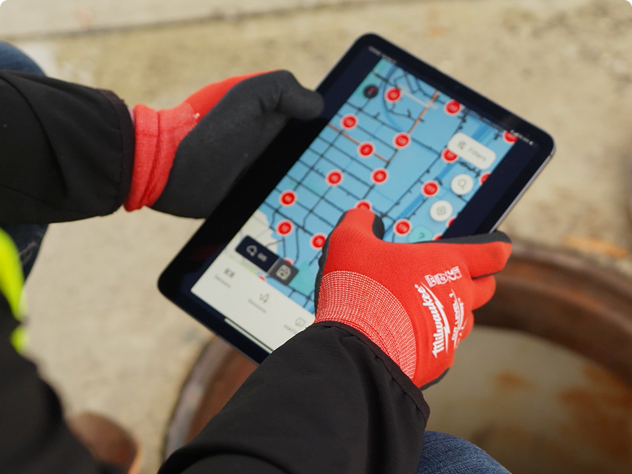
CivilSense™ is the only water asset management solution that combines AI-driven predictive risk analysis and real-time leak detection capabilities to help municipalities to identify areas of risk, detect hidden leaks, and prioritize repairs.
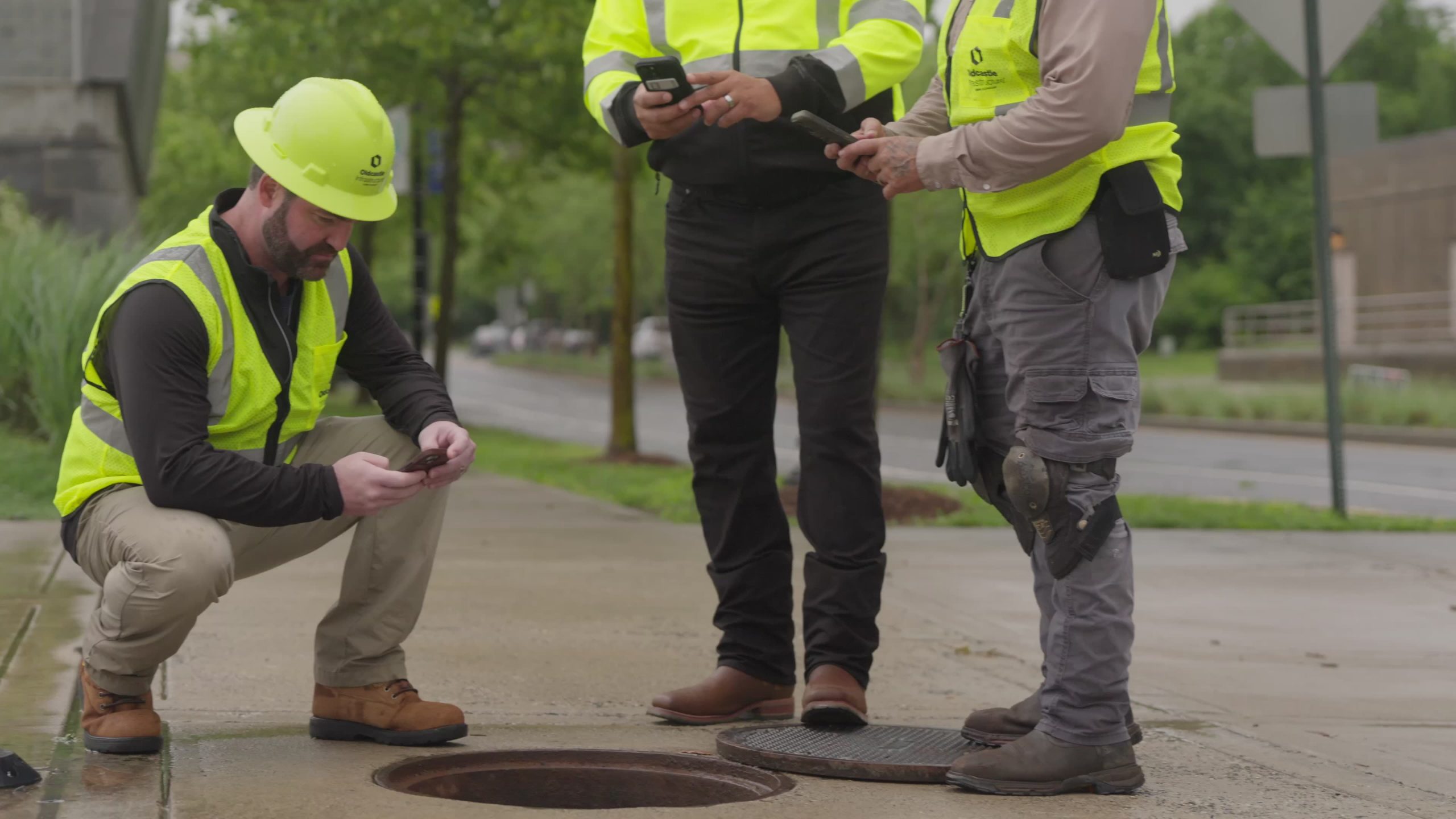
We’ve worked with municipalities and water utilities from coast to coast in 2025—from small towns to large cities—and our projects from the past year reveal some valuable hidden insights into the condition of water infrastructure in the U.S.
Here’s what our data shows:
One leak for every 1.8 miles of pipe
The USU study estimated an overall failure rate of 11.1 breaks per 100 miles of pipe each year, with a failure being defined as a leak that was detected and subsequently repaired. However, it’s important to note that the USU study was focused on pipe material and degradation, so it did not consider failures due to joint leakage or construction damage. In addition, the data did not include leaks that were detected but not repaired and could not account for leaks that were present but not yet detected.
On average, CivilSense™ detected 0.53 leaks per mile of pipe, which equates to one leak for every 1.87 miles.
Scaled up, this represents a failure rate of 53.5 breaks per 100 miles of pipe (note that this is an overall failure rate measured at a single point in time, not a per year failure rate).
However, the data set ranged from a low of 8.7 breaks per 100 miles to a high of 175.0 per 100 miles, so the average does not convey the real story—which is that there is wild variability in the number of leaks that are hidden beneath our feet.
One in five leaks was large
It’s not possible to calculate exactly what volume of water is being lost to a detected leak, but the CivilSense™ team has used test and real-world data to calibrate the AI model so that it can determine, based on the acoustic signature of the leak, whether that leak should be categorized as small, medium or large. The team then uses AWWA nominal values for each of these categories to estimate the likely volumetric loss of each leak detected.
Of the leaks that CivilSense™ detected in 2025, 21% were categorized as large, 30% were categorized as medium, and 49% were categorized as small.
Every mile of pipe was losing 4.7M gallons a year
Applying the AWWA nominal values to the leak sizes, the CivilSense™ team was able to calculate that for every mile of pipeline in the water distribution network, 9 gallons was being lost every minute. This translates to 12,907 gallons a day, or 4.7M gallons every year.
Put another way, a 100-mile section of network would be losing around 470M gallons to leaks every single year.
Hydrants, meters and mains
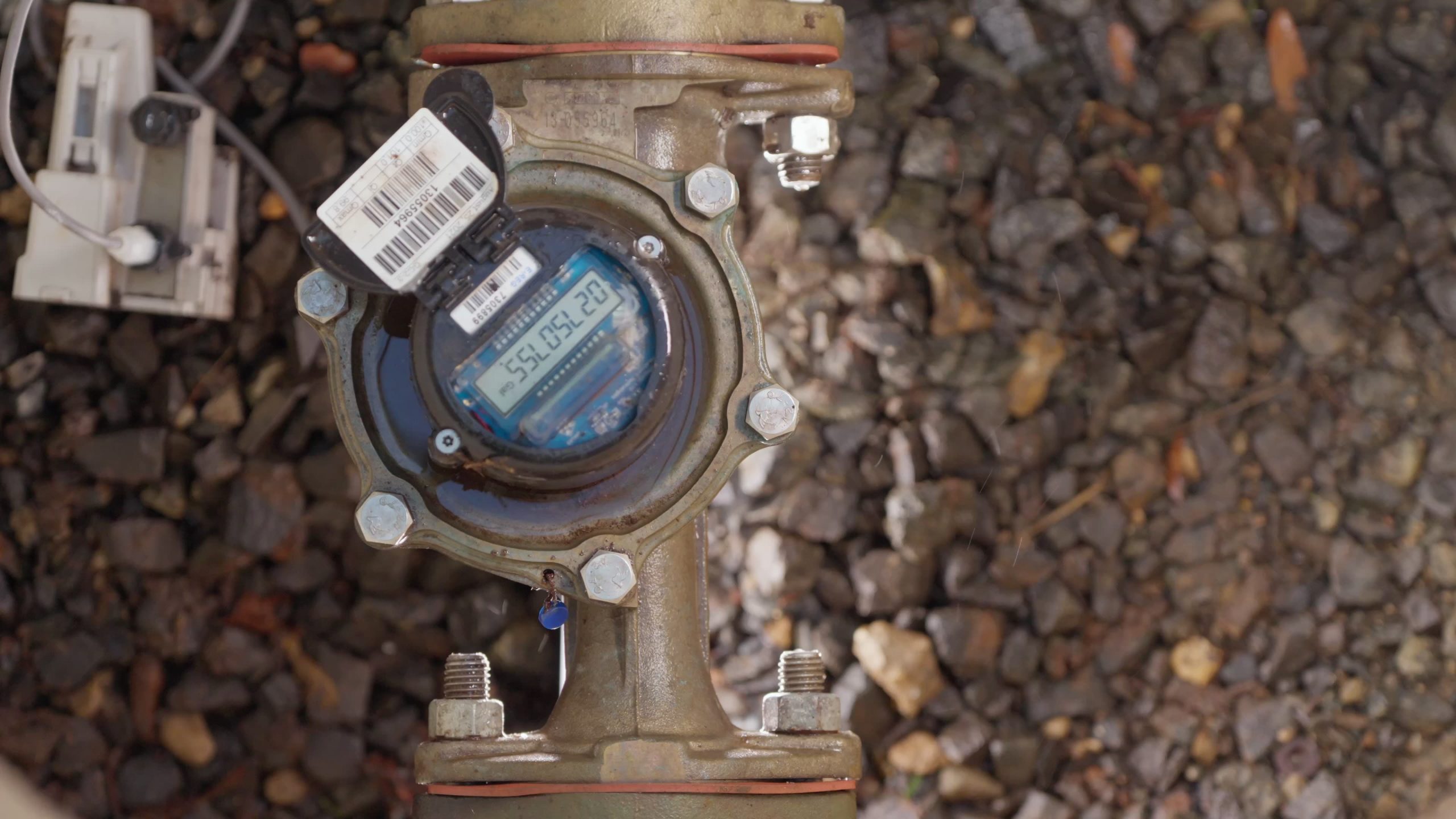
The leaks that were detected were distributed across all different types of assets, from curb stops to blow-off valves, and across mains, service lines and customer side. However, the majority of leaks were detected on hydrants (24%), meters (20%), and mains (16%).
Given the sheer number of these assets that are present within water distribution networks, utilities should give careful consideration to them when conducting risk analysis as part of their water asset management activities.
Conclusion
The USU study paints a dramatic high-level picture of the scale of pipe degradation and non-revenue water within our water distribution networks, and the CivilSense™ 2025 project data reveals a deeper layer of granularity that adds further detail.
The water infrastructure challenge facing municipalities and utilities is a daunting one, and resources are limited. However, taking a data-driven approach to water asset management enables decision makers to target high-risk sections of the network first—deploying resources efficiently, ensuring that budgets are allocated effectively, and addressing leaks before they become costly, disruptive major breaks.
Learn more
- Learn more about CivilSense™ AI-powered leak detection technology
- Try the CivilSense™ ROI calculator
- Connect with one of our smart water experts