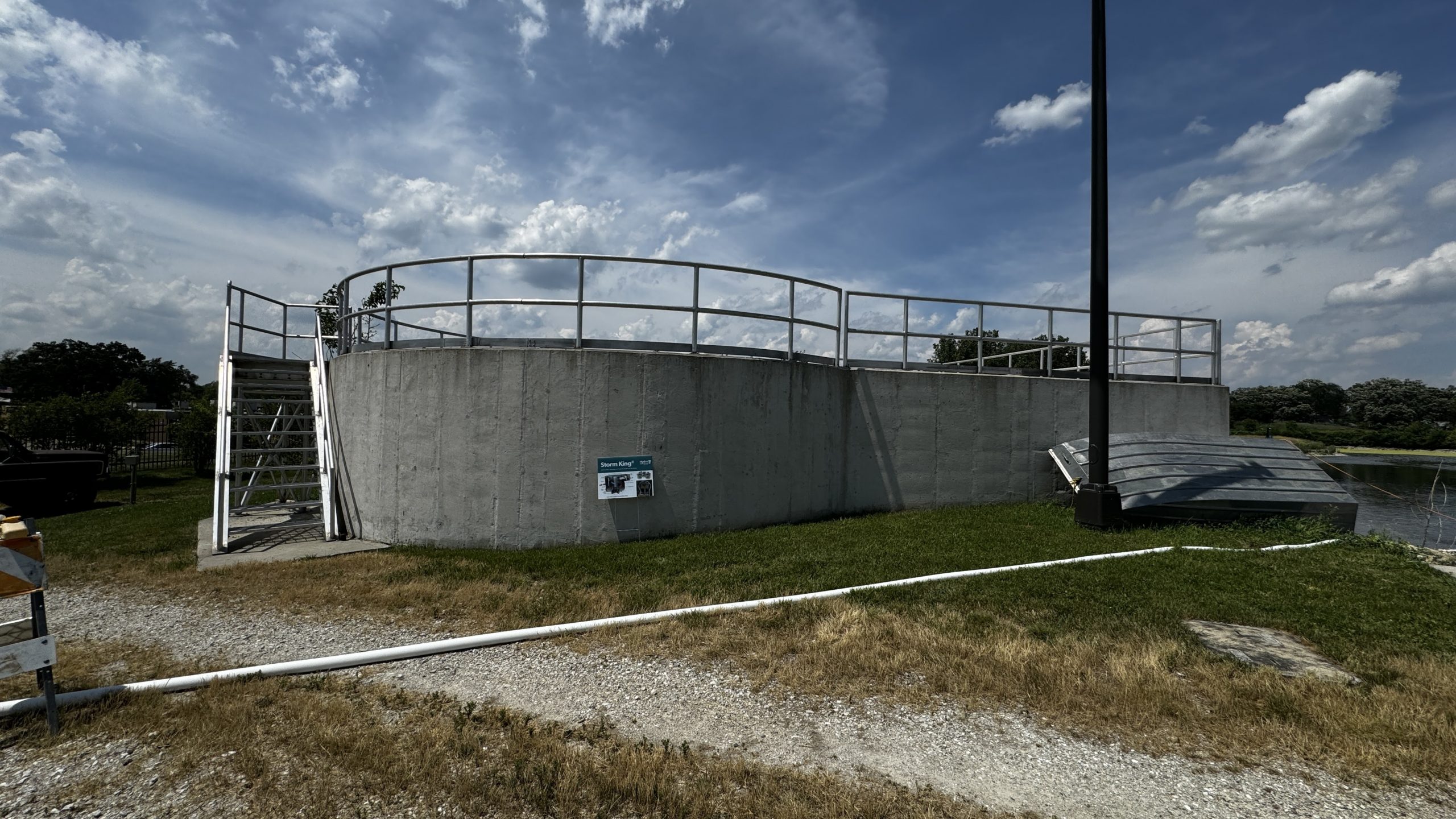
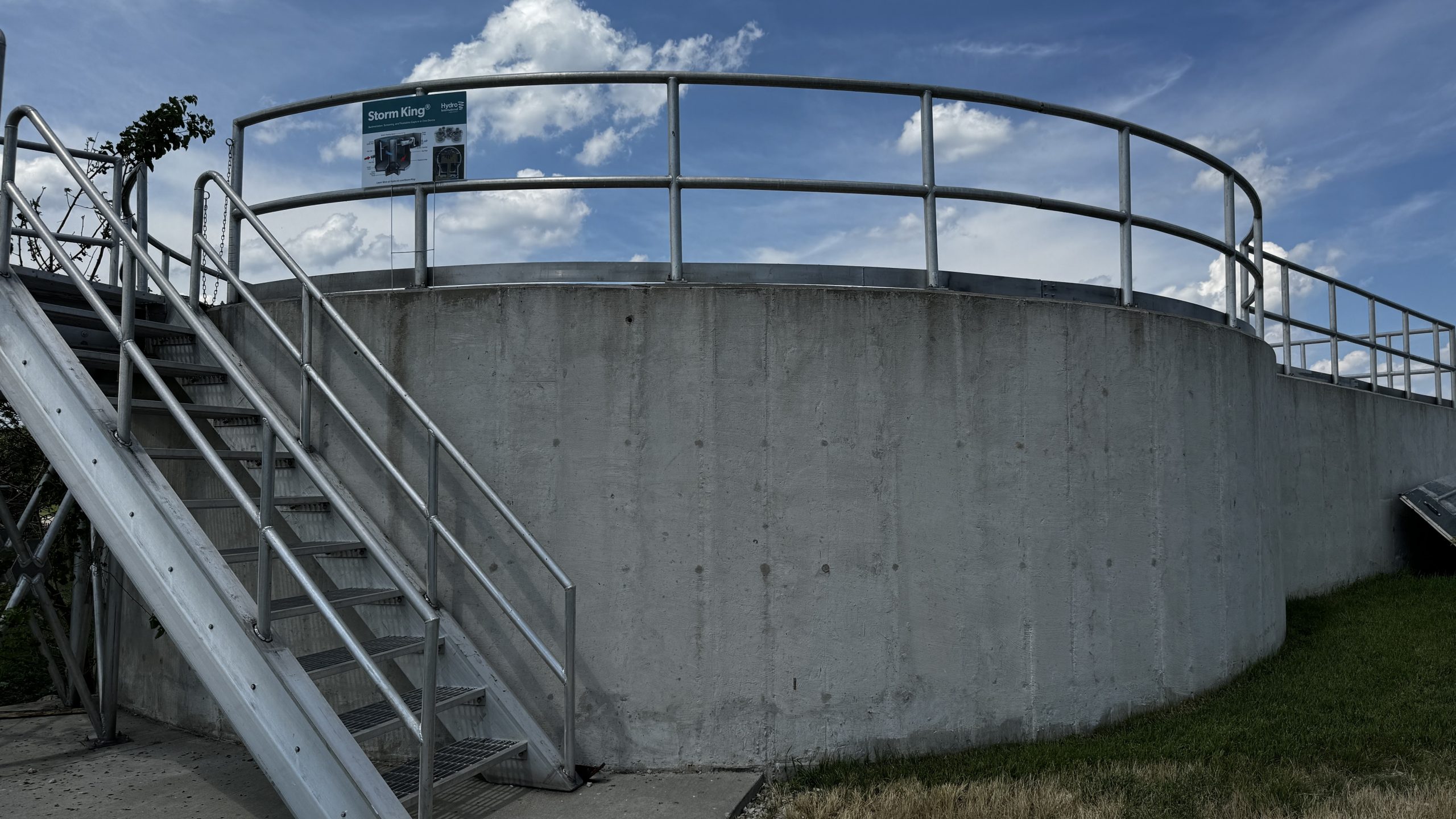
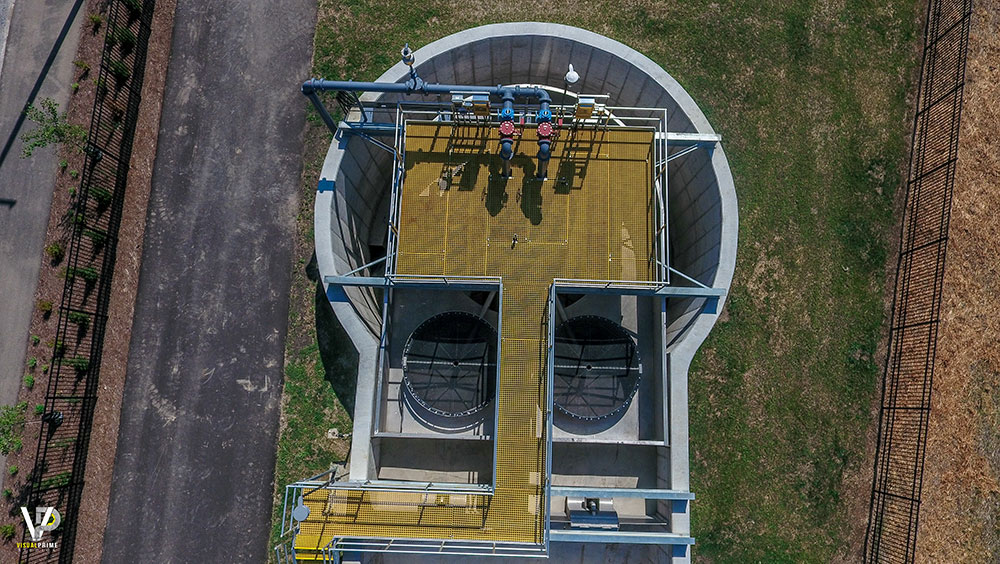
Storm King®
Prevent 100% of combined sewer floatables and gross solids and 95% of grit and sediment from reaching the environment.
Overview
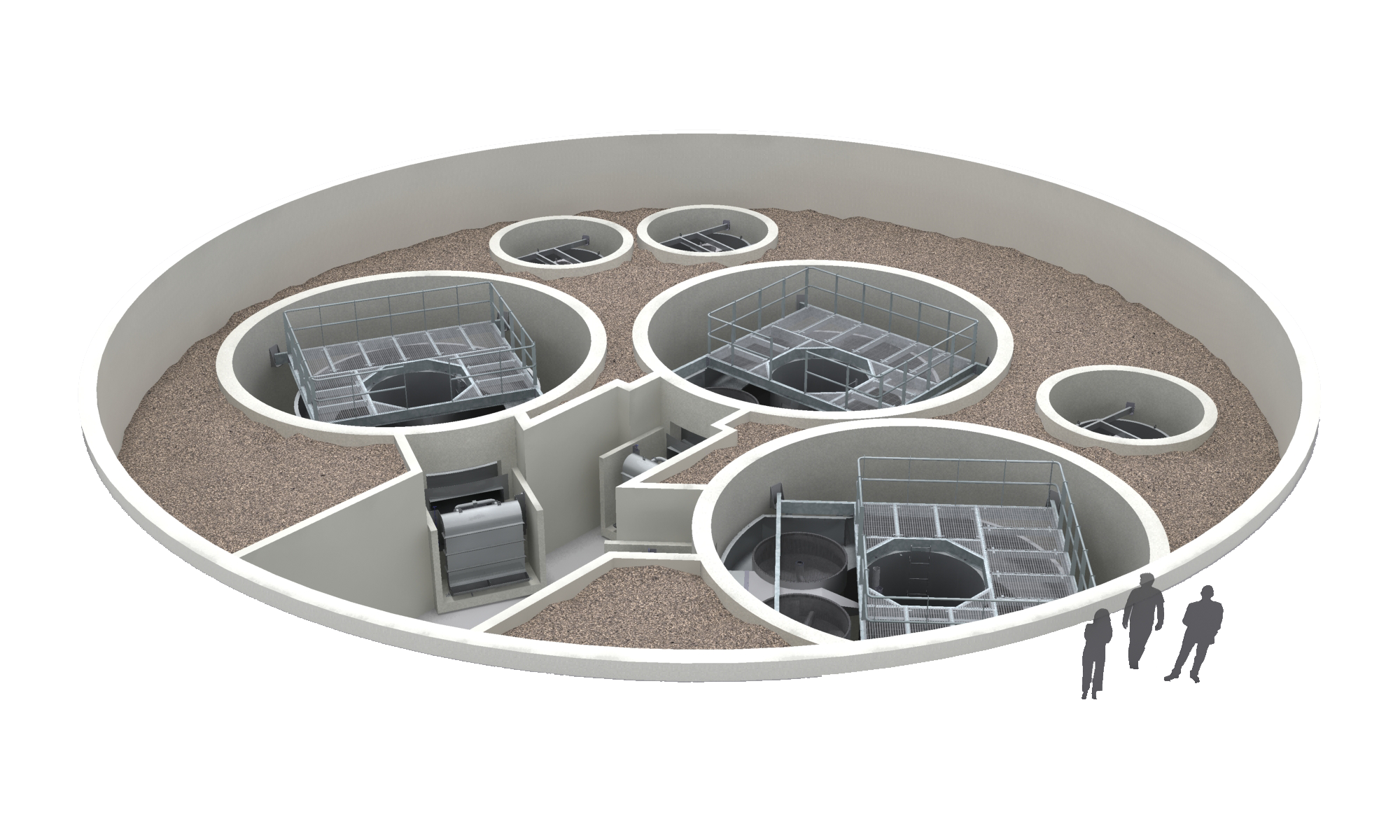
The Storm King® is an advanced hydrodynamic vortex separator that utilizes proven technology to provide a combination of grit removal, primary treatment equivalency (TSS and BOD reduction), floatables control, and in-vessel disinfection within a single unit process.
Engineered by Hydro International, the system is ideal for satellite or centralized treatment at overflow sites because it is self-activating, has no moving parts, and requires no power to separate solids.
Applications
- Floatables capture, primary treatment equivalency, and disinfection of combined sewer overflows (CSOs) and wet weather–induced flows
- Remote or unmanned treatment facilities
- Treatment of excess wet weather flows at centralized facilities or POTWs, either through direct discharge through a CSO outfall or blending of the Storm King effluent at the plant discharge
- Retrofit or new wet weather treatment facilities
- Preliminary treatment prior to storage or equalization
The Storm King® is an advanced hydrodynamic vortex separator that utilizes proven technology to provide a combination of grit removal, primary treatment equivalency (TSS and BOD reduction), floatables control, and in-vessel disinfection within a single unit process.
Engineered by Hydro International, the system is ideal for satellite or centralized treatment at overflow sites because it is self-activating, has no moving parts, and requires no power to separate solids.
Applications
- Floatables capture, primary treatment equivalency, and disinfection of combined sewer overflows (CSOs) and wet weather–induced flows
- Remote or unmanned treatment facilities
- Treatment of excess wet weather flows at centralized facilities or POTWs, either through direct discharge through a CSO outfall or blending of the Storm King effluent at the plant discharge
- Retrofit or new wet weather treatment facilities
- Preliminary treatment prior to storage or equalization
Benefits
Space Efficient Treatment
The Storm King has a long history of providing protection to watercourses. One of the benefits the Storm King can provide is solids removal and disinfection in the same vessel. Taking advantage of the separator’s complex flow paths created by the unique internal components, the Storm King can provide excellent efficiencies, potentially using a fraction of the disinfection agent while occupying less than 30% of the area required for conventional disinfection solutions. The Storm King is able to achieve 3 to 4 log kills of total or fecal coliform bacteria within an 8 minute hydraulic retention time and handle commonly available disinfectants such as Sodium Hypochlorite, Peracetic Acid, or Chlorine Dioxide.
A Low Maintenance Solution
The Storm King has no moving parts or power requirements and typically requires no higher maintenance commitment than the sewer system in which it is placed. The maintenance requirement is dependent upon the influent characteristics, which in turn are dependent upon the nature of the contributing system. Once the device has been brought on-line, the Storm King should be visually inspected after the first two spill events. After the initial inspections, visual inspection of the equipment should be carried out twice per year, or as deemed appropriate for the location.
How It Works
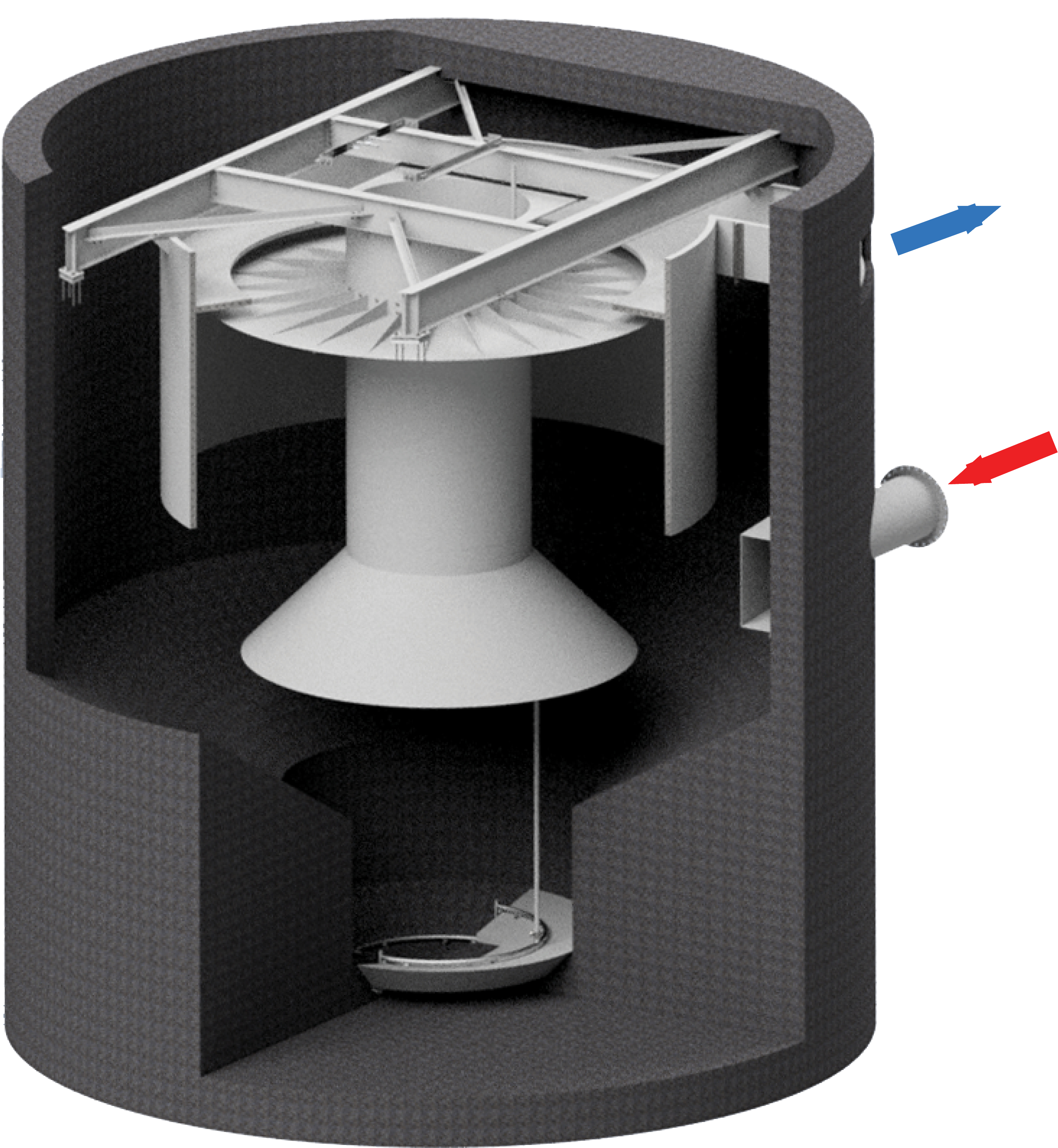
Flow is introduced tangentially into the side of the Storm King barrel (red arrow) causing the contents to rotate slowly about the vertical axis. The flow spirals down the perimeter allowing solids to settle out by gravity. This process is aided by rotary forces, shear forces and drag forces at the boundary layer on the wall and base of the vessel.
The internal components direct the main flow away from the perimeter and back up the middle of the vessel as a broad spiraling column, rotating at a slower velocity than the outer downward flow. A dip plate locates the shear zone, the interface between the outer downward circulation and the inner upward circulation, where a marked difference in velocity encourages further solids separation. Settled solids are directed to the collection chamber located under the center cone and are conveyed out by gravity or through a recessed impeller pump. Treated effluent is discharged into a receiving watercourse, a storage facility, or continues on to receive further treatment. (blue arrow).
The collected solids accumulate in the base of the unit and are returned to the sanitary flow (pumped or gravity flow) to continue on to the wastewater treatment facility.
Bacteria reduction is achieved within the Storm King by introducing chemicals such as Sodium Hypochlorite, Peracetic Acid, or Chlorine Dioxide into the upstream diversion structure or into the inlet pipe of the vessel. The spiraling action integral to the system combined with the predictable flow path of the separator allows the unit to combine its solids and grit removal duties with disinfection. Dechlorination (if applicable) is performed at the discharge of the unit (by others).
Performance
Storm King® standard performance includes 30–50% Total Suspended Solids (TSS) removal and up to 30% Biological Oxygen Demand (BOD) reduction. Additional removal can be achieved with chemical addition.
- Floatables, gross solids, and neutrally buoyant material removal
- High-rate disinfection in less than 8 minutes
- Grit and sediment: 95% removal of grit 75 micron and larger; different size systems can be provided for varying levels of grit removal performance
Capacity
- Sized for peak flow at peak grit loads
- Virtually no turndown ratio limits
- Modular and expandable combinations to fit any size plant
Frequently Asked Questions
Q. What size Storm King® unit do I need?
A. The required diameter of a Storm King® is a function of the peak design inflow rate, design removal performance, and the available depth. Within defined design limits, unit diameter can be increased to counteract the effect of limited available depth. Please contact us to discuss your project requirements.
Q. What level of performance can the Storm King® achieve?
A. The performance efficiency of a hydrodynamic separator depends on the physical size of the unit (and consequently retention time) and on the settleability of the incoming sewage; purely neutrally buoyant material cannot be removed by gravitational forces alone.
A hydrodynamic separator typically achieves the same removal performance as a primary sedimentation tank in a quarter of the plan area. Higher loading rates can be used when less efficient performance is required — for example, at a treatment works where grit and silt need to be removed but where it is beneficial for finer fecal material to pass forward to downstream treatment processes.
Q. Does the Storm King® also control the flow rate?
A. No. Separate Hydro-Brake® flow controls are typically used to control the pass-on flow rate to treatment. If a gravitational system is unobtainable, a pump can be used to control the pass-on flow to treatment as an alternative to the Hydro-Brake® flow control.
Specs & Downloads