April 30, 2026
Reducing Potable Water Demand Through Smarter Irrigation Design

Water scarcity is no longer a future concern; rather, it is a present‑day design challenge.
Across the U.S., rising potable water costs, drought conditions, and regulatory pressures are reshaping how engineers design. For many developments, irrigation is one of the largest consumers of potable water, making it a prime opportunity for meaningful reduction.
Reimagining irrigation starts with rethinking stormwater.
Why Potable Water and Irrigation Are Under Scrutiny
Traditional irrigation systems often rely almost entirely on municipal potable water. While this approach is straightforward, it comes with growing risks:
- Increasing water rates
- Seasonal restrictions during droughts
- Local mandates to reduce potable water use
- Sustainability and ESG reporting pressures
For large commercial sites, campuses, and multifamily developments, irrigation can represent a significant portion of total water demand. Reducing that demand is often one of the fastest ways to improve water efficiency without compromising site aesthetics or usability.
Stormwater as a Local Water Resource
Rainfall is one of the most underutilized resources on most sites. Rather than treating stormwater as waste to be conveyed offsite, modern stormwater management strategies focus on capture, storage, and reuse.
When stormwater is stored underground, it can be reused for non‑potable applications like irrigation directly offsetting potable consumption. This shift transforms stormwater infrastructure from a regulatory requirement into an operational asset.
How StormCapture® Enables Irrigation Reuse
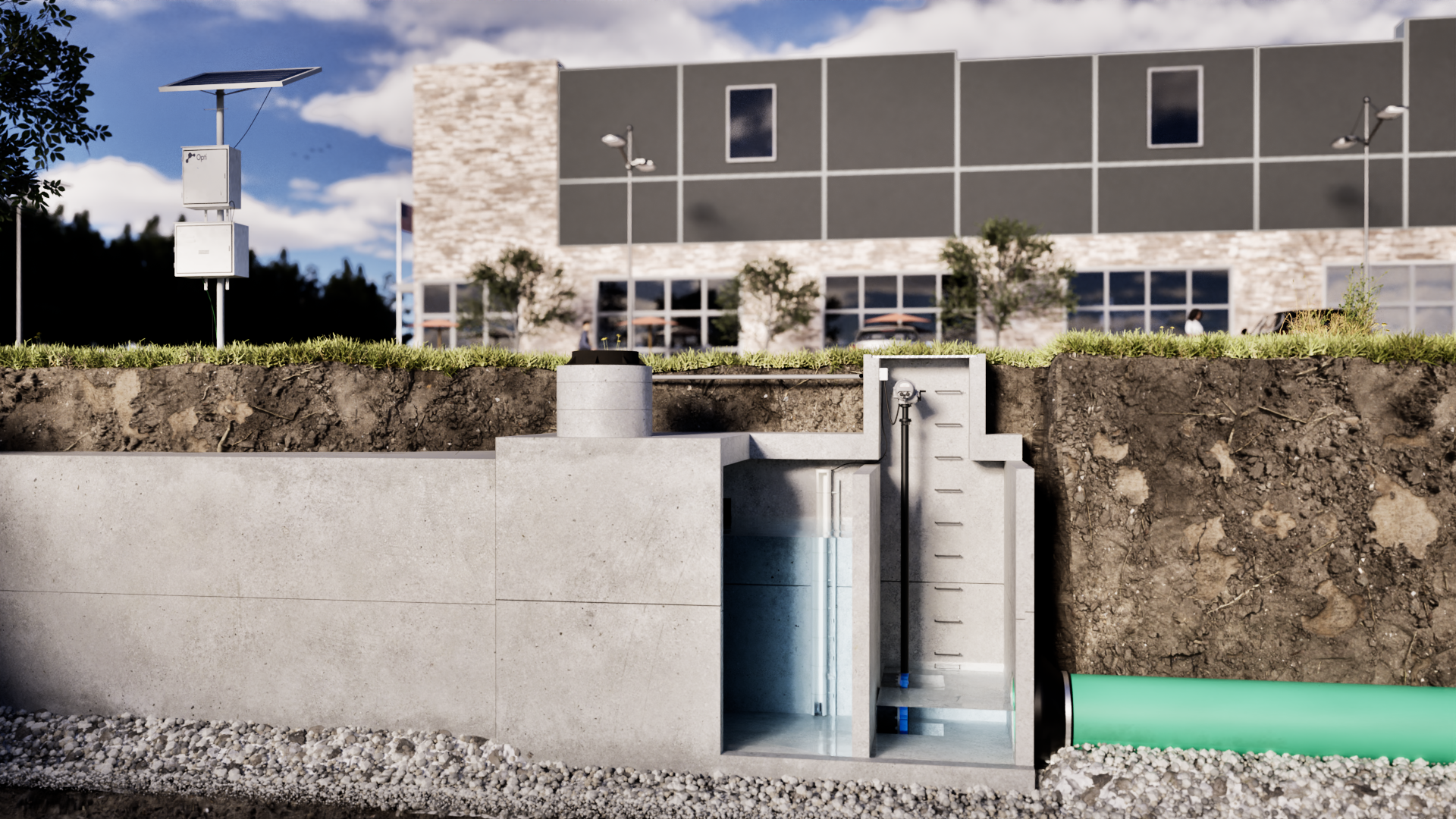
Oldcastle Infrastructure’s StormCapture® supports potable water reduction by functioning as an underground storage platform that can be configured for stormwater harvesting. Its modular, precast concrete design allows large volumes of water to be stored efficiently beneath parking lots, roadways, and landscaped areas.
Key advantages of this solution include:
- Flexible storage capacity tailored to irrigation demand
- Minimal surface footprint
- Integration with pumping and treatment systems
- Long‑term durability and maintainability
By storing stormwater onsite, projects create a dependable supplemental water source for irrigation, particularly valuable during peak watering seasons.
The Long‑Term Benefits of Reducing Potable Water Use
Using captured stormwater for irrigation delivers value well beyond sustainability goals:
- Lower utility bills over the life of the project
- Improved resilience during drought periods
- Support for green building initiatives such as LEED®
- Reduced demand on municipal infrastructure
As water availability becomes less predictable, projects that reduce dependence on potable irrigation water are better positioned for long‑term success.
Learn more
- Discover the benefits of StormCapture
- Read our StormCapture Brochure
- Launch our Online Design Tool
- Request a Lunch & Learn