August 17, 2026
Smart Infrastructure for an Unpredictable Climate
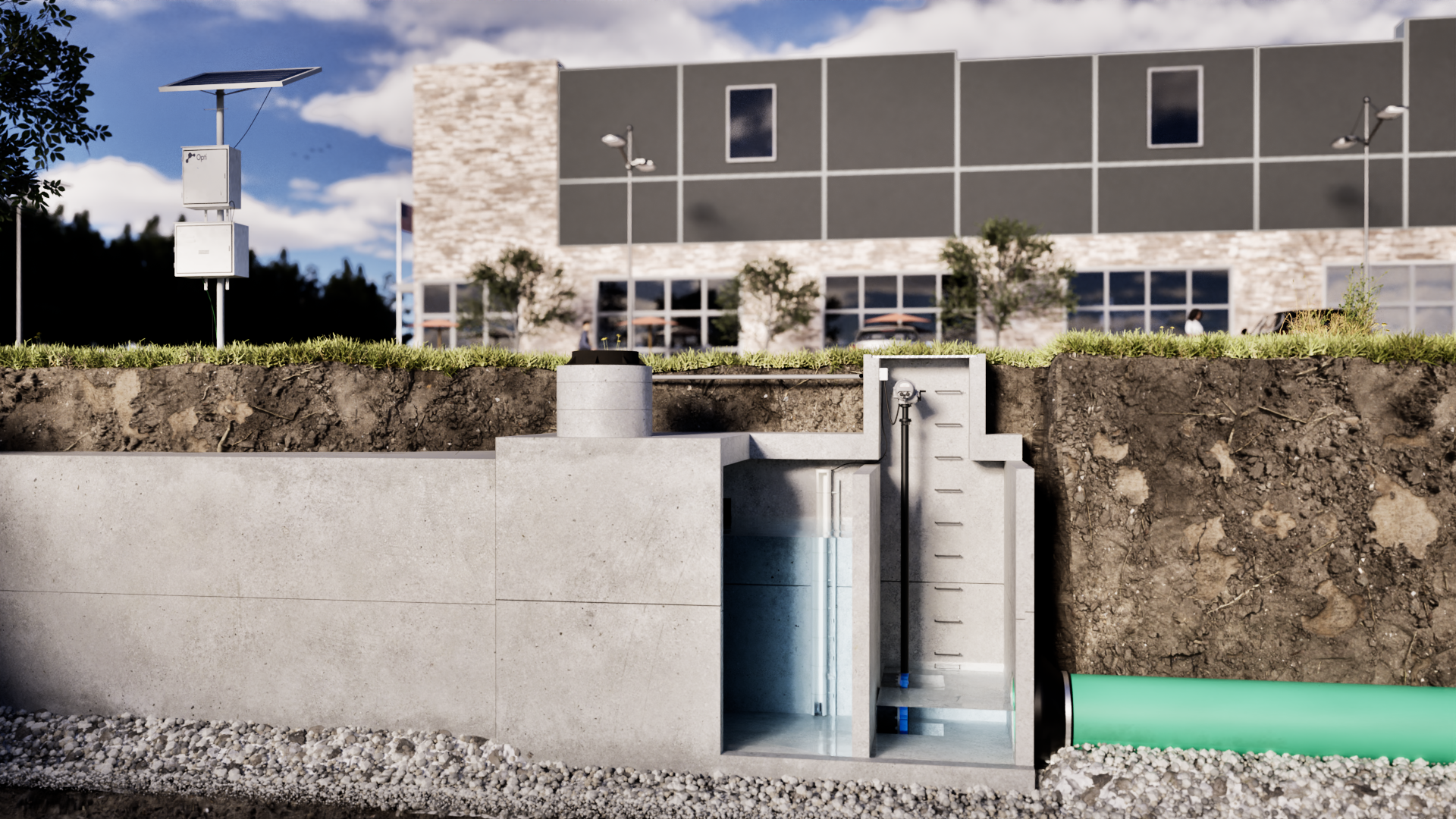
Continuous Monitoring and Adaptive Control (CMAC) transforms passive stormwater assets into smart infrastructure that anticipates, responds to, and optimizes for changing conditions.
The Limits of Designing for Today’s Weather
Existing stormwater infrastructure has been designed for a world where the past was a reliable predictor of the future. For decades, engineers have designed detention ponds, retention basins and related conveyance systems around statistical rainfall models that accommodate 10-year, 25-year, and 100-year storm events.
That approach has served communities well, but it relies on two assumptions that are increasingly under pressure: first, that future weather patterns will resemble the past, and second, that static infrastructure can manage dynamic conditions.
More intense rainfall, back-to-back storm events, urbanization, and evolving regulations are exposing the limits of designs based on historical data, however. In many regions, storms once considered rare are becoming increasingly common, compressing decades of flooding risk into a much shorter timeframe.
The issue is not that traditional infrastructure is failing; it is that passive infrastructure cannot adapt to these changes. Whether a major storm is forecast in 48 hours, or a week of dry weather lies ahead, a conventional basin operates exactly the same way.
From Passive Storage to Adaptive Management
Continuous Monitoring and Adaptive Control (CMAC) changes that model. By combining water level sensors, automated valves, cloud-based analytics and weather forecasting, stormwater systems become smart infrastructure assets that adapt to real-world conditions in near real time, and can prepare for storms before they arrive.
When significant rainfall is forecast, water levels can be lowered in advance to create additional storage capacity. Instead of reacting to rainfall, infrastructure begins responding to forecasts.
This means that assets that once served only as storage become active participants in overall watershed management.
The Rise of Smart Infrastructure
The next evolution of stormwater management is embedding intelligence directly into the asset itself. Emerging solutions such as SmartCapture™ illustrate how storage, monitoring, forecasting, and adaptive control can be delivered as a single integrated system.
This approach simplifies deployment while enabling real-time optimization of flood control, detention, retention, reuse, and water-quality objectives.
More broadly, it reflects the beginning of a shift in how the industry views stormwater infrastructure: not as static storage, but as an actively managed resource.
Increase Performance Without Adding Footprint
One of adaptive infrastructure’s greatest advantages is its ability to increase effective storage without increasing the actual volume of physical storage required.
Traditionally, improving performance meant building larger basins, expanding underground storage, or acquiring additional land. Adaptive control unlocks unused capacity by managing storage dynamically and creating additional storage ahead of forecasted storms.
For municipalities and developers facing budget and space constraints, getting more value from existing assets or maximizing the efficiency of the available storage space is often as important as building new assets or expanding capacity by other methods.
The Power of Connected Watersheds
The true value of CMAC emerges when assets operate as part of a connected network. Traditionally, detention facilities function independently, often releasing water with little awareness of downstream conditions. During major storms, simultaneous discharges can contribute to flooding, erosion, and downstream bottlenecks.
A connected network of smart infrastructure assets enables those assets to share real-time information on storage availability, discharge rates, forecasts, and downstream capacity. Releases can be coordinated, storage distributed strategically, and peak flows reduced across the watershed.
Rather than operating as isolated facilities, stormwater assets function as a coordinated network capable of optimizing performance across an entire watershed, not just a single site.
Operational Visibility and Environmental Benefits
Smart infrastructure delivers many benefits beyond flood mitigation. Continuous monitoring provides visibility into water levels, storage utilization, valve positions, and system performance, supporting maintenance planning, regulatory reporting, and long-term asset management.
At the same time, dynamic detention strategies can improve pollutant removal, increase sediment settling, and help support water quality goals. Infrastructure performance becomes measurable, verifiable, and actively managed.
The Future of Stormwater Resilience
As climate uncertainty grows, the next generation of stormwater infrastructure will be defined not by how much water it can hold, but by how effectively it can anticipate, adapt, and respond. Communities that embrace adaptive control will be better positioned to reduce flood risk, improve water quality, maximize existing assets, and build long-term resilience.
The future of stormwater management is not simply about adding capacity. It is about building connected networks of smart infrastructure assets that can anticipate, adapt, and respond to our increasingly unpredictable climate conditions in an effective, efficient and coordinated way.
Learn more
- Visit the SmartCapture smart infrastructure product page
- Request a SmartCapture lunch and learn
- Read about how CMAC delivered 10x more effective flood storage