Hydro-Brake® Drop
Overview
The Hydro-Brake® Drop is an energy dissipating flow control device that protects infrastructure from water hammer caused by dropping water from heights. Engineered by Hydro International, the system is all-hydraulic with no moving parts.
The Hydro-Brake® Drop is self-activating and is designed to safely drop water or sewage from virtually any height in order to prevent noise, vibration, and damage to existing structures.
Applications
- Controlled drop of flow into deep tunnels
- Odor and corrosion control
- Flood control
- Combined / sanitary sewer systems
- Stormwater systems
The Hydro-Brake® Drop is an energy dissipating flow control device that protects infrastructure from water hammer caused by dropping water from heights. Engineered by Hydro International, the system is all-hydraulic with no moving parts.
The Hydro-Brake® Drop is self-activating and is designed to safely drop water or sewage from virtually any height in order to prevent noise, vibration, and damage to existing structures.
Applications
- Controlled drop of flow into deep tunnels
- Odor and corrosion control
- Flood control
- Combined / sanitary sewer systems
- Stormwater systems
Benefits
Odor & Corrosion Control
The Hydro-Brake® Drop unit’s wide range of operation in the air entrained flow mode combined with the enhanced and powerful mixing at the outlet by the energy dissipation unit ensures rapid oxidation of flow to prevent the release of noxious gases such as H2S.
Small Pipe Size Results in Cost Savings
Traditional vortex drop shaft designs require the preservation of a finite sized air core while maintaining a specific terminal velocity of the water over a wide range of flows for proper operation. The resulting effect is oversized drop shafts with complicated influent structures and separate air vents to transfer entrained air out of the structure.
Easy Retrofit & Lower Project Costs
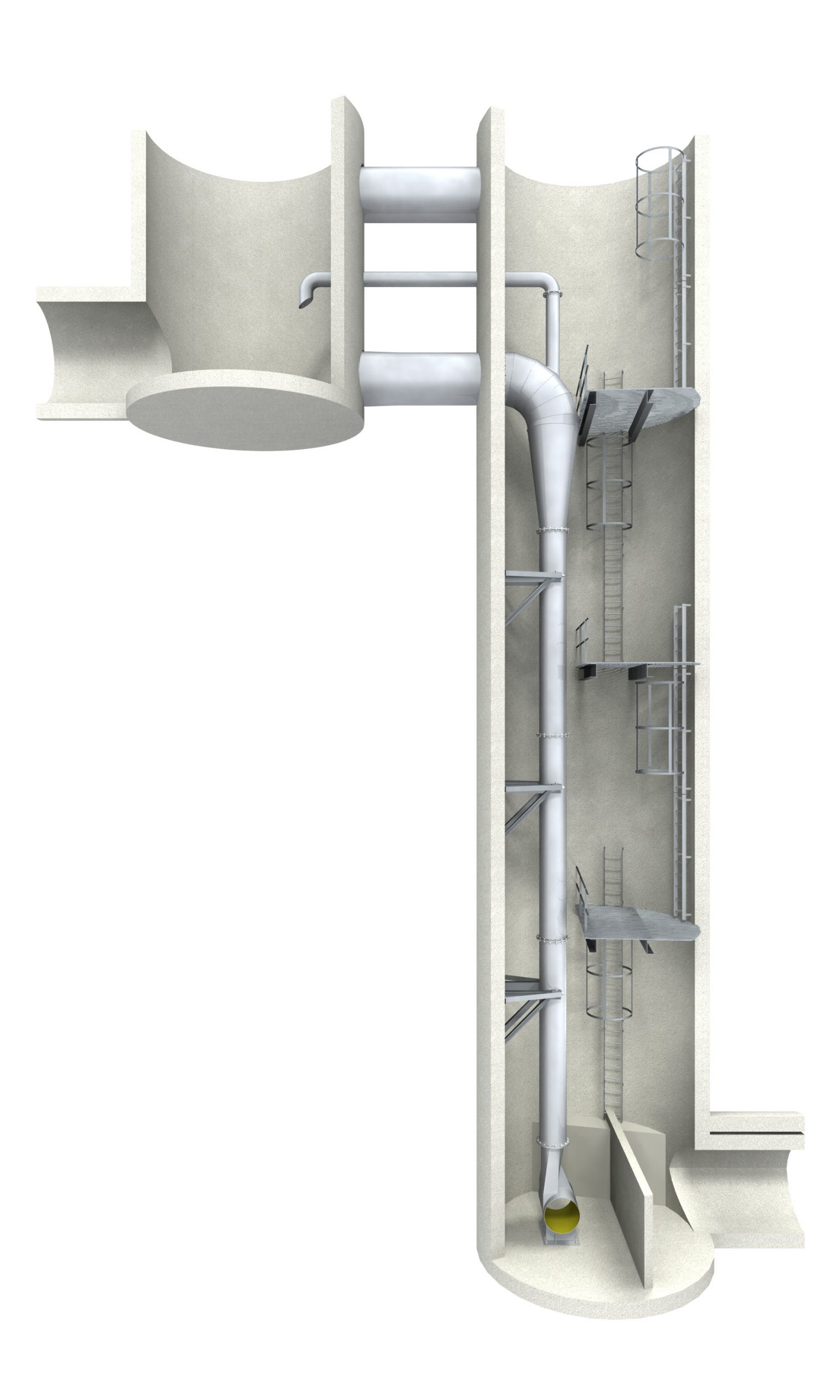
The Hydro-Brake® Drop system’s simple design facilitates easy retrofit into existing chambers while its integrated access and small pipe sizes reduce excavation cost and shaft diameters and eliminate the need for a separate access / vent shaft. The system also benefits from a compact and simple to construct inlet chamber with no complicated curves or benching.
- Self-activating with no moving parts
- No air vents or auxiliary maintenance shafts
- Efficient, safe, controlled, and quiet
- Flexible design can accommodate multiple pipes in a single structure
- Fully enclosed system aids visual inspection to facilitate maintenance
- No de-aeration chamber needed
- No separate vent chamber required
How it Works
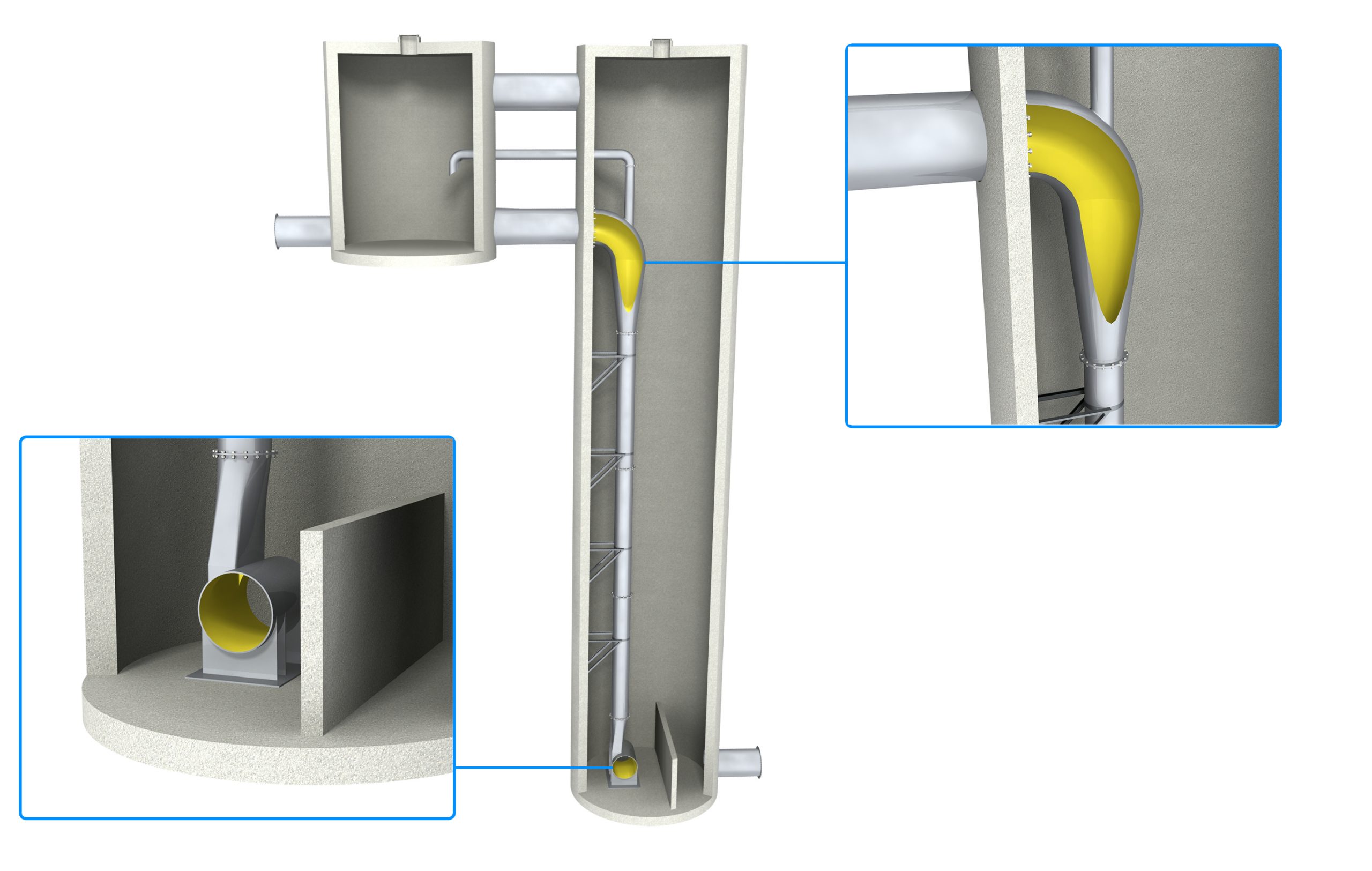
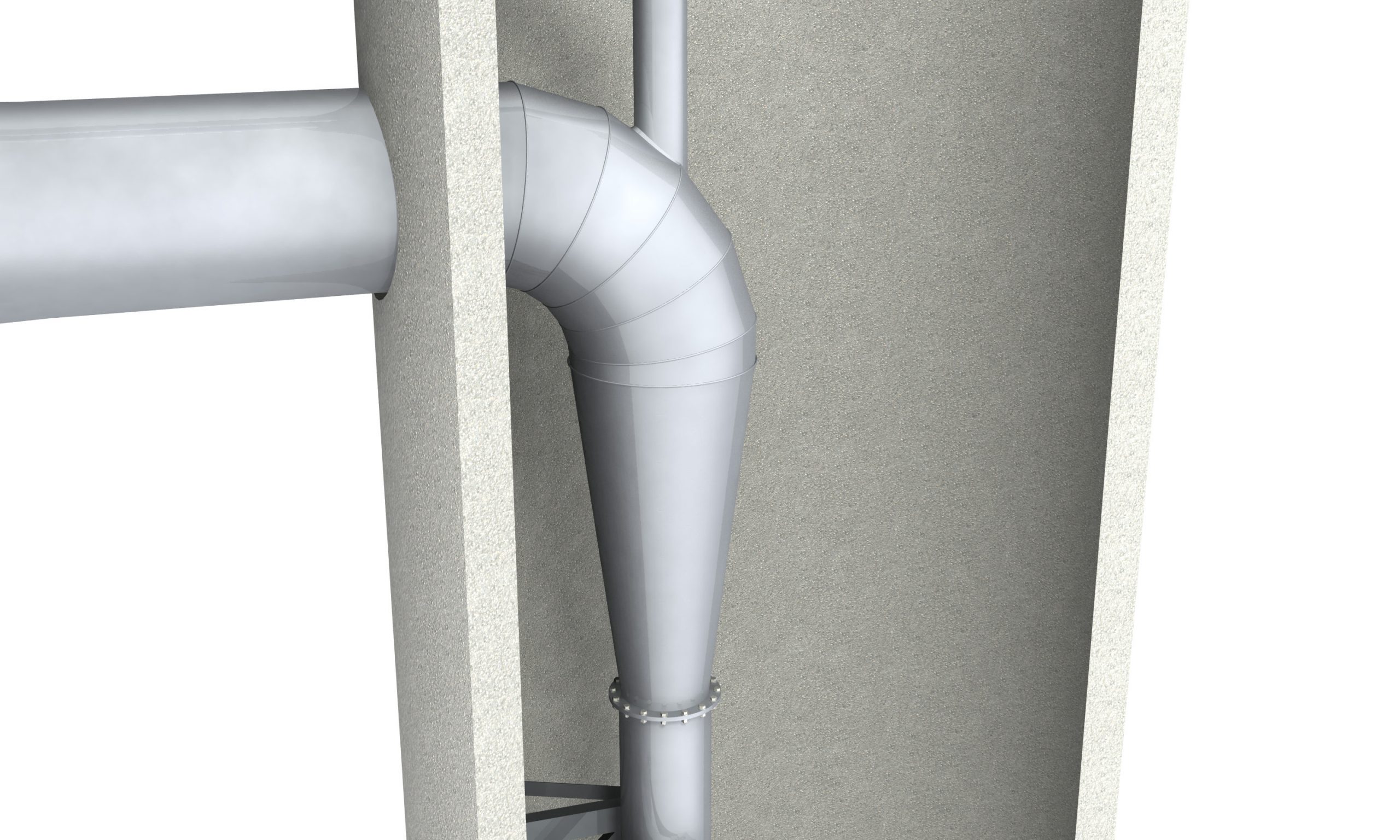
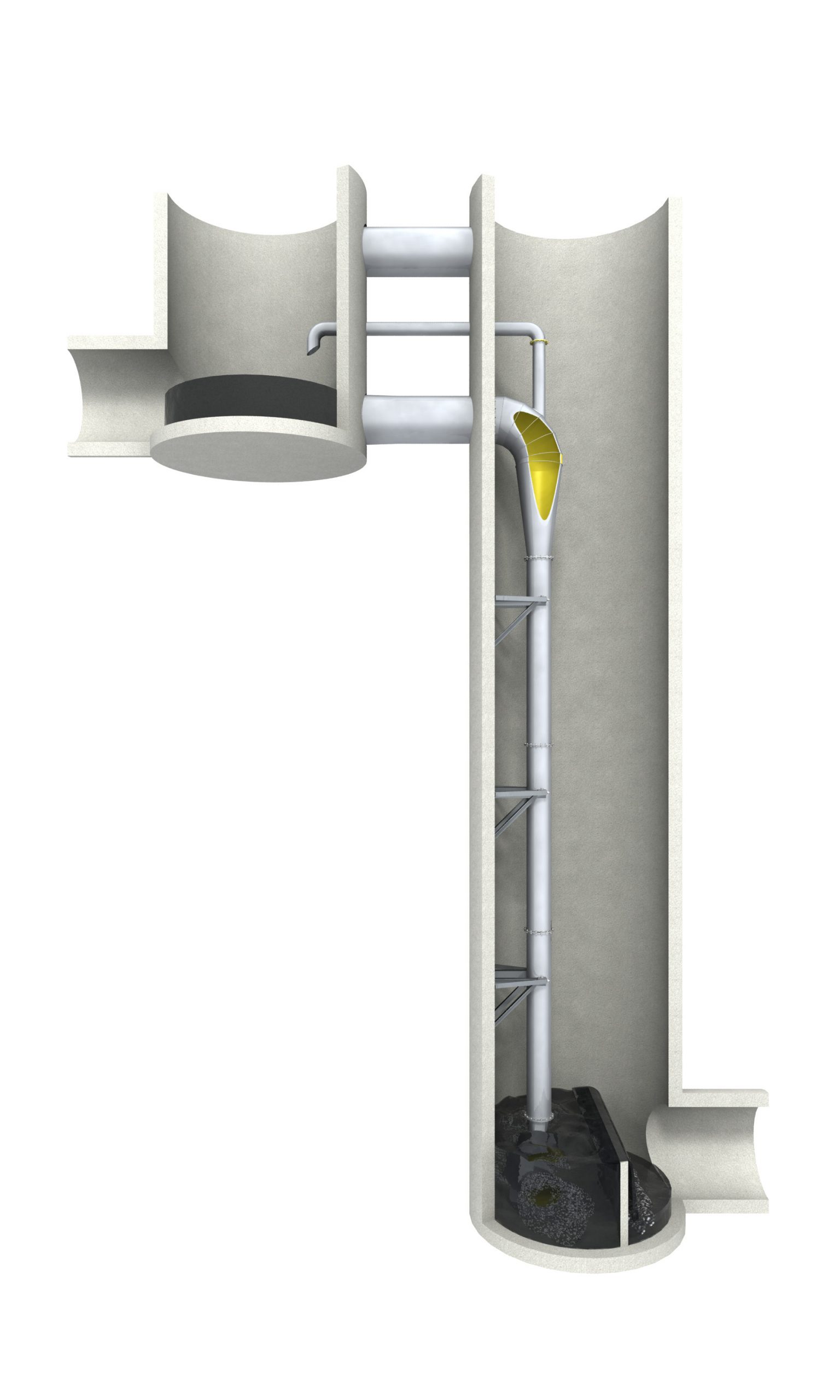
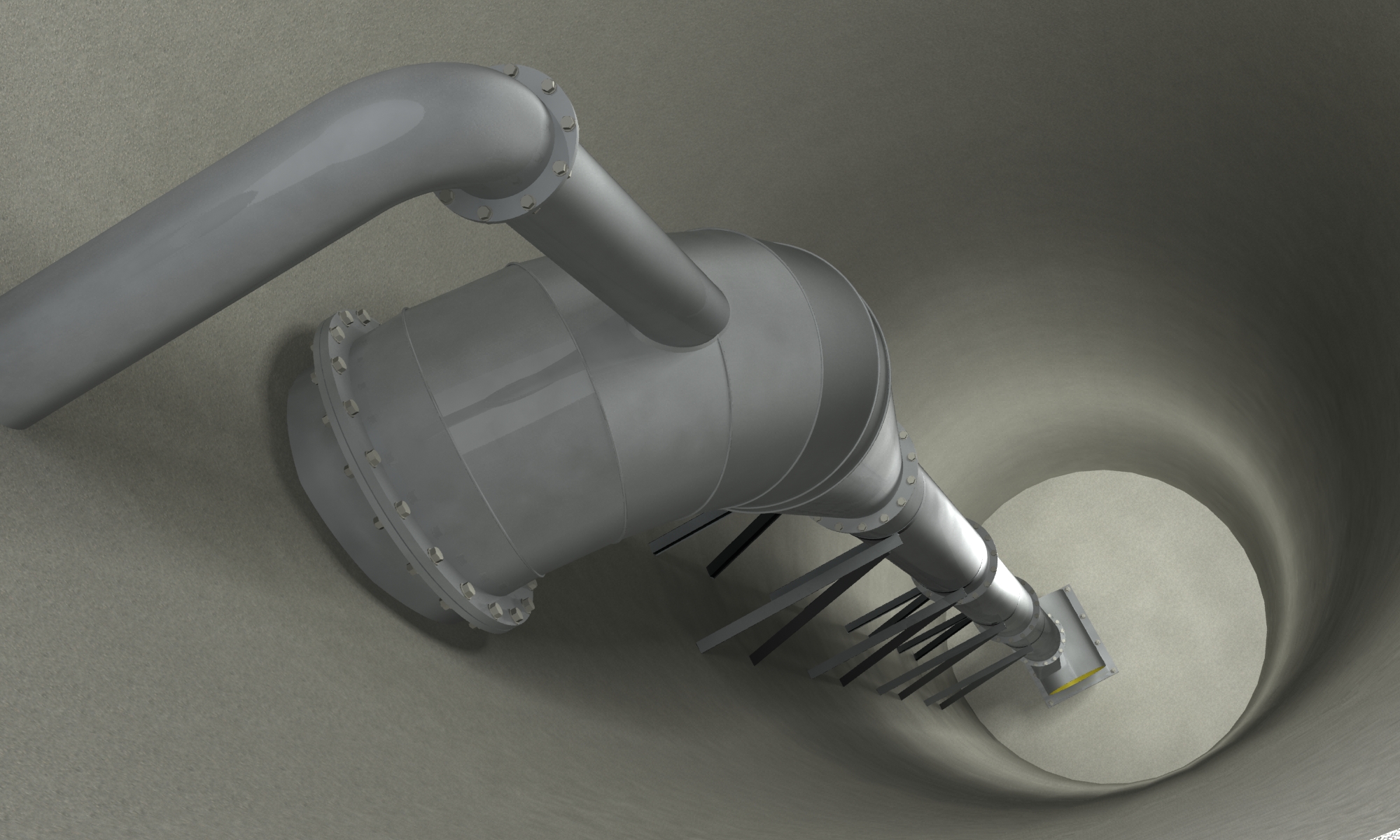
Flows enter the system via the main horizontal inlet, around the carefully designed top bend and, if appropriate, taper. After dropping the desired height, flow enters into the Energy Dissipation Unit before continuing downstream.
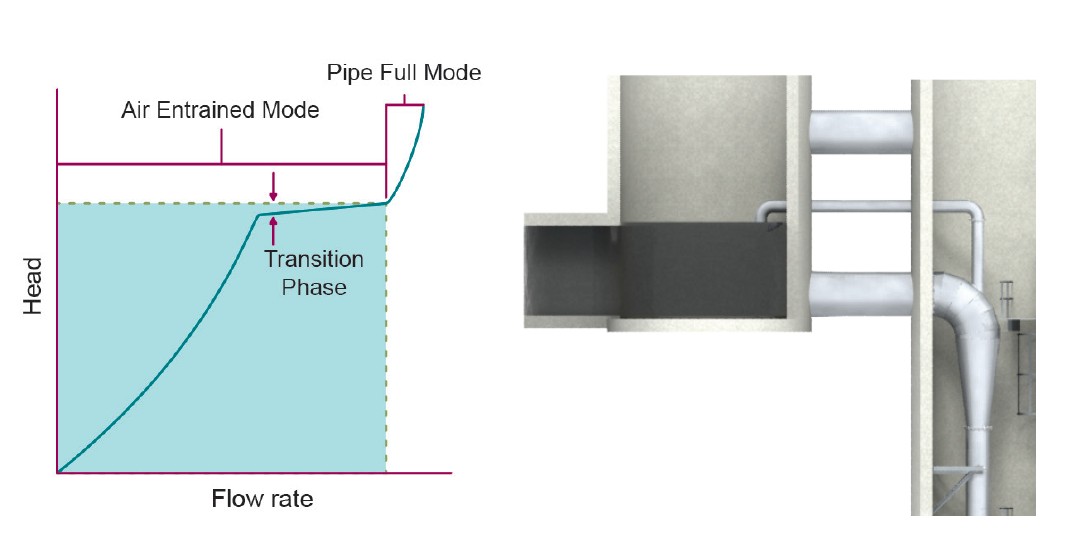
The Hydro-Brake® Drop uses a unique Air Switch to enable a safe transition into the full pipe mode where it can operate at maximum capacity without the need for an air core. This allows it to accommodate as much as three times the flow as compared to a traditional drop shaft solution in the same pipe size.
Air Entrainment Mode
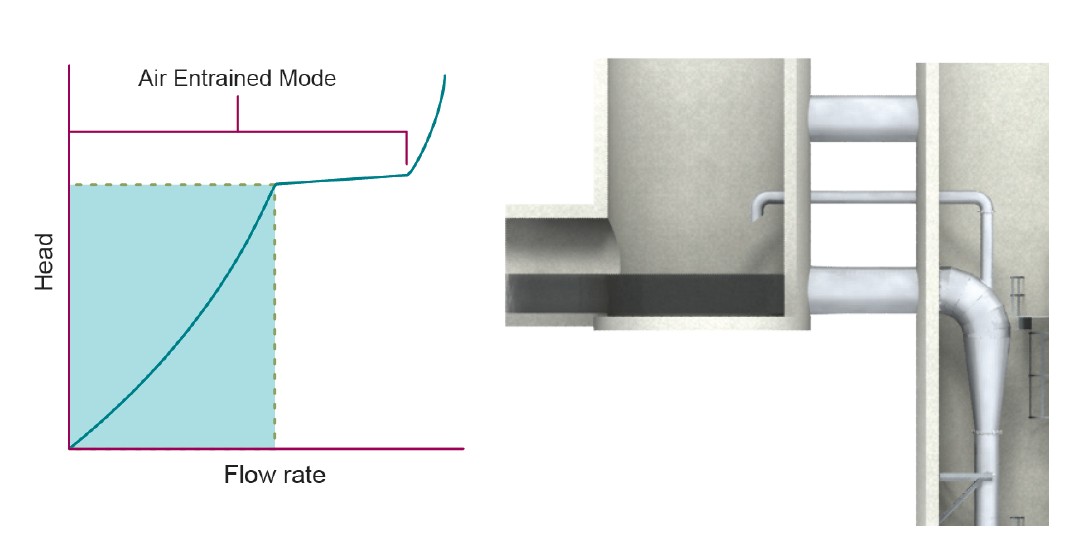
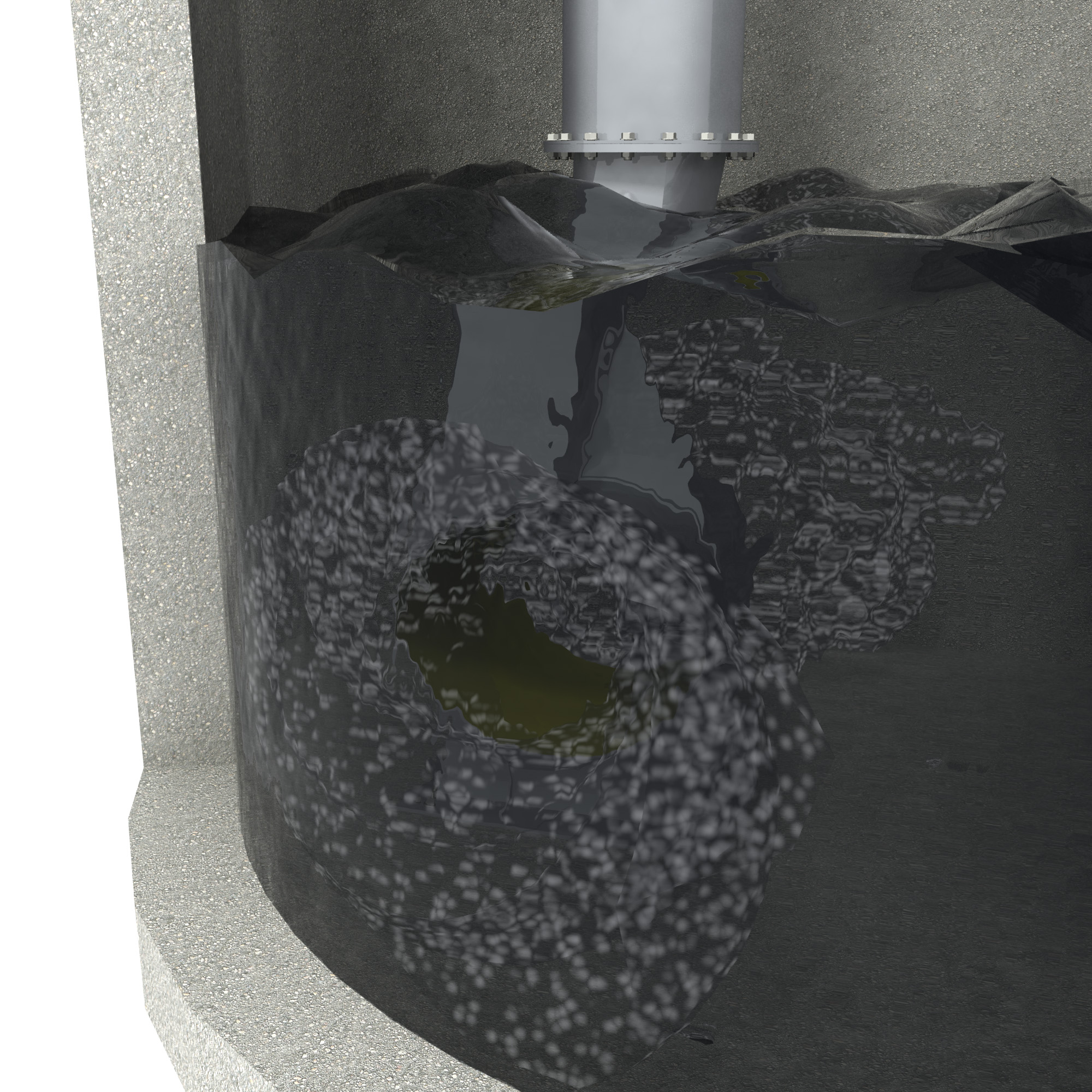
At low flow water passes through the Hydro-Brake® Drop inlet pipe and drops as a film, maintaining contact with the inside surface of the drop pipe. This results in the formation of a central air core through the drop pipe. Water then enters the top of the Energy Dissipation Unit and exits the system through the side openings into the bottom of the drop chamber. A weir at the bottom of the chamber creates a stilling area to absorb the release of energy from the water exiting the Energy Dissipation Unit. This ensures a smooth operation with minimal turbulence. At increased flows, the water level in the inlet chamber submerges the inlet pipe of the Hydro-Brake® Drop. At this stage, air is fed into the Hydro-Brake® Drop via the Air Switch, maintaining the stability of the air core and a smooth flow regime.
Pipe Full Mode
If the flow rate continues to increase, the water in the upstream inlet chamber rises until it begins to enter the transition to Pipe Full Mode. At this stage any increase in flow has a much lower impact on the upstream water level due to the high flow capacity during Pipe Full Mode. The Air Switch is designed to smoothly and efficiently regulate the transition phase, eliminating any glugging and vibrations, until Pipe Full Mode is reached completely and there is no more air flow through the system.
Energy Dissipation Unit
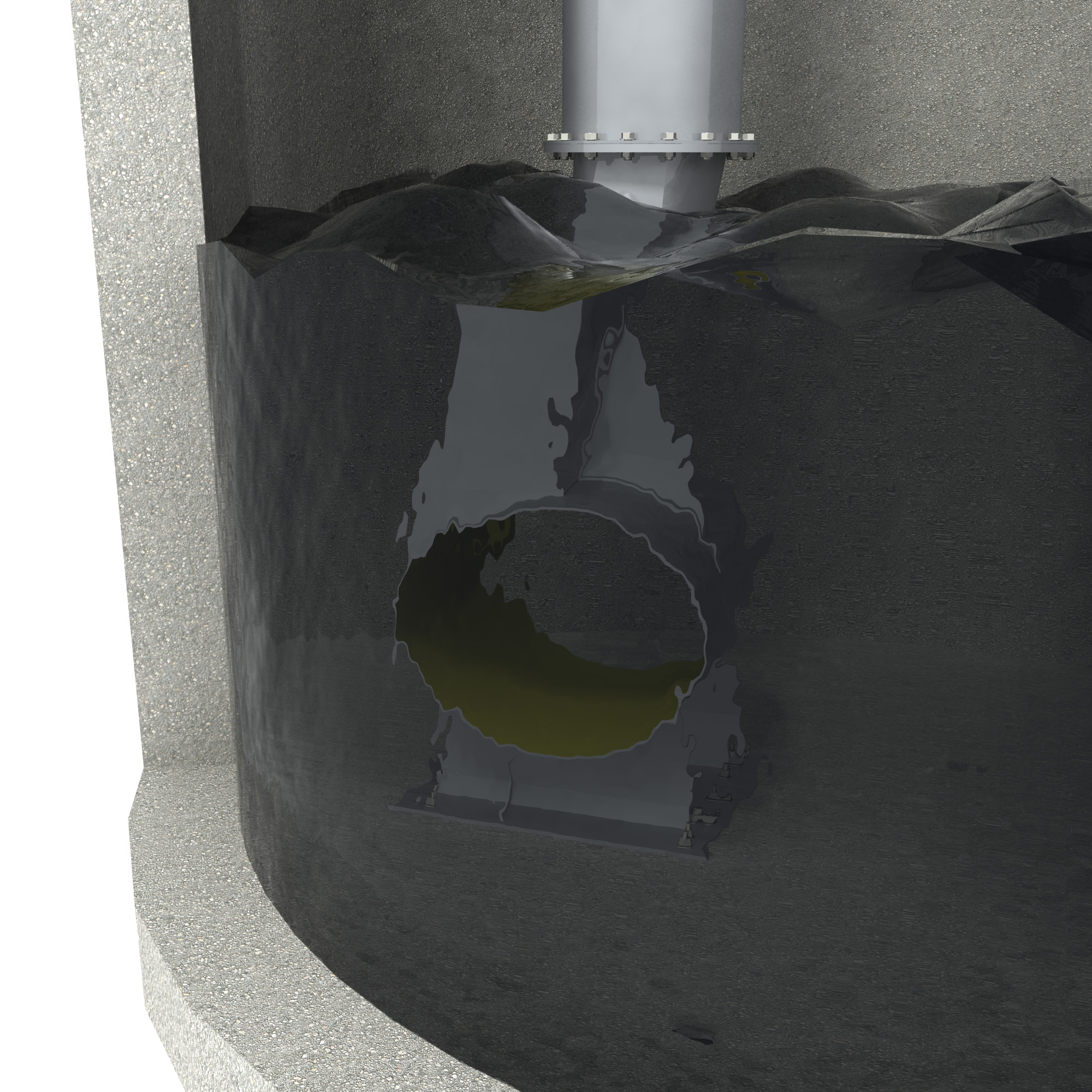
The Energy Dissipation Unit was specifically designed to minimize the damage that can be caused by falling water and also to avoid the effects of cavitation. During Air Entrainment Mode air is carried down the shaft and released in the outlet chamber to ensure that water hammer cannot occur. During Pipe Full Mode no air is carried and therefore the drop pipe can operate at full capacity pulling water from the inlet chamber until air is introduced.
Performance
The Hydro-Brake Drop’s unique proprietary design allows up to three (3) times the flow of a traditional drop shaft in the same pipe size.
Configuration
The Hydro-Brake® Drop is completely configurable and can be designed to suit either the smallest flow or the longest drop. Its compact nature means that two or more shafts can fit into the same chamber, further enhancing its versatility and ensuring the best solution can be found for each project.
Construction
The Hydro-Brake® Drop is constructed from durable and corrosion resistant stainless steel. Furthermore the inlet bend, reducer, and Energy Dissipation Unit are treated with an Irathane coating to protect them from wear and ensure an extremely long component life.
Frequently Asked Questions
Q. Why are conveyance and control systems needed when dropping water from height?
A. Dropping water from height without some form of control can result in noise, vibration, and damage to network infrastructure. A conveyance and control system is needed to dissipate the increased energy of falling water, eliminate cavitation and hydraulic instability, and reduce hydraulic head losses when drainage tunnels are surcharged with additional flows, such as during a storm event.
Q. Does the Hydro-Brake® Drop require large stilling basins and pipes?
A. The Hydro-Brake® Drop allows for a smaller, simpler inlet structure and uses a compact Energy Dissipation Unit at the base. It enables the use of small diameter pipes because the technology allows them to run full. These smaller pipes can be fixed to the tunnel wall, allowing safe access to the base of the drop and eliminating the need for auxiliary shafts for maintenance access.
Q. What are the limitations of conventional drop technologies?
A. Conventional technologies such as weirs and backdrops have practical height limits — sometimes as low as 8 ft (2.4 m). Cascades are expensive and cause water to gain energy on each downward “step,” increasing the risk of loss of control and overshooting. Flumes are difficult to design to properly match energy dissipation with energy gain. Conventional vortex-type drop technologies require very large diameter pipes to accommodate the air core that forms and also require elaborate entry structures and large stilling basins to dissipate energy at the bottom.
Q. Is dropping water from height dangerous?
A. Conventional drops can cause high velocity and turbulence, and improperly designed shafts may cause hydraulic shock and glugging. Improperly designed drop shafts may also accelerate pipe erosion if entrained air is not properly removed. Entrained air can cause cavitation — a phenomenon in which micro-bubbles form and explosively collapse on the pipe surface due to rapid changes in water elevation. The Hydro-Brake® Drop has been designed to prevent these issues.
Specs & Downloads
Media