June 15, 2026
How Lighter-Weight Trenches Are Redefining Substation Design
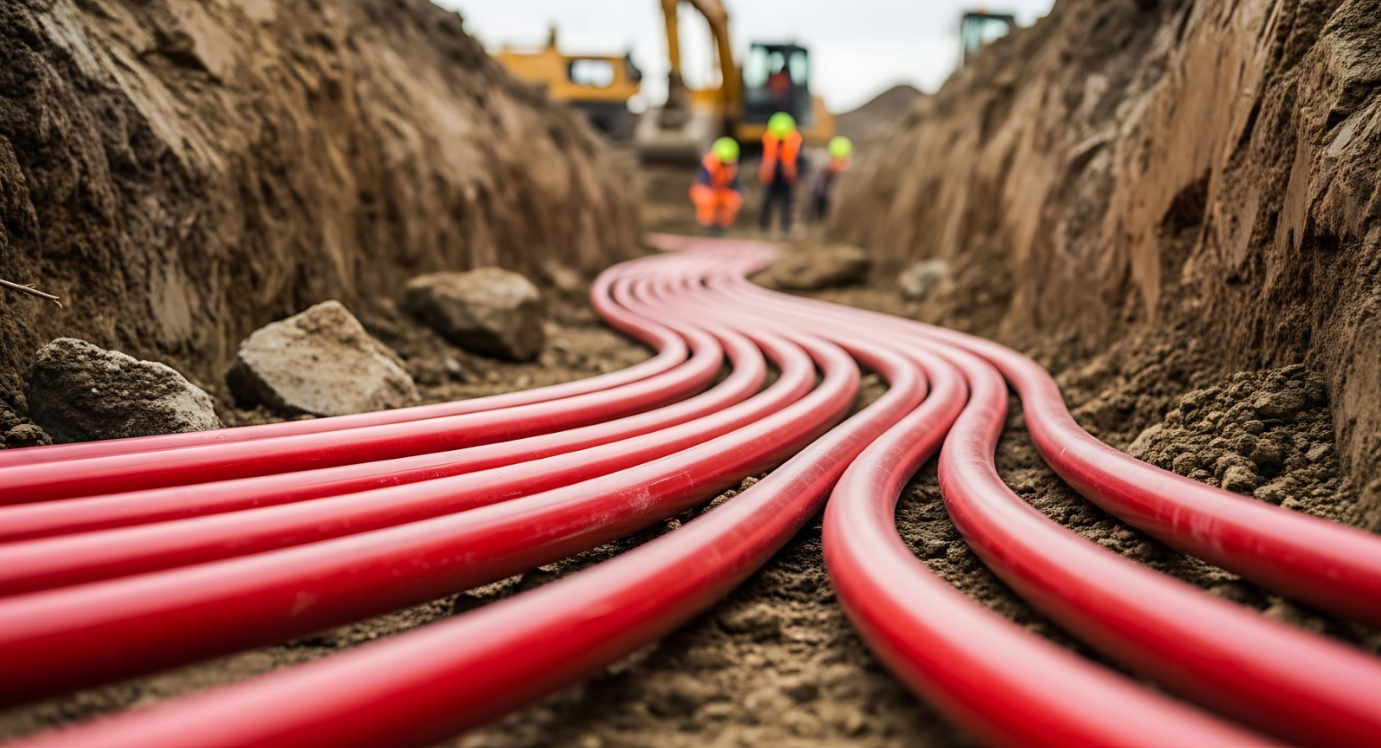
Substation design is undergoing a meaningful shift.
What was once a purely structural decision (how to route and protect cables) is now a balance across labor, safety, access, and lifecycle performance.
At the center of that shift is not simply “lightweight” materials, but the emergence of lighter-weight trench systems that challenge the constraints of traditional heavyweight precast concrete.
From Static Structures to Operational Systems
Historically, trench systems were specified based on compressive strength and load rating. Heavyweight precast dominated because it reliably met those requirements.
That approach is increasingly misaligned with today’s substation environments, which are defined by higher cable density across fiber, control, and communications systems, more frequent access requirements, compressed construction schedules, and persistent labor constraints.
As a result, trench systems are no longer just structural infrastructure. They are operational systems that must enable efficient installation, safe access, and ongoing adaptability.
Rethinking Weight: From Mass to Manageability
“Heavy” has long been equated with durability. In practice, excessive mass introduces friction across the project’s lifecycle by requiring heavy equipment, larger crews, and more complex handling.
Solutions like Plastibeton® trench systems reframe this tradeoff. They are engineered to reduce weight where it matters operationally without compromising structural performance. Polymer concrete delivers higher compressive strength than traditional concrete while maintaining full traffic-rated performance, including H20 and beyond. At the same time, reduced component weight improves handling, access, and installation efficiency.
The shift is from mass-driven design to performance-driven design with optimized weight.
Labor Efficiency Becomes the Constraint
Across utilities and engineering/procurement firms, labor—not materials—is increasingly the limiting factor.
Lighter-weight systems address this directly. Covers designed for safe manual handling reduce or eliminate the need for lifting equipment, accelerate installation, and simplify access for inspection and maintenance. These gains allow projects to be completed with smaller crews and fewer dependencies on specialized equipment.
In constrained labor environments, reducing handling complexity can be as impactful as reducing material cost.
Safety Moves Upstream into Design
As substations become more complex and tightly controlled, safety is no longer confined to installation practices. It is embedded in product design.
Compared to heavyweight precast systems, lighter-weight trenches reduce manual cover lifting risk, limit the use of heavy equipment in confined or energized spaces, and enable safer, more frequent access. Features such as anti-skid surfaces and integrated lifting points reinforce safe interaction with the system.
Safety is no longer a byproduct. It is a specification driver.
Durability Without the Weight Penalty
Substation environments remain unforgiving. Freeze-thaw cycles, moisture, salts, and oils all challenge material performance.
Plastibeton’s polymer concrete is engineered for these conditions. It resists acids, salts, and chemical exposure while maintaining low water absorption, which minimizes freeze-thaw degradation. The result is long-term structural integrity with reduced maintenance requirements.
Durability is no longer dependent on mass. High-performance materials decouple weight from lifecycle reliability.
A System Advantage
Plastibeton systems offer configurable widths, depths, and linear layouts, along with factory-built components to accommodate complex routing without field modification. Integrated accessories, including dividers, cable management, and risers, further extend system functionality, while multiple cover options support varying load and access requirements.
Pre-engineered directional components eliminate the need for on-site forming or improvisation. This reduces installation time, improves fit and finish, and maintains consistent system performance across the network.
Lower Weight. Lower Emissions. Higher Efficiency
Plastibeton trenches support sustainability initiatives by helping utilities reduce the environmental impact of infrastructure deployments. Compared to traditional concrete trench systems, Plastibeton’s lighter weight composite construction allows significantly more product to be transported per truckload. This improved efficiency can reduce fuel consumption, transportation costs, and associated carbon emissions across the supply chain.
Combined with long service life and corrosion resistance, Plastibeton trench systems provide a durable infrastructure solution that aligns operational performance with increasingly important sustainability objectives.
The Bottom Line
The evolution in trench design is not about making systems “lightweight.” It is about eliminating unnecessary weight while improving performance across the dimensions that matter most.
Compared to traditional heavyweight precast, lighter-weight systems deliver equivalent or superior structural performance, faster installation with improved labor efficiency, safer and more accessible infrastructure, greater sustainability benefits, easier handling on the job site, and greater flexibility through custom design and long-term durability without maintenance tradeoffs.
Plastibeton is not simply a lighter alternative; rather, it is aligned with how modern substations are built, operated, and expanded.
Learn more:
- Discover our Energy solutions.
- Learn more about Plastibeton.
- View more on MULTIduct.