May 8, 2026
Is Your Enclosure Slowing You Down? A New Study Says It Might Be
Staying on schedule is one of the toughest challenges in underground infrastructure work. Between tight labor windows, limited equipment availability and pressure to meet service activation deadlines, even routine tasks can cause delays that ripple across an entire project.
One often-overlooked task that could be quietly driving up labor hours is the installation of underground enclosures. A recent white paper from Oldcastle Infrastructure takes a closer look at this critical step, presenting field-tested data that highlights how your choice of enclosure can significantly affect overall project efficiency.
Based on two years of timestamped installation data across 27 U.S. job sites, the study compares the install time of traditional polymer concrete handholes to an alternative: Duralite®, a lightweight composite enclosure system. The results are compelling. On average, Duralite installs 55% faster than traditional boxes—and in some scenarios, the time savings are even greater.
Unlike lab-based studies or controlled simulations, this time study was built on real-world job data from active sites. The analysis focused solely on the installation phase—specifically the time between excavation and backfill—while eliminating external variables like digging conditions, soil type and weather. This approach enabled a true apples-to-apples comparison of how enclosure material and design affect installation speed.
The findings point to a simple but powerful insight: the box you choose can shape your schedule more than you think.
Where the Time Savings Happen
While Duralite’s advantages include durability, load performance, improved crew safety and corrosion resistance, the white paper focuses on where time is actually gained in the field. Three steps stood out as the biggest drivers of faster installs:
- Setting the enclosure body
- Leveling and aligning the unit
- Placing and securing the cover
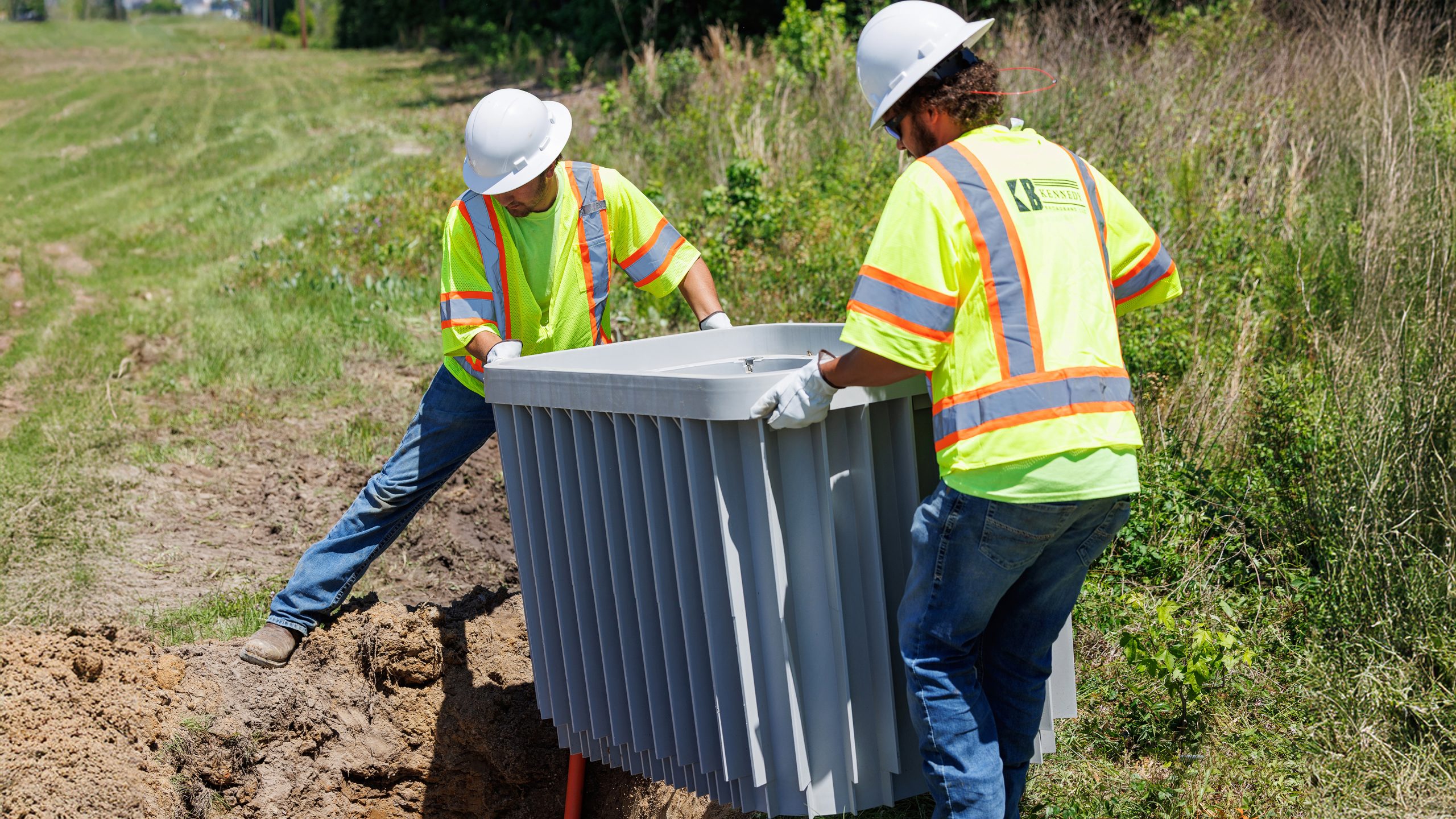
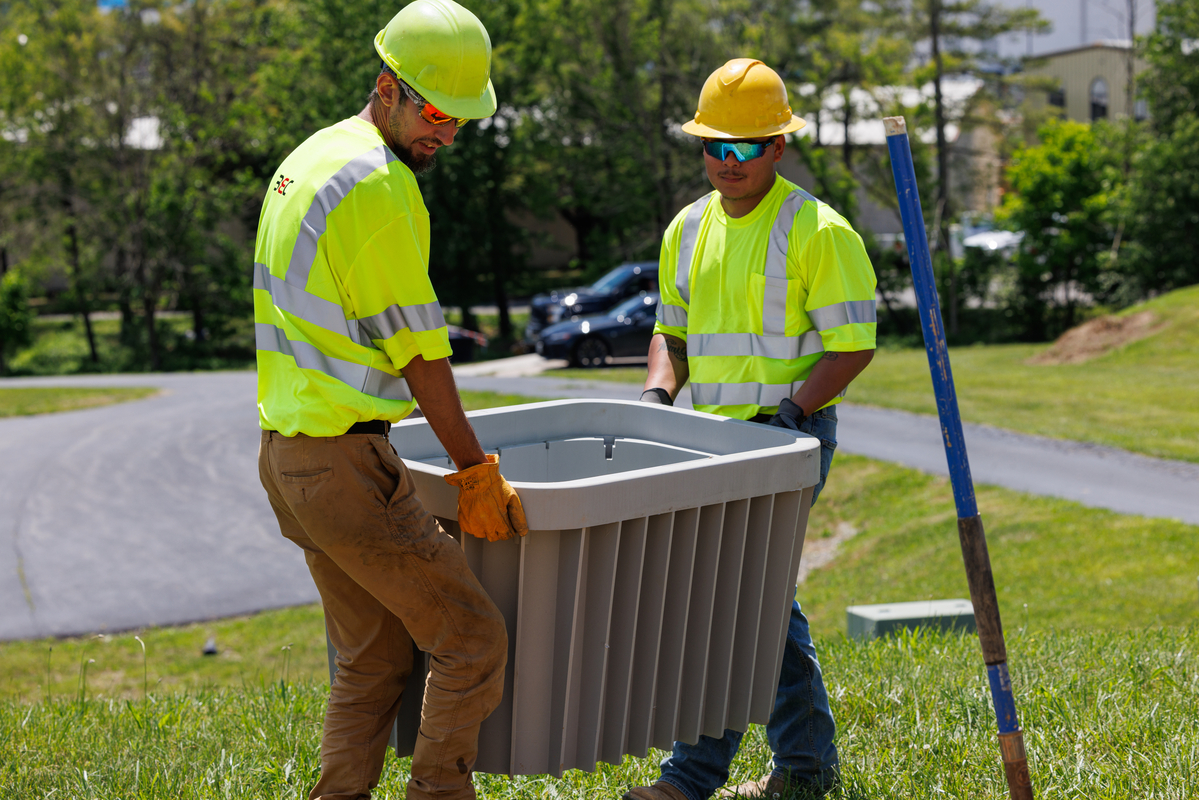
These steps, often made more complex by the weight and rigidity of polymer concrete, are notably faster with Duralite. Its lighter construction allows it to be safely positioned and adjusted by hand, without the need for cranes or other lifting equipment.
That alone can eliminate delays tied to equipment availability and reduce the need to coordinate multiple crews. In the field, that translates to fewer bottlenecks, smoother logistics, more predictable scheduling and safer construction sites.
For contractors trying to make the most of limited labor resources—or trying to squeeze additional work into a compressed window—those are advantages that go beyond convenience.
A New Perspective on a Familiar Process
For engineers, specifiers and project managers, the white paper raises an important question: If one enclosure system installs significantly faster without compromising performance or safety, should it become the new standard?
The study not only validates what many field crews have already observed—it provides a measurable case for rethinking how projects are planned and executed. It also lays the groundwork for broader productivity conversations, from reducing equipment mobilization to increasing daily output with smaller crews.
In a time when every hour counts, material decisions that drive efficiency aren’t just helpful, they’re essential.
Curious about the full findings? Download the white paper to explore the data, examine the methodology and see where the real opportunities for improvement may lie.
Built to perform. Engineered to last.
Learn more:
- See how Duralite enclosures simplify installation and stand up to the demands of the jobsite
- Download our white paper