May 12, 2026
BioPod helps Washington city deliver award-winning sustainable stormwater management
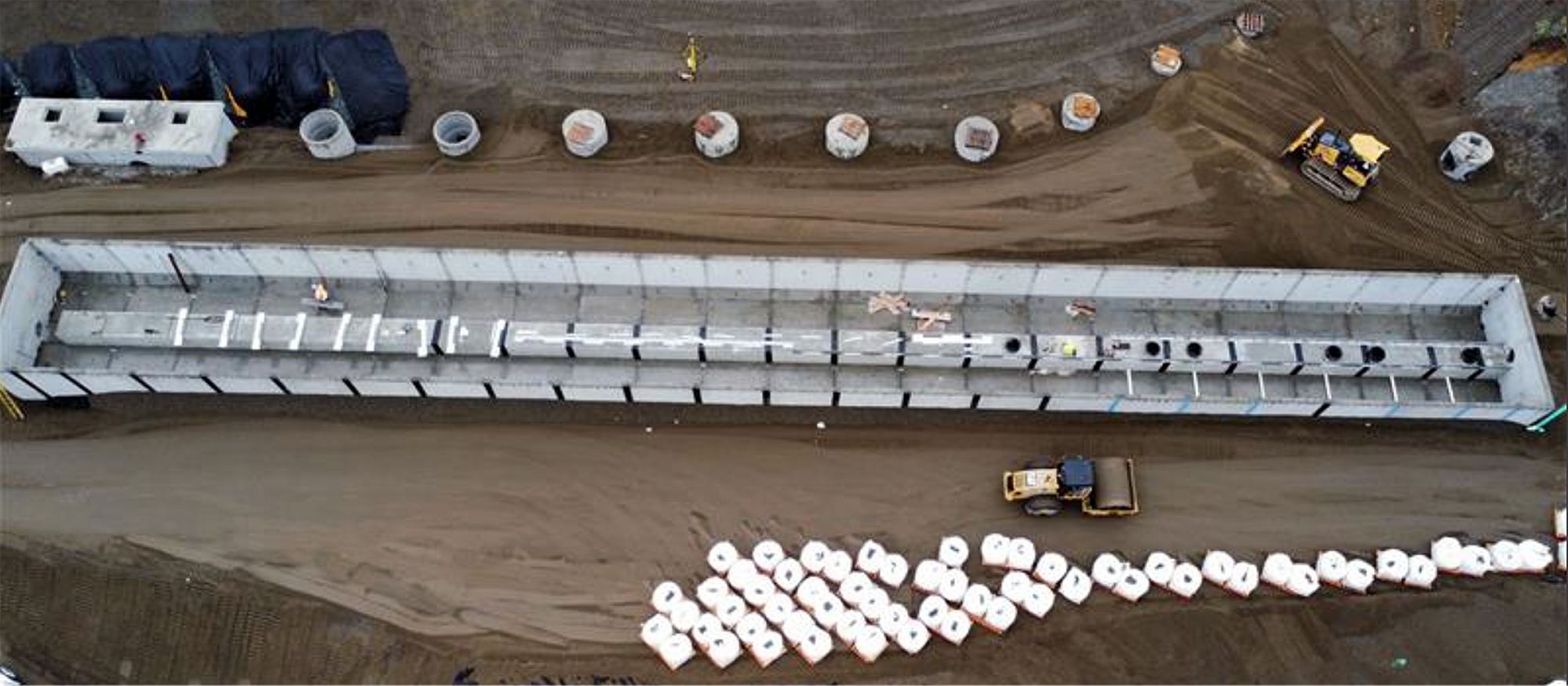
Renton, WA turned to BioPod™ to help deliver an award-winning sustainable stormwater management project.
Background
The City of Renton, WA, is a suburb of Seattle that sits on the shore of Lake Washington at the mouth of the Cedar River.
The city receives around 37 inches of rainfall each year, and the highly urbanized Renton Highlands area had no drainage connection to a waterway and few infiltration pipes. As a result, the city obtained a temporary drainage easement that enabled it to discharge stormwater from this area into Upper Balch Pit, a local gravel pit.
This approach served the city for some 30 years, but with the city experiencing persistent and damaging flooding along Monroe Avenue—in some instances at historic levels—even with two additional overflow pipes, it became clear that the gravel pit had reached the point where it was no longer viable for the long term.
In addition, city officials were aware that if the drainage easement were lost then a large, miles-long stormwater drainage pipe would have to be constructed to convey surface water down to the Cedar River—a project that would be costly and extremely disruptive to local residents and infrastructure.
Challenge
The city needed a new, permanent sustainable stormwater drainage system that could accommodate surface water flows from over 250 acres of land in Renton Highlands, employing a combination of treatment and infiltration in order to recharge the Cedar River aquifer while preserving its water quality.
In addition to dealing with typical annual precipitation levels, it needed to be designed to handle the large volumes associated with 100-year and 500-year storm events, assessed at 1% and 0.2% annual probability respectively.
Further, it had to operate in a way that preserves the infiltration capacity of the local soils for up to 100 years.
Solution: sustainable stormwater management
Having obtained $10.8M of grant funds from the Washington Department of Ecology and $479K from the King County Flood Control District, the city engaged Otak. The engineering consultancy evaluated a range of options with the city, including ponds, vaults, and direct discharge to the Cedar River, but ultimately the project team settled on a new small-footprint stormwater infiltration facility that would be built on the site of the old gravel pit.
Incorporating a large infiltration chamber gallery, the facility was designed to divert flows in order to accommodate higher-volume storm events, and employed a treatment train with pretreatment to capture and remove total suspended solids (TSS) and an underground BioPod™ system to provide the biofiltration required to preserve the quality of the infiltrated water.
BioPod was the preferred water quality solution due to its:
- High-volume flow treatment, with high levels of pollutant removal
- High permeability media, with underdrain
- GULD for Basic, Metals and Phosphorus treatment
Using a custom three-sided precast concrete box culvert from our Auburn, WA facility, the BioPod system was roughly a third of the size of an Olympic swimming pool—around 10 times smaller than typical biofiltration systems—enabling Otak to minimize land take and site footprint, while still delivering the necessary 13 cfs / 5,824 gpm treatment flow rate capacity to accommodate peak flows.
The project also used cement from Ash Grove, and aggregate and recycled asphalt paving from ICON Materials, both also CRH companies.
Impact
Completed ahead of schedule in January 2026, the Monroe Avenue Infiltration Facility is one of the largest treatment facilities in the state of Washington, and handles runoff from some 260 acres of developed land, using its 2.2 acres of underground infiltration chambers to return stormwater to replenish the Cedar River aquifer.
In addition to delivering effective, sustainable stormwater management, the project has also provided a local community asset, a public green space that represents a valuable new local amenity.
The project won in both the Environment $5-25M and Sustainability categories in APWA’s Washington Chapter 2025 Project Of The Year Awards, and also won a Gold Award for Uniqueness and/or Innovative Application of New or Existing Techniques from ACEC-WA.
“The result really highlights our large-scale water treatment ability. We can create any size water treatment solution, and we have a vast ability to customize, even in a state like Washington, where regulations are most stringent.”
– Anna Deiters, Solutions Engineer Team Lead, Oldcastle Infrastructure
Learn more
- Find out more about BioPod
- Schedule a lunch and learn with one of our stormwater experts
- Learn more about CRH’s Ash Grove and ICON Materials companies