January 5, 2026
Georgia city uses new AI tech to target water line repairs
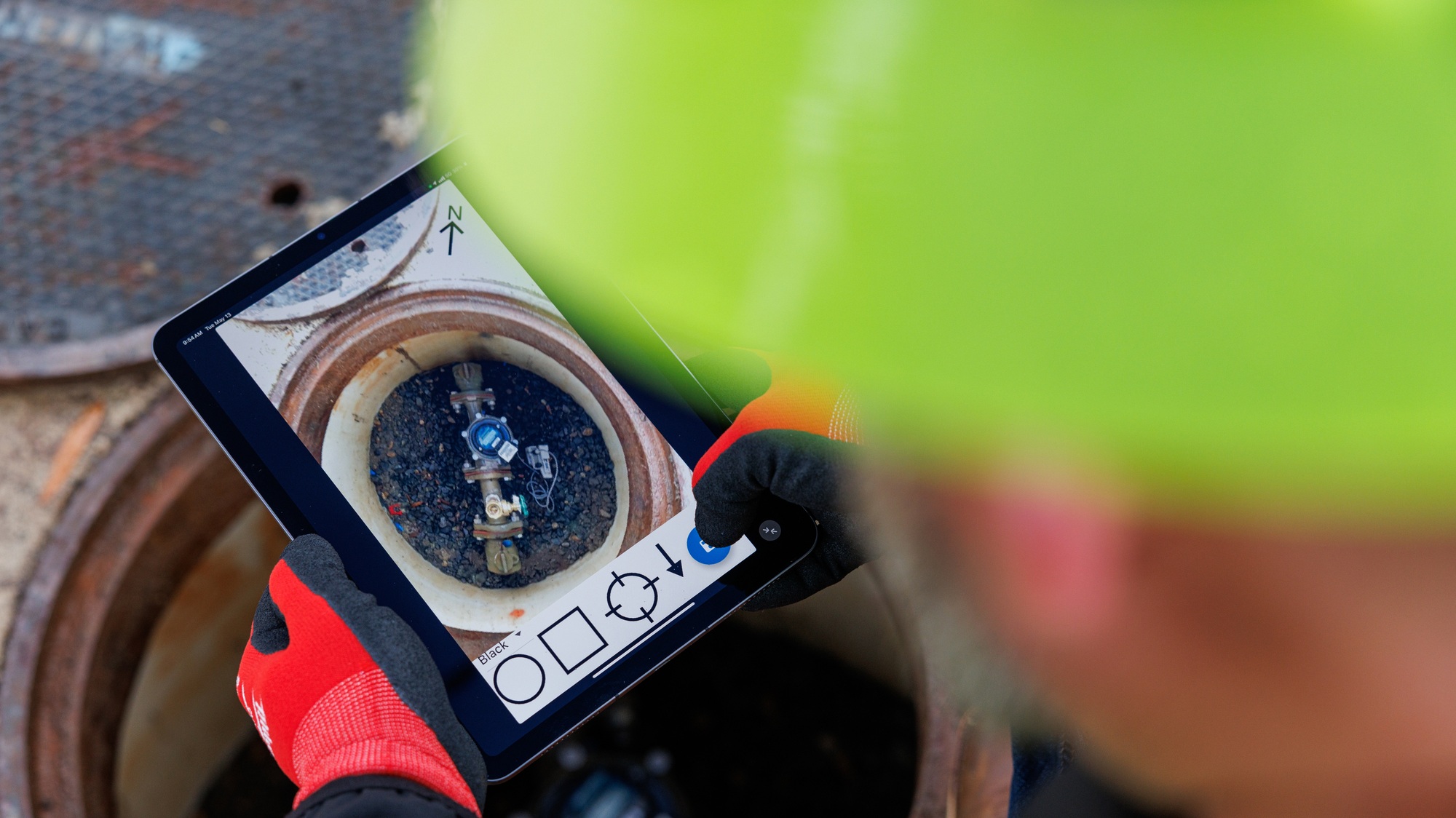
Using AI to target water line repairs
Losing water to undetected leaks, one forward-looking Georgia city used AI technology to target downtown water line repairs and address an annual revenue loss of up to $238K.
The challenge: targeting water line repairs
When it comes to non-revenue water (NRW)—water lost to leakage after having been abstracted, treated and pumped—Georgia is one of the more progressive states in the US, having required utilities to conduct annual water loss audits since 2012.
As a result, municipal leaders at one Georgia city knew that the water distribution network was losing water—a recent water loss audit indicated that its NRW loss could be as high as 25%—but what they didn’t know was where the leaks were.
With a water supply network comprising over 1,000 miles of pipe and over 50,000 active and inactive connections, the local water utility distributes over 12 bn gallons of clean water every year. Like many utilities across the US, however, this water infrastructure is aging, and the miles of pipe and thousands of connections meant that reliably detecting and locating leaks was a challenge.
The solution: CivilSense™ real-time leak detection
Following a consultation with Oldcastle Infrastructure’s smart water consultants, city officials identified CivilSense™ real-time leak detection as a potential solution.
CivilSense™ is the only AI-powered water asset management solution to combine predictive risk assessment with targeted real-time leak detection, and the city’s water utility opted to deploy the real-time leak detection capability on a focused, high-priority area of the network.
They selected a 20-mile section of the water distribution network covering around 100 blocks in the heart of city. The area under investigation was a business district containing elements of critical city infrastructure, which would result in significant economic and civic disruption in the event of a major line break.
CivilSense™ field experts deployed 202 acoustic sensors across the targeted section of the network, and created a total of 650 investigation sessions. These investigation sessions gathered acoustic data that was fed into the CivilSense™ AI for analysis.
The AI, powered by FIDO Tech, performed comparative analysis using its curated library of more than 2.3 million acoustic signatures to generate Waypoints that indicate potential leaks in the system.
What is a Waypoint?
Field teams used the results of this analysis to redeploy sensors upstream and downstream of each of the leaks, using cloud computing to validate and pinpoint the location of each leak via a technique known as correlation. The leaks were then marked up to direct water line repair activities.
The outcome: water line repairs to save up to $239K
The CivilSense™ team created 650 investigation sessions, from which the AI generated 52 Waypoints. Of these Waypoints, CivilSense™ correctly determined that 19 were previously undetected leaks in the targeted section of network, and pinpointed their locations for repair.
The leaks were discovered across a range of network infrastructure assets, including distribution mains, meter valves and vaults, curb stops and hydrants. The largest leak detected was on a main line valve, and was assessed to be losing around 10 gallons per minute.
In total, applying AWWA nominal volumetric values, the leaks were assessed to be losing a combined volume of 93.7 gallons per minute, which equates to around 49.2M gallons of water every year.
With local residential and commercial water rates ranging from $2.00 to $4.86 per thousand gallons, this represents lost revenue of between $98K and $239K every year. Add in variable production costs, and the real losses are far higher.
By revealing this loss and directing repair teams to conduct targeted water line repairs to address the leaks, CivilSense™ is helping the city to address aging infrastructure issues, develop water supply resiliency, and improve its finances.
Learn more
- Learn more about CivilSense™ AI-driven leak detection
- Read our real-time leak detection FAQ
- Discover how CivilSense™ helped Hailey, Idaho to save 59M gallons a year