January 5, 2026
Sludge Degritting Protects Award-Winning Lorton, VA Plant
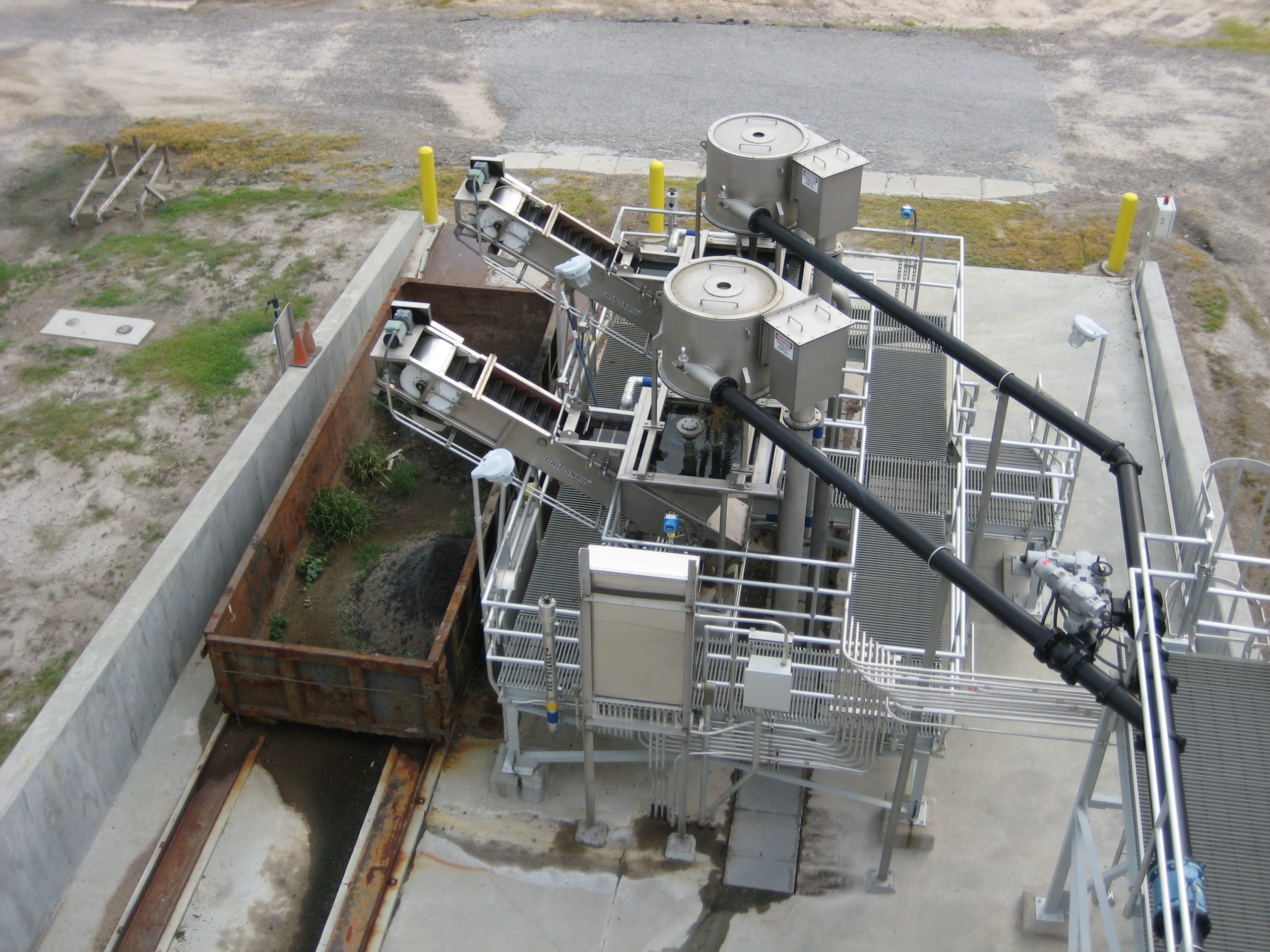
Protecting an award-winning plant
The Noman M. Cole, Jr. Pollution Control Plant (NMCPCP) in Fairfax County, Virginia, just west of Washington, D.C., is one of the most recognized wastewater treatment facilities in the United States.
Background
The plant has earned 19 consecutive Platinum Peak Performance Awards from the National Association of Clean Water Agencies—a distinction achieved by fewer than a dozen of America’s 16,500 wastewater treatment plants. NMCPCP discharges into a tributary of the Potomac River, which supplies drinking water for most of the six million people living in the D.C. area.
In addition to traditional wastewater treatment, NMCPCP operates a robust water reuse program. The plant initially treats water to a level suitable for irrigation and industrial applications, and 2-3 MGD (7.6–11.4 MLD) of this pretreated gray water is used internally for plant operations. A pipeline also delivers reclaimed water to Covanta Fairfax, Inc., where approximately 560 million gallons are used annually to operate cooling towers at their 80 MW energy recovery plant. Reclaimed water is also used to irrigate the nearby Laurel Hill Golf Course and county parks, replacing the need for 400 million gallons of drinking water each year.
The Problem
Despite its advanced operations, NMCPCP had no headworks grit removal system. An aging cyclone/screw classifier sludge degritting system was ineffective at removing the large amounts of grit present in sludge. This outdated system provided little protection and was nearing the end of its usable life.
At this facility, excess biosolids are dried, incinerated, and the resulting ash is hauled to a landfill for disposal. Since the cyclone/screw classifier failed to capture grit, significant amounts remained in the ash, increasing landfill volume, handling, and hauling costs, ultimately driving up operational expenses. Cyclone/screw classifier systems typically remove grit 212 microns and larger, leaving finer particles in the 75-212-micron range to pass through and impact downstream sludge treatment processes. Additionally, the system required frequent liner changes, causing costly maintenance and downtime. The plant needed a more robust technology capable of removing finer grit particles and reducing operating and maintenance costs.
The Solution
NMCPCP partnered with Oldcastle Infrastructure to conduct a field trial of the SlurryCup™ and Grit Snail® Advanced Sludge Degritting systems, engineered by Hydro International, to verify its performance in this challenging application. After the trial delivered outstanding results, the plant selected six 42-inch (1.1 m) SlurryCup units and three 2 yd³/hr (1.5 m³/hr) Grit Snail quiescent dewatering escalators. Since installation, the system has significantly reduced maintenance and operational costs while protecting mission-critical biosolids operations from the damaging effects of grit.
The SlurryCup and Grit Snail offer several advantages. It removes over 90% of particles as small as 75 microns (with a specific gravity of 2.65) and captures up to 20 times more grit than a cyclone/screw classifier. Its first-flush solids handling capacity minimizes grit loss, and the classified grit has low organic content (less than 20% volatile solids), reducing disposal volume. The system produces grit with 60% total solids content, operates as an enclosed system for improved odor control, and significantly reduces operations and maintenance costs.
The Outcome
The SlurryCup and Grit Snail continue to provide exceptional performance, protecting NMCPCP’s sludge treatment processes and reducing costs associated with grit-related maintenance and landfill disposal. By implementing advanced sludge degritting technology, NMCPCP continues to uphold its reputation for environmental excellence while improving operational efficiency.
Learn more
- Discover the SlurryCup™
- Read the SlurryCup™ product brochure
- Learn more about the Grit Snail®
- View the Grit Snail® product brochure