June 23, 2026
Insights on Grit Management, Plant Performance, and the Future of Scalable Grit Separation: Q&A with Dana Casbeer, Product Manager
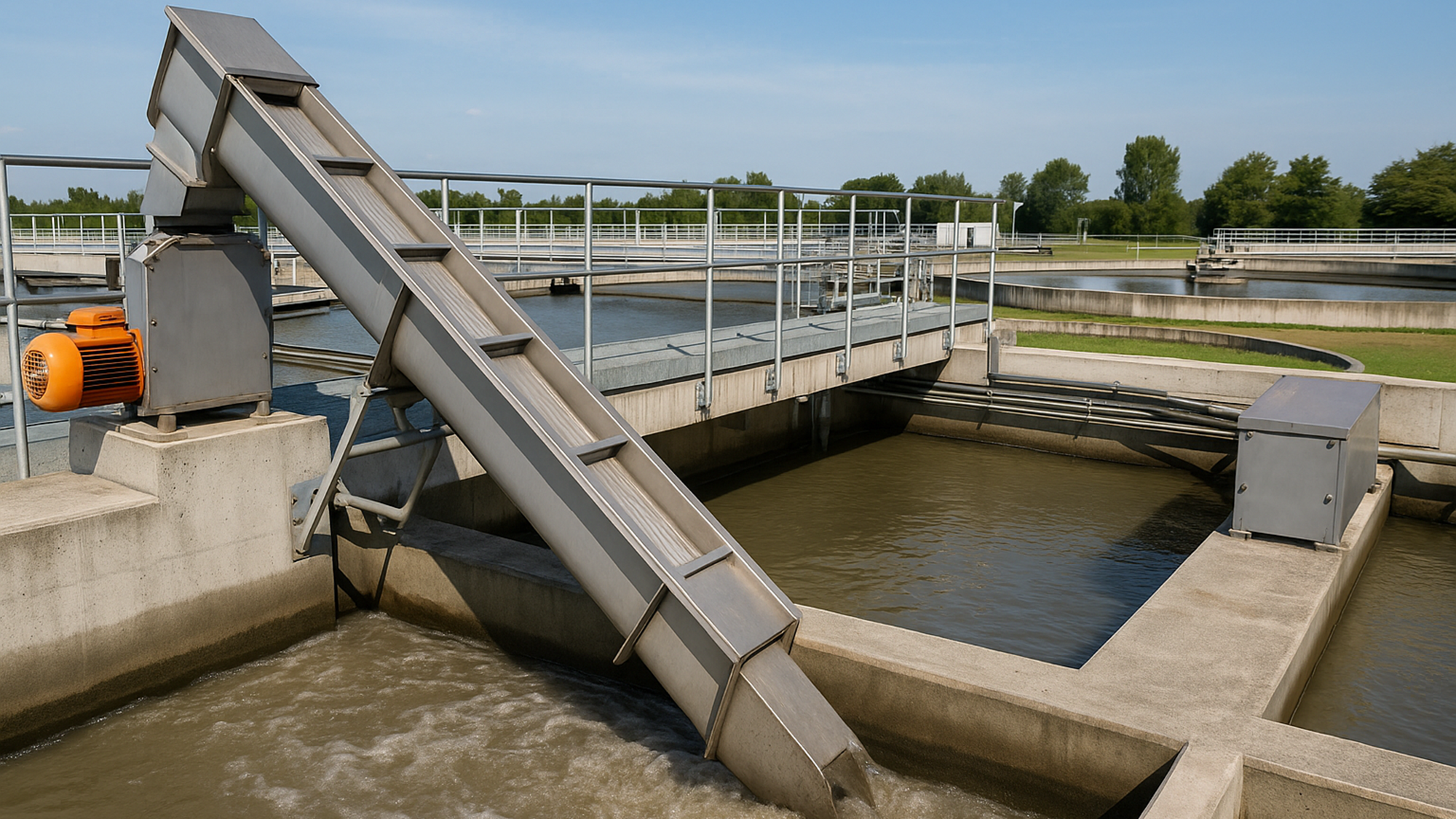
As wastewater treatment facilities face increasing pressure from population growth, aging infrastructure, and tighter regulations, effective grit management has never been more critical.
In this Q&A, Dana Casbeer, Product Manager at Oldcastle Infrastructure, shares expert insights on the challenges of traditional grit removal, the operational risks of underperformance, and how innovative, scalable solutions like the HeadCell® are helping municipalities improve plant performance and reduce long-term costs.
Q: Tell us about your background in wastewater.
A: I’m a mechanical engineer with more than 30 years of experience in wastewater treatment. I began my career in the offshore oil and gas sector, developing EAOP (electrochemical advanced oxidation processes) and hybrid MBBR (moving bed biofilm reactor) based wastewater treatment systems, and primarily designing highly spec-driven packaged wastewater treatment units for offshore platforms and marine vessels. A few years ago, I transitioned to municipal wastewater with Hydro International, which is now part of Oldcastle Infrastructure. My current focus is ensuring that our advanced grit management systems are high-performing, reliable, and competitive in the municipal market.
Q: Why is grit management so critical in municipal wastewater plants?
A: Grit is a highly abrasive material composed of particles like sand, coffee grounds, eggshells, and other hard substances that pass through initial influent screening. If not removed effectively at the beginning of the plant’s treatment process, it can:
- Abrade pumps and mechanical equipment
- Clog pipelines
- Buildup in basins and low-flow corners
- Reduce biological treatment efficiency
- Increase maintenance costs
Even worse, wastewater grit typically carries organic matter attached to it, and when this organic-laden grit is allowed to build up in slow-moving areas of the process, it can become septic, meaning the wastewater around this grit can enter an anaerobic state where all beneficial oxygen has been depleted but microbes continue to decompose organic matter. This often results in an unfavorable condition that can produce foul-smelling hydrogen sulfide (H2S) gas, leading to significant operational and safety risks.
Poor grit management isn’t just an inconvenience—it’s a lifecycle cost issue.
Q: What are the ripple effects of ineffective grit removal?
A: The ripple effects are significant:
- Accumulated grit can reduce available treatment volume in aeration basins and digesters
- Plants can fail regulatory effluent parameters
- Operators must drain tanks and manually remove the buildup
- Plants risk extended shutdowns
- Unpleasant odors, either from septic conditions or ineffective organics removal from landfill-bound grit
- Unscheduled downtime
A process pump failure caused by grit during a peak flow event can trigger fines ranging from $5,000 to $50,000 per day, depending on the severity of the environmental violation. Pump failures can result in NPDES permit violations under the Clean Water Act (CWA), with fines depending on the severity and duration of the incident, as well as whether the violation is considered negligent, knowing, or repeated.
Digesters are often a place where grit that has passed downstream will accumulate. The cost to remove and dispose of a cubic yard of grit from a digester can be exponentially higher than that of effective headworks grit removal. It is far more cost effective to remove grit at the headworks rather than incur the damage and costs of fighting grit throughout the plant.
Q: How has grit traditionally been managed, and what are the flaws?
A: Traditional systems include:
- Detritor Tanks: These tanks are similar to shallow clarifiers but require significant maintenance due to the quantity of moving parts. These systems require more space than other systems, so they fell out of favor in the 1980s. Typical removal rates for detritor tanks are 40–60%.
- Aerated grit chambers: These use air to agitate flow but still struggle to fully separate organics. Especially with fine-bubble aerators, finer grit can settle and accumulate around the aeration discs, eventually covering them and reducing system efficiency while increasing the blower energy required to maintain proper operation. Typical removal rates for these units are 30–50%.
- Mechanically induced vortex systems (MIVs): These use rotating paddles to create a low-energy vortex for separation. They often include heavy mechanical components that require routine maintenance. These systems can also struggle during peak wet-weather flows, when grit load is highest. Many are not efficient at capturing finer grit specified by modern plants.
The core issue: Traditional grit removal systems were designed to capture particles around 212 microns, based on early textbook definitions. However, many treatment plant specs today call for finer grit capture. These systems often cannot adapt to variable inlet flow conditions. During high-flow events, grit can flush downstream, causing equipment damage and critical pipeline blockages.
Q: How does the HeadCell® differ from other solutions in the market?
A: The HeadCell® uses a non-mechanical, hydraulic vortex-driven principle—no motors, no paddles, no rotating assemblies. Key differentiators include:
- Operates entirely hydraulically, using less than a foot of headloss
- Small footprint with short influent/effluent channels
- Provides up to six times more settling area per square foot of plant space
- Patented influent flow distribution duct evenly distributes flow across multiple stacked trays
- Eliminates short-circuiting (a major issue in other vortex units)
- Removes 95% of grit particles equal to or greater than 75 microns at design flow
Because it is tray-based and modular, plants can scale capacity by adding more trays or tray stacks.
Q: What makes the HeadCell® future-proof?
A: Three key factors:
- Expandability: Plants can add trays as flows increase. In some cases, trays can be installed and “blinded off” until needed.
- Small footprint: Provides high surface area performance in a compact space, especially compared to equivalent MIV units.
- Maintainability: The stack can be unbolted and removed quickly. No heavy motors, leading to lower operational and lifecycle costs.
This is a major advantage for growing communities.
Q: How does Oldcastle Infrastructure differentiate itself in the HeadCell® category?
A: Oldcastle Infrastructure holds the original lineage of the technology. While some competitors produce inferior clones, they lack:
- 45+ years of operational knowledge in vortex
- Hydraulic separation
- Computational Fluid Dynamics (CFD) modeling expertise
- Localized grit performance data across regions
- Extensive lab and field validation
- Guaranteed fine grit capture performance
Understanding regional grit characteristics is critical; for example, Florida grit differs significantly from grit in northern states.
Q: Is the HeadCell® suitable for retrofits?
A: Absolutely. For plants that:
- Can’t add new concrete basins
- Have ineffective aerated grit chambers
- Need performance upgrades without major construction
We offer:
- Freestanding stainless-steel units
- Elevated or packaged systems
- Expandable configurations
These reduce civil work and enable modernization without major structural changes.
Q: What drives municipalities to act now?
A: Plants typically seek upgrades when:
- They’re underperforming
- Population growth increases flow
- Infrastructure ages
- Regulatory pressure increases
The cost of delay compounds:
- More downtime
- Higher maintenance
- Greater regulatory risk
- Reduced biological efficiency
Grit issues rarely appear overnight; they build over time. Underperforming systems that remove only 30-60% of incoming grit result in a 100% aggravation factor for operators and maintenance teams.
Learn more:
- Discover our Advanced Grit Management Solutions.