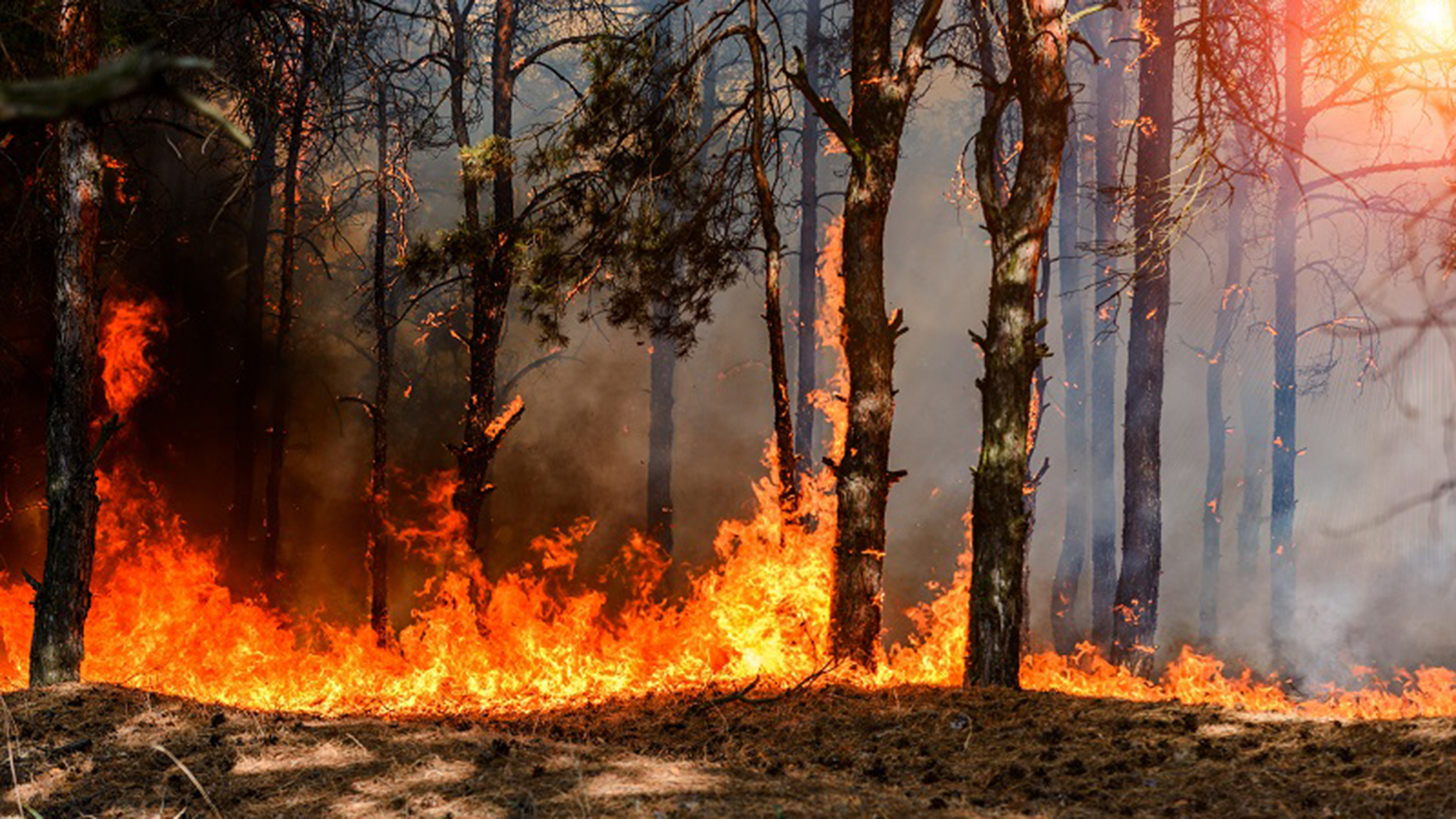
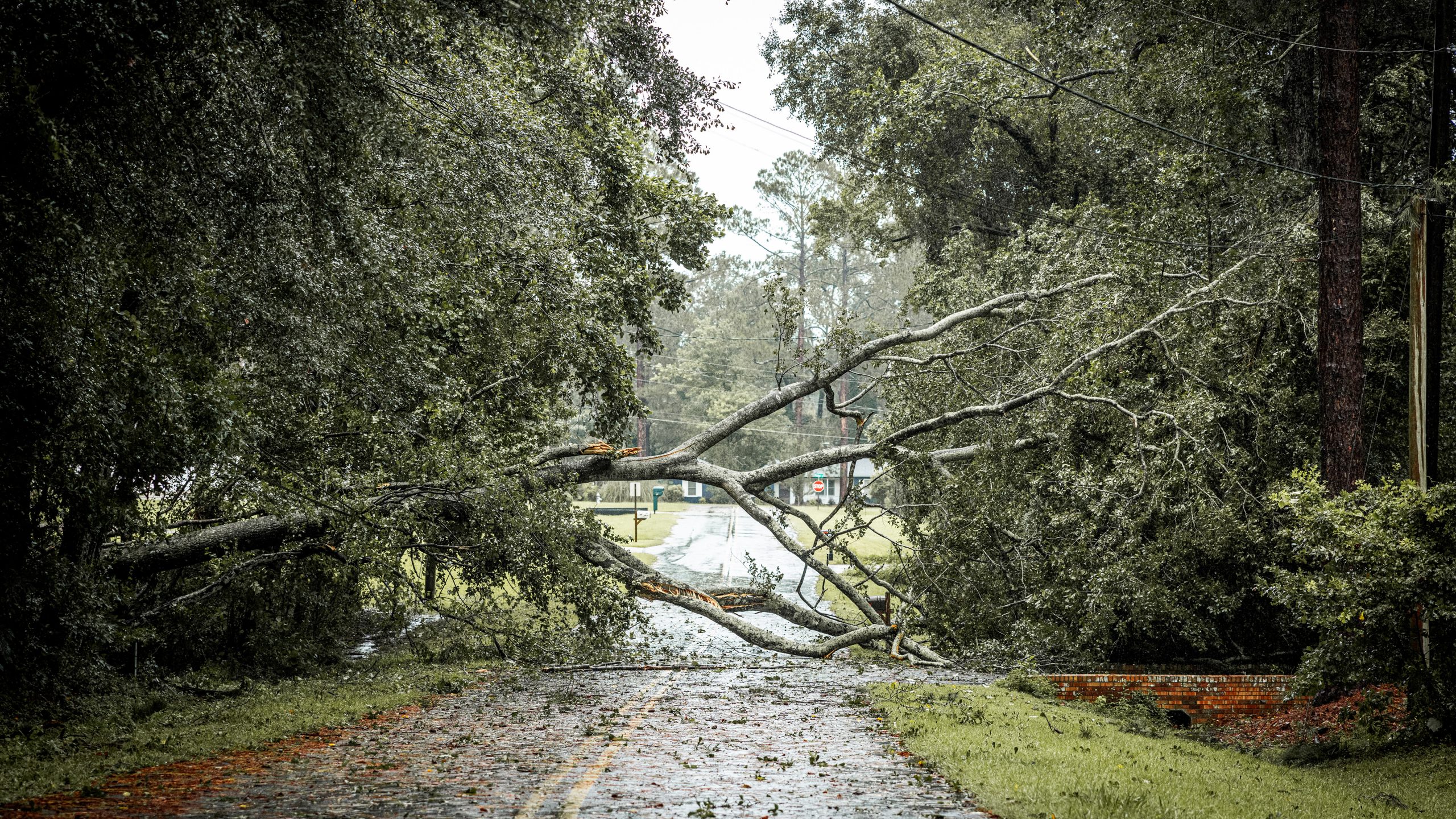
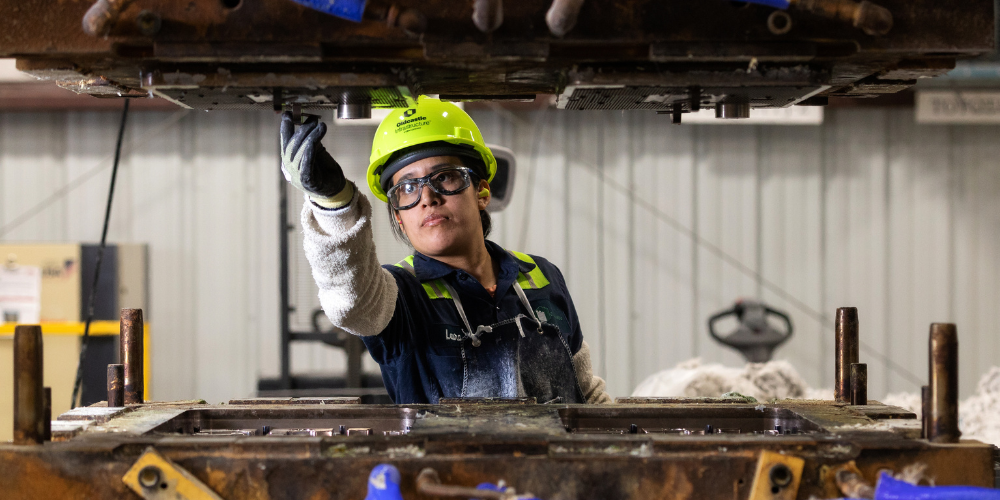
On January 23, 2025, the U.S. House of Representatives passed the Fix Our Forests Act, a bipartisan bill designed to reduce the risk of devastating wildfires. This legislation will help electric cooperatives by expediting federal approval for grid hardening and allowing the removal of hazardous vegetation that could fuel fires. Both measures aim to prevent future wildfire disasters.
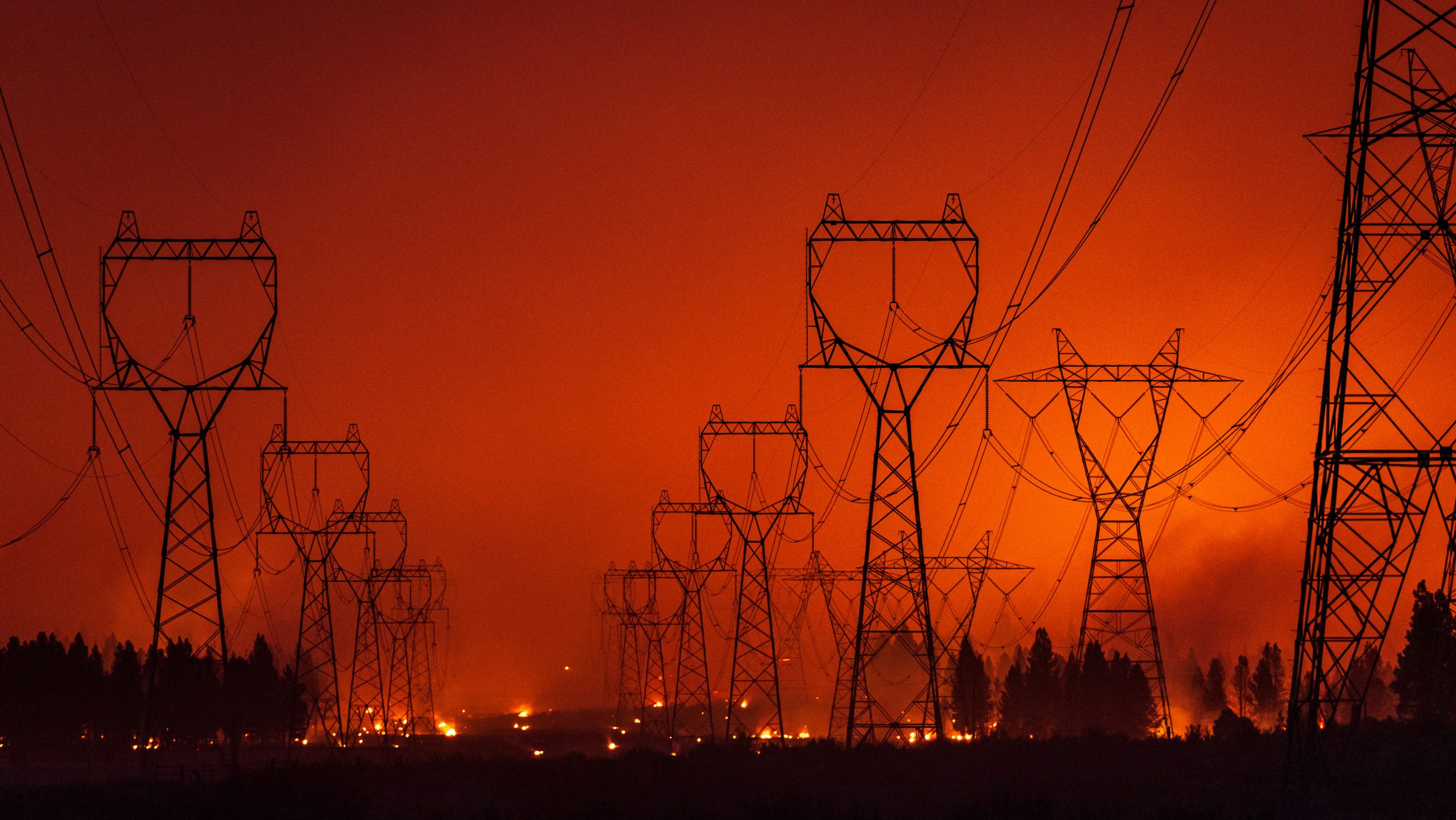
In recent years, the U.S. has faced catastrophic wildfires causing billions in damages and displacing thousands of people. Many of these fires have been linked to electrical equipment failures or power lines sparking in areas overrun with vegetation. For instance, the 2018 Camp Fire in California, sparked by electrical transmission lines, tragically claimed 85 lives and destroyed the town of Paradise. Similarly, the 2023 Maui wildfires and the 2025 Palisades wildfires highlighted how failures in electrical systems and vegetation management can result in significant loss.
The Fix Our Forests Act aims to streamline the process for electric cooperatives to obtain federal permits to modernize their systems and enhance their resistance to wildfires. Currently, cooperatives can only remove vegetation within 10 feet of power lines and rights of way. This bill expands that limit to 150 feet, allowing them to proactively clear hazardous trees that could fall and spark fires.
As wildfire activity and extreme heat waves become more frequent, electric utilities must prioritize fire resistance when selecting underground enclosures, especially in high-risk areas. The ANSI/SCTE 77 guidelines include flammability testing (Section 6.5) and internal equipment protection (Section 6.6) to assess how enclosures withstand fire exposure. Flammability tests (ASTM D635) measure how easily a product ignites and burns, while internal protection testing (USDA RUS 7 CFR 1755.910) ensures underground equipment remains functional in the event of a fire above the enclosure.
Oldcastle’s Duralite® enclosures exceed all industry standards for fire resistance and internal equipment protection. They maintain safe internal temperatures even when exposed to brushfire conditions exceeding 1,000°F. Duralite® has undergone third-party testing to meet GR-902-CORE, SCTE 77 2023, and USDA RUS 1755F 910 standards. By choosing fire-resistant enclosures, utilities can ensure long-term protection of underground assets, minimizing the risk of wildfire-related damage.
Bill Overview:
- Introduced by Rep. Bruce Westerman (R-AR) and Rep. Scott Peters (D-CA)
- Passed the House with bipartisan support (279-141)
- A previous version of the bill passed last September, but the Senate adjourned before acting. The current version now awaits Senate approval, which could be key in preventing future wildfire catastrophes.
The importance of stormwater maintenance
When it comes to stormwater treatment, much emphasis is given to performance. Testing verification and protocols such as New Jersey’s NJCAT and Washington’s TAPE assess the pollutant removal rates of stormwater separators and filters, and they provide valuable like-for-like comparisons that assist engineers in specifying the most effective treatment solution for the site.
However, the stated performance of any system is contingent on the operating condition of that system.
The Prussian general Helmuth von Moltke once suggested that “no plan survives first contact with the enemy”, and I think a similar principle may be applied here: no unmaintained stormwater treatment system survives extended contact with the real world.
What do I mean by that? Simply put, a typical surface water treatment system is designed to capture and remove pollutant materials from stormwater. This ranges from trash and gross solids to nutrients, heavy metals and hydrocarbons, all while having defined storage capacity for these materials. If left unattended, it will eventually fill and its capacity to store pollutants will be lost. Its performance will drop to zero, and it could eventually create a flood risk by preventing water from flowing at all.
All stormwater systems need to be maintained—green or grey, natural or engineered—and ironically, the better the system performs, the faster it will fill up.
So while performance is the fundamental characteristic of any stormwater treatment system, without regular maintenance, that performance eventually means nothing.
Maintenance: a shared responsibility
Responsibility for the operation and maintenance of a surface water treatment system ultimately lies with the site owner, but they are often unaware that they even own such a system.
The consultants, design engineers and contractors who deliver the project are custodians of the site before and during development, and as such they share a duty to ensure that the site that they pass on meets all necessary regulations—now and in the future.
Engineers in particular are uniquely placed to position a site for long-term environmental compliance. The lifetime of a stormwater treatment system is measured in decades, so the selection of that system will determine how effectively stormwater is managed on the site for many years.
The engineer has a delicate task, having to balance client expectations against regulatory compliance and cost effectiveness against performance. It would be easy to sacrifice long-term performance for short-term benefit. Fortunately, however, modern systems such as the Hydro-Shield™ Advance hydrodynamic separator are increasingly engineered to operate in a sweet spot that provides affordable high-performance treatment with quick, easy maintenance.
Contractors also bear responsibility for handing over a site that is optimized for effective long-term stormwater management, and they can benefit from doing so. More and more construction companies are recognizing that sustainable development and environmental stewardship are valued by shareholders, employees and the communities in which they live and work. Demonstrating that procurement decisions have been made with sustainability in mind has both environmental and commercial benefits.
How to maximize stormwater treatment operating efficiency
Maintenance is often thought of as a post-install responsibility, but engineers and project owners should keep operating efficiency and system lifetimes in mind from the very start.
Good project operation and efficient maintenance begin with design and continue through installation, and these aspects are influenced by decisions made and actions taken early on in the project.
Adopting the following three principles at early and intermediate stages of the project will help to maximize the operating efficiency of the stormwater treatment systems for the lifetime of the site development.
Design stormwater with maintenance in mind
Stormwater regulations persist for the lifetime of the site, so engineers should optimize the design of the site so that the site owner is enabled and empowered to remain compliant with regulations and protect the local environment from surface water pollution for the lifetime of the site development.
Clearly engineers approach the design process with regulations and performance at front of mind, but optimizing for lifetime performance means going beyond that. Not only should the stormwater management systems themselves be quick, easy and safe to maintain, but the site overall should accommodate maintenance in a way that does not impinge on that.
Site features and components should improve—or at the very least not hinder—access for ongoing maintenance. Vehicle access should be safe and secure, for example, and wherever possible, maintenance access points should be sited in such a way that maintenance vehicles do not block or impede road users or pedestrians.
Safety should also be paramount. Maintenance work can be risky, so particular attention should be paid to systems and features that remove, minimize or mitigate risk to maintenance workers and the public. Access to stormwater systems should be quick and simple, and engineers should prioritize systems that limit the time that maintenance personnel spend in confined spaces or operating machinery. Ease and speed of maintenance are key.
Develop an effective maintenance plan
Site plans governing the operation and maintenance of surface water management systems on site are an essential tool for the owner, engineer and contractor alike—and in fact may be required by local planning regulations.
As part of the site development process, the engineer and contractor should develop a maintenance plan or operation and maintenance (O&M) manual. This document will provide site owners with all the information that they need in order to monitor, clean, repair or replace any parts of their stormwater management system necessary to remain compliant.
Indeed, the EPA recommends that any stormwater maintenance plan clearly defines who is responsible for maintenance, what maintenance activities are required and how frequently they are carried out, what level of funding is required, and so on. Individual states may also provide their own recommendations or templates based on local requirements.
The plan should provide a site owner with all necessary information required to inspect, operate and maintain stormwater management infrastructure. This should include maintenance requirements for component parts, schedules for inspections and site visits and instructions on how to report and record repairs.
The plan can also help the owner budget for the required maintenance, to prevent any financial surprises down the line. Most manufactured treatment devices have O&M manuals that can form the basis for such a plan.
This plan should form part of a site handover, giving owners a clear step-by-step guide to maximizing system performance and operating efficiency for the duration of its lifetime.
Use handover as an opportunity to add value
Stormwater treatment systems are often one of the first components of a development to be installed, sometimes a number of years before completion of the overall project. Typically they are underground, and the owner is likely to be distanced from the project due to there being a substantial number of other parties involved. When it comes time to take ownership of the site they are likely to have a range of other competing priorities.
As the subject-matter experts, prior to and during handover, consultants and designers should take the opportunity to underline to the owner the importance of carrying out the correct maintenance of the system. Proper maintenance supports both the expected performance and lifespan of the system.
Site owners are likely not to be experts in stormwater management, so engineers can provide value by educating the owner on the need for maintenance. They can recommend that maintenance be overseen or carried out by a party with knowledge or expertise of stormwater management.
They may also advise that the equipment manufacturer provide expert inspections for an initial period while the site owner manages a newly completed project. We recommend scheduling regular inspections on stormwater treatment systems for a minimum of two years after installation.
Finally, it is common for systems to be “lost” after construction, and for owners to be completely unaware of them. Owners and regulatory inspectors rarely own the original drawings and plans. Engineers can benefit all involved by pushing for all installed systems to be captured in a geographic information system (GIS) to eliminate this knowledge gap and aid in regulatory compliance.
Conclusion
Undertaking the correct maintenance program is the most cost-effective long-term approach for the site owner. Maintaining the stormwater treatment systems installed on their site helps the owner to avoid costly fines, bad publicity and legal issues resulting from non-compliance with regulations.
By outlining these risks and helping the owner to plan to mitigate them, engineers provide additional value to clients, partners, and the public and position themselves to win further business.
Next
Utilities are central to the U.S. renewable energy transition, with a growing emphasis on clean energy driven by favorable economic conditions, supportive policies, and increasing demand for sustainable energy.
Meeting the Growing Demand for Clean Energy
The transition to renewable energy is heavily driven by growing consumer demand. As individuals and businesses seek to reduce their carbon footprints, utilities are pressured to offer cleaner energy options. This consumer-driven demand pushes utilities to accelerate their renewable energy investments, which helps them meet renewable portfolio standards (RPS) and clean energy standards (CES) set by individual states and at the federal level.
Additionally, utilities are under increasing pressure from investors and stakeholders to shift their energy mix toward renewables. The growing emphasis on environmental, social, and governance (ESG) factors in investment decisions is influencing utilities to diversify their portfolios away from fossil fuels and toward cleaner, more sustainable energy sources. These pressures, combined with a desire to stay competitive in a rapidly evolving energy market, are driving utilities to expand their renewable energy offerings.
Utility Involvement in Wind and Solar Projects
Utilities are essential in the transition to renewable energy by ensuring the integration of solar and wind power into the electrical grid. They do this through Power Purchase Agreements (PPAs), direct project ownership, grid integration, energy storage, and collaboration on siting and permitting of renewable projects. By partnering with independent power producers (IPPs), utilities can leverage expertise and funding to assist in the development of these projects. For example, the Midwest has seen a surge in wind power investments in Kansas, Oklahoma, and Colorado, which benefit from some of the best wind speeds in the country. Similarly, solar energy investments are flourishing in states like California, Texas, and Florida, which have become leaders in the adoption of solar power.
Utility investment in large-scale solar and wind energy projects is also fueled by tax incentives, the U.S. government’s shifting policies toward cleaner energy, and some cost reductions in renewable technologies. Tax credits for these industries—such as the Investment Tax Credit (ITC) for solar and the Production Tax Credit (PTC) for wind—remain intact, encouraging significant investments in renewable infrastructure.
The Road Ahead for U.S. Utilities and Renewable Energy
As utilities continue to invest in renewable energy, they are not only contributing to the fight against climate change but also position themselves for the future. The shift from fossil fuels to renewables is a critical component of the nation’s energy strategy, with utilities playing a pivotal role in expanding solar and wind capacity.
With the continued evolution of energy policy, technological advancements, and growing consumer demand for cleaner energy, utilities will play a vital role in shaping the future of renewable energy in the United States.
Oldcastle Infrastructure is your partner in renewable energy infrastructure projects. Explore our utility distribution solutions—including our Highline and Nordic brands—designed to power projects toward a sustainable, electric-powered future at: Electric Utility Infrastructure Precast & Enclosure Products | Oldcastle Infrastructure
BABA Certified Infrastructure for Smart Cities
As cities become smarter, reliable communication infrastructure is necessary to support evolving social and economic needs. BABA certification supports that transition.
As cities evolve into smart urban centers designed to support work, play, and living, the need for reliable communication infrastructure becomes more critical.
Federal programs supporting communication service providers enable high-speed connectivity and the technologies that drive smart cities forward.
One cornerstone of these federal initiatives is the Build America, Buy America (BABA) certification, which ensures that materials used in broadband deployments are domestically sourced and meet rigorous federal standards.
This certification plays a key role in ensuring that the infrastructure supporting smart cities is both high-quality and reliable, giving developers, planners, and policymakers confidence in the systems they implement.
The Importance of BABA in Smart City Infrastructure
Smart cities rely on integrated systems to enable technologies like the Internet of Things (IoT), smart grids, and other next-gen solutions. BABA-certified products are crucial to building these systems.
For example, Oldcastle Infrastructure’s Duralite® lightweight enclosures, engineered for tier 15 and tier 22 loads, are indispensable in forming the infrastructure backbone of these cities, ensuring the correct connections are made to enable data to flow securely.
In addition, Oldcastle’s Primex product line offers fiber-to-the-home solutions, including fiber interface (NID) enclosures and premise distribution components, both used to design and enable high-speed internet service deployments.
Our BABA-certified products meet the rigorous standards of the Broadband Equity, Access, and Deployment (BEAD) Program, which directs $42.45 billion toward enhancing high-speed internet access in underserved areas.
We expect these standards to be part of other future funding programs as this approach not only promotes American manufacturing but also guarantees that the infrastructure built for smart cities is robust, sustainable, and reliable.
Streamlining BABA Compliance
BABA compliance strengthens the integrity of the BEAD Program by ensuring that only domestically produced equipment is used, reinforcing the commitment to American manufacturing and securing eligibility for federally funded projects. Compliance also benefits manufacturers by enhancing their reputation and increasing their competitiveness in the market.
The Department of Commerce plays a critical role in this process by maintaining a BABA Self-Certification list. This tool allows manufacturers to demonstrate their products meet domestic manufacturing standards, providing transparency to service providers and contractors.
This makes it easier for stakeholders to select certified products and ensures that companies like Oldcastle remain trusted partners for federally funded infrastructure projects.
Commitment to American Manufacturing
Oldcastle Infrastructure proudly supports U.S. manufacturing through its extensive network of facilities that serve the communications, energy, and water infrastructure markets.
Next
The US stormwater sector is highly regulated, with stormwater testing protocols such as NJCAT and TAPE setting a high standard for pollutant removal performance. However, engineers will benefit their clients and their communities by looking beyond the test.
The stormwater sector in the US is highly regulated, and these regulations are what help to ensure that our surface water is appropriately treated to remove damaging pollutants before they are able to reach the environment.
In implementing these regulations, some states have developed or adopted testing protocols in order to ensure that manufactured treatment devices (MTDs) and other stormwater best management practices (BMPs) meet performance standards. Systems and technologies that verifiably meet these standards are certified or approved and thereby made available to engineers.
Prominent testing frameworks include New Jersey’s NJCAT and Washington’s TAPE programs, with many jurisdictions around the country also accepting certifications from these programs.
The great strength of these testing protocols is that they level the playing field, create consistency and provide engineers with a list of options that meet performance standards.
However, in addition to that strength there is also an opportunity.
Maximum treatment flow rate
In order to create consistency and a level playing field, the tests typically require systems to demonstrate that they remove a certain percentage of a particular pollutant; all systems that pass the test achieve that percentage removal rate by definition, so the only differentiation between them that engineers can make is in the maximum treatment flow rate (MTFR) of the system.
As an example, one system might remove 50% of total suspended solids (TSS) at an MTFR of 5 cfs, while another system might remove 50% at 6 cfs.
This can be helpful, but what is not always well understood is that the MTFR and its associated removal rate is not a simple number; rather it is a weighted aggregate of different removal rates at a range of different flows, designed to provide an overall average removal rate over the course of a typical year of annual precipitation.
For example, a system might remove 70% of TSS at 10% of MTFR and remove 30% of TSS at 150% of MTFR, with a range of other removal rates for the other different flow rates in between. Overall, with different weightings given to the different flow rates, that might equate to an aggregate removal rate of 52% at the given MTFR.
In this way, stormwater testing accounts for seasonal variations in rainfall, ensuring that the system provides greater protection from the more frequent smaller storms that generate the bulk of the pollutant load, while also providing protection from the less frequent but more intense storms. In other words, the test attempts to simulate the flows that a system might encounter in the real world.
Stormwater testing and treatment performance in the real world
While stormwater testing protocols such as these are a good approximation of real-world conditions, they are necessarily an abstraction, however, and a range of confounding environmental factors can affect performance, including temperature, influent particle size and the hydraulic characteristics of the surrounding network.
Under these conditions stormwater treatment systems don’t always operate predictably. For example, stormwater samples tested at our Portland, ME hydraulics lab has indicated that for the Up-Flo® Filter, higher pollutant loading rates correlate with higher percent removals: as the concentration of TSS increases, so does the percent removal.
Our new Hydro-Shield™ Advance hydrodynamic separator has been recently certified by the New Jersey Corporation for Advanced Technology and achieved the protocol’s 50% TSS removal rate with the highest flow rate of any system under its newest test protocol, and while I’m delighted that we’ve developed the leading stormwater separator on the market, I know that the system’s truest test will be under the conditions that it will face in the field.
And of course we should keep in mind the non-performance aspects of systems such as these. For example, smaller footprints can mean that installation is easier, cheaper and—most importantly—safer for contractors, while improved maintenance access can help to ensure that systems continue to perform as designed long after they’ve been installed. After all, test results doesn’t mean much if a system has been left to clog up.
The opportunity lies beyond the test
Therein lies the opportunity. The test results indicate which companies have the technical expertise to design a system that performs, but this should be the start of the conversation rather than the end.
All stormwater separators remove TSS, but which are optimized for maintenance? Which are quick and easy to install? Which are made sustainably? Looking beyond the system itself, which companies provide reliable technical information, design support and tools? Finally, which companies provide reasonable lead time delivery and installation support after the sale is made?
All these things must be considered for the design engineer to make the right choice for the project owner.
Stormwater testing protocols such as NJCAT and TAPE are necessary and valuable, and they provide the consistency and minimum performance levels that we need to protect our environment from stormwater pollution. However, if engineers focus overly on the results in the lab then they run the risk of underemphasizing the way a system will perform where it really matters: in the ground.
I would urge specifying engineers to use approvals, verifications and certifications as an initial menu of options, but then to partner with providers that go beyond the test to deliver the real-world performance and practical considerations that ultimately improve design, installation and long-term stormwater management.
Next
In today’s connected world, broadband access is essential. A 2021 study by Microsoft revealed that approximately 120.4 million Americans use broadband internet, but millions of people still face barriers to reliable service. According to Broadband Now, over 42 million Americans lack adequate broadband, further deepening the digital divide and limiting access to critical opportunities for education, business, and personal growth.
A promising solution to this problem lies in Fiber to the Home (FTTH) technology, which delivers fast and reliable internet by running fiber optic cables directly to homes. This method allows for quicker, more stable connections that meet the growing demands of modern internet use.
Electric Utilities Stepping into the Broadband Arena
While electric utilities have traditionally been responsible for delivering power, many are now stepping into the broadband space. Recognizing that access to high-speed internet is just as crucial as reliable electricity, utilities are increasingly using their existing infrastructure—such as power lines and rights-of-way—to support broadband deployment, especially in rural and underserved areas.
This shift is particularly significant in rural communities where traditional broadband providers may not be willing or able to invest. By leveraging their existing networks, utilities are uniquely positioned to bring internet access to areas that have long been left behind.
Cooperatives and Municipal Utilities at the Forefront
Cooperatives and municipal utilities are playing a central role in broadband expansion, particularly in rural regions. These local entities, which have a deep understanding of their communities’ needs, are ideal partners for broadband initiatives. For example, in Alabama, eight rural electric cooperatives have joined forces to form a single entity focused on broadband expansion. Their collaborative efforts have already led to job creation and an estimated $500 million in economic impact.
The National Rural Electric Cooperative Association (NRECA) has provided critical support to these utilities, helping them navigate the complexities of FTTH deployment. By tapping into these resources, cooperatives are overcoming the barriers to broadband access and driving economic growth in their regions.
Public Utilities Accelerating Broadband Access
Public utilities, too, are key players in expanding broadband. Many public power providers are taking steps to enhance their broadband offerings by partnering with local stakeholders and investing in infrastructure. With their existing infrastructure and local connections, public utilities are well-positioned to extend broadband access to underserved communities.
A New Role for Utilities in the Digital Age
The growing involvement of electric utilities in broadband expansion marks a major shift in the utility landscape. No longer focused solely on delivering electricity, utilities are becoming key players in the effort to provide reliable internet access to all Americans. By utilizing their existing infrastructure and forming strategic partnerships, utilities are helping to ensure that high-speed internet reaches even the most remote areas.
As utilities continue to embrace broadband deployment, they are playing a critical role in creating a more connected, digitally inclusive future. By working together with local communities, these utilities are bridging the digital divide and powering a new era of economic opportunity.
The involvement of electric utilities in FTTH expansion represents a promising solution to the nation’s broadband challenges and Oldcastle Infrastructure can help electric utilities build the underground network and connect it to the premise. Check out our communications solutions at: Communications Solutions | Oldcastle Infrastructure
Each passing day underscores an eye-opening reality: water scarcity is becoming more and more prevalent nationwide, and protecting our available water is imperative.
Nearly 40 million people — about 12% of the U.S. population — live in the western part of the country that is dependent on the water supply from the Colorado River.
It’s a mighty challenge for the one of the longest rivers in the nation, which winds through seven states serving multiple purposes such as irrigation, power and source for potable water.
The river’s flow has decreased by about 20% in the past 100 years, a decline that may sound minimal until you factor in that a 10% decline puts nearly $1.4 trillion dollars of economic activity at risk.
Combine the overreliance on the Colorado River with climate change and aging infrastructure, and you face a trio of challenges demanding innovative solutions for effective water management.
Each passing day underscores an eye-opening reality: water scarcity is becoming more and more prevalent nationwide, and protecting our available water is imperative.
Water scarcity in Arizona and California
Real-life examples abound about the impact of water scarcity on communities, particularly in Arizona and California.
A 2023 report by the Arizona Department of Water Resources warns that there will be a major shortage of groundwater in the next century — a deficit on the order of 4.6 million acre-feet of water over the next 100 years. New estimates show that in Arizona one acre-foot of water can serve up to three typical households in a year, a number that varies by community. Regulators indicated that new development approvals in the sprawling Phoenix metropolitan area — home to some 4.6 million people — may be at risk unless additional water resources are identified.
In California, the 2023 State Water Project Delivery Capability Report predicted that the state’s ability to deliver water to its communities could be reduced by as much as 23 percent in 20 years because of changing water flow patterns and extreme weather shifts.
The report paints a stark picture of water scarcity: a 23% decline equals about 496,000 acre-feet a year, enough to supply 1,736,000 homes for a year.
Water loss due to leaks, theft, or metering inaccuracies before it reaches the consumer — called non-revenue water (NRW) — is also a major contributor to water scarcity. Globally, around 35% of all treated drinking water is lost as NRW each year.
The United States alone loses a staggering six billion gallons of treated drinking water every day due to leaks — about two trillion gallons of drinking water lost annually.
Using innovative solutions to tackle non-revenue water
This is where Oldcastle Infrastructure’s experience and expertise come in. CivilSense™, a comprehensive new water loss management service that pairs expertly trained field teams and actionable artificial intelligence (AI), enables municipalities to take effective, targeted action to protect drinking water supply.
Water scarcity can have major impacts on communities, threatening both public health and economic stability. Cities losing water also lose money, with operational costs from water loss and capacity strains placing massive financial burdens on cities.
Municipalities relying on traditional water management methods can now turn to innovative yet proven methods to address the growing challenges of water supply and demand. While metering, measuring, and managing water use help identify saving opportunities, they fall short in fixing large-scale water loss.
Rainwater harvesting and groundwater recharge provide valuable reserves but are unable to meet the increasing demand. Even efficient irrigation techniques like drip systems and advanced sewage water treatment, while important, cannot fully offset the pressures of overuse and population growth.
Without more ambitious solutions, these traditional ways will remain inadequate in the face of escalating water scarcity.
The challenges of water scarcity — and the potential of CivilSense™ — are clear. It’s a cutting-edge solution backed by decades of experience ready to provide a near-instant return on investment to systems of all sizes.
It’s an effective process that involves mapping networks with GIS data to ensure optimal sensor deployment and coverage, expert analysis of data collected, and prioritization of leak repair for optimal efficiency.
Conclusion
It’s increasingly evident that new, technology-based solutions are the answer to coping with today’s water challenges. Municipalities are dealing with reduced staffing and brain drain as senior-level managers retire and leave a skills gap and expertise that will take decades to rebuild. Budget limitations hinder necessary repairs, and the result is that drinking water slips through the cracks.
In the face of these challenges, municipalities large and small are finding CivilSense™ a reliable solution to today’s water scarcity realities. It’s the innovative approach to reduce operational costs and introduce scalable water loss management solutions in water-stressed communities across the country.
Next
Underground enclosures are crucial to provide access to fiber networks and electrical equipment while protecting them from frost, rust, and the elements. For decades, these enclosures have been constructed from polymer concrete – a heavy and bulky composite product.
There had to be a better solution, and Oldcastle Infrastructure’s product team came up with the answer: Duralite®.
The lightweight enclosure solution
With safety, efficiency, cost savings, and eco-friendliness at its core, Duralite is a lightweight alternative to polymer concrete handholes. Designed to exceed product performance standards for polymer concrete, Duralite is also 50% lighter than the old technology.
This weight reduction creates value for buyers and end users downstream by reducing overall installation time, maximizing equipment efficiency, and mitigating safety risks. Duralite also meets all ANSI SCTE 77 performance standards.
Built to take the heat
Duralite is engineered to withstand high temperatures from heatwaves and wildfires. The product exceeds the standards in the ANSI/SCTE 77 section 6.5, ASTM D635 as well as and US Dept of Agriculture, Rural Utilities Service, 7 CFR 1755.910 – (e), 3 xiii, requirement A.
This enclosure is designed to keep utility and service provider assets safe and functional even in a high-temperature environment.
Lower environmental impact
Oldcastle Infrastructure is committed to improving manufacturing methods to be more sustainable. Duralite enclosures contain up to 65% recycled materials. Its eco-friendly profile allows easier and lighter transportation options, which translates to saving money and carbon footprint.
Compared to polymer concrete, Duralite is a no-brainer for saving time, money, and the environment.
Saves time, reduces cost
Duralite is easier to maneuver at the inventory yard and installation site. Its reduced weight allows contractors to use lighter duty equipment like pickup trucks instead of flatbeds. This translates into fuel cost savings and a lower carbon footprint.
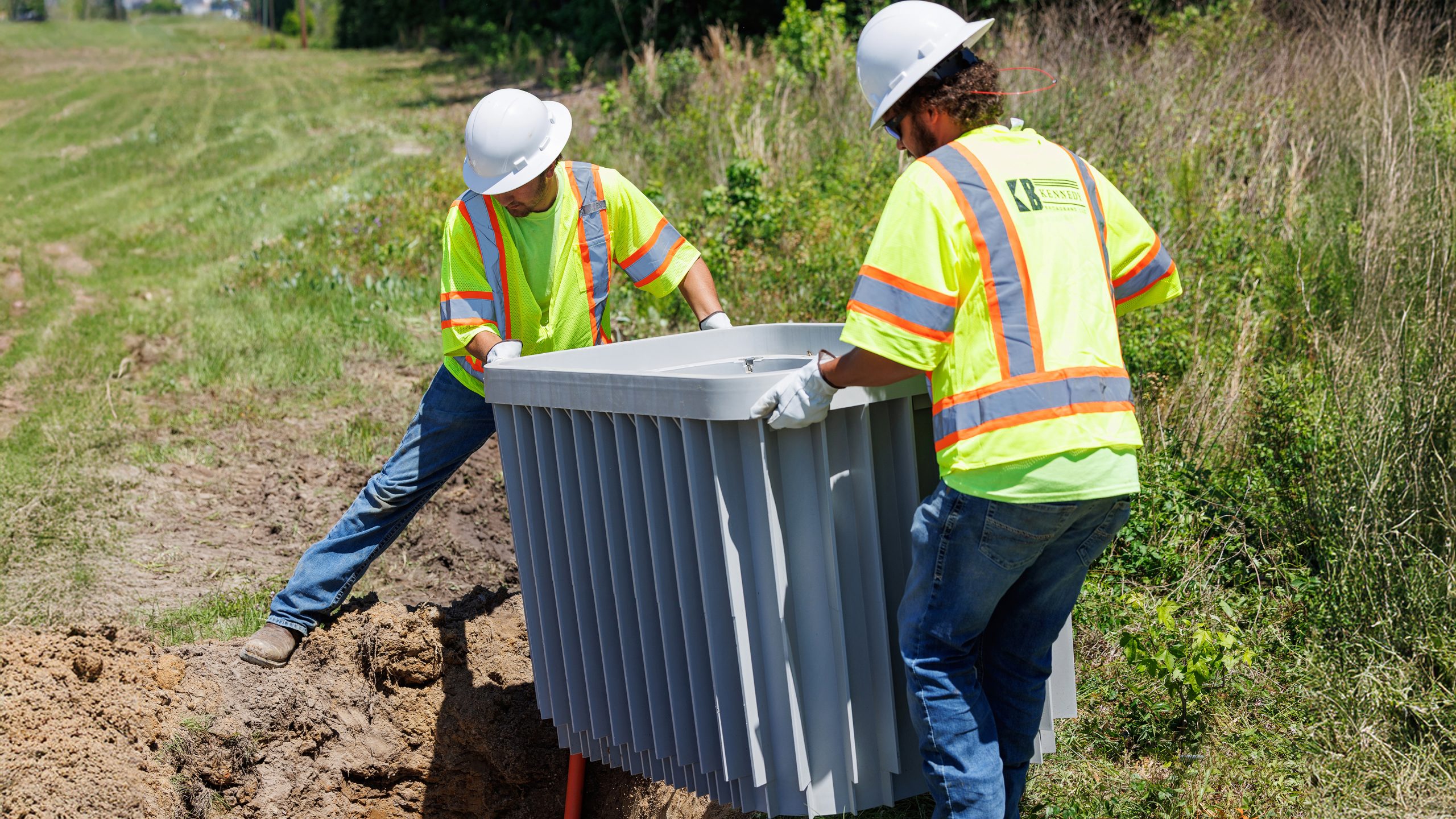
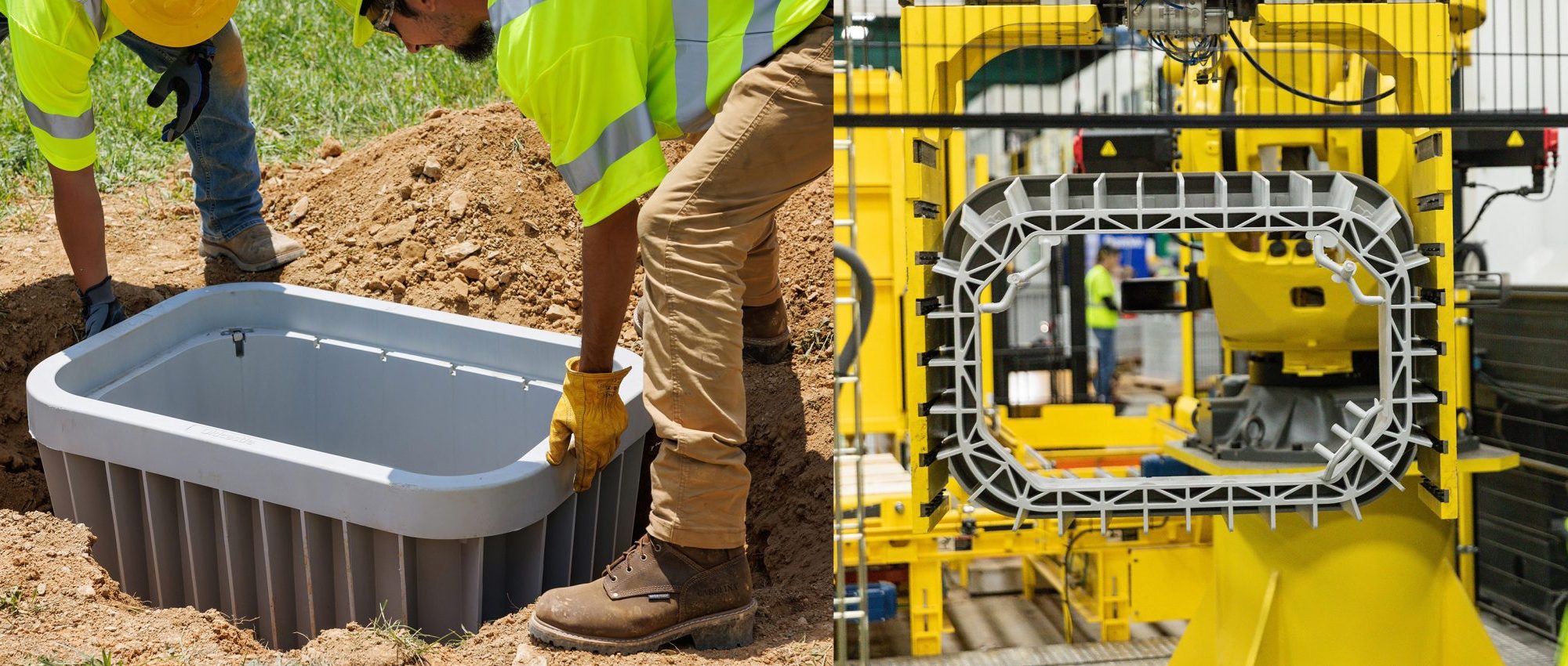
The revolutionary product also maximizes excavator efficiency. With Duralite, an excavator can dig one hole and immediately move on to the next installation site. This is because most Duralite products can be safely lifted and installed by two people by hand while the excavator is prepping the next installation site. This reduces installation time and the need for heavy-duty equipment while helping contractors install more boxes faster.
Data from multiple installations reveals that contractors complete their projects 30% faster by using Duralite instead of traditional polymer concrete.
Safer design limits injuries
Since Duralite is 50% lighter and easier to lift than polymer concrete, it reduces the risk of injury associated with maneuvering and leveling the box during installation. If a Duralite box falls on someone, they can walk away from the injury; the same incident with polymer concrete could result in severe injury or loss of life.
Dropping the cover into the body of a handhole is
risky for hand and finger injuries as well. Since Duralite covers are significantly lighter than polymer concrete, installers are much less likely to break their fingers when inserting the cover into the box.
Lighter and better in every way
When choosing the right Tier 15 or Tier 22 enclosure to complete your job, the overall improvement of Duralite compared to polymer concrete cannot be understated. Duralite is lighter, faster, safer, easier to modify in the field, and results in a lower carbon footprint – helping communication service providers and utilities save time, money, and the environment.
Broadband contractors can see the difference
On a recent project we shadowed a customer, Kennedy Broadband, along Hwy 17 in Richmond Hill, Georgia to compare the installation of polymer concrete versus Duralite.
The team at Kennedy Broadband related how they have switched to Duralite because of the lightweight solution, which positively impacted crew safety and cost savings for fuel and equipment.
James Kennedy, operations manager at Kennedy Broadband said it best:
“Sometimes we’re asked what we would prefer to use by our customers, and I would definitely prefer a Duralite versus polymer concrete because we’re minimizing the injury potential, the need for heavier axle trailers and heavier trucks to move vaults. Oldcastle has the technology to build a lighter, yet strong, tier-rated box and I would say don’t think about the old days – go with Duralite.”
As energy consumption rises due to factors like population migration, the proliferation of data centers, and the surge in electric vehicles (EVs), the urgency to protect critical infrastructure has intensified. This heightened demand has led to long lead times for essential equipment, such as transformers, making it vital to safeguard these valuable assets.
Escalating Physical Threats to Substations
Electrical substations, integral to the nation’s power grid, are facing a troubling surge in physical threats. Recent reports indicate a staggering 79% rise in threats against the U.S. power grid within a single year, encompassing domestic political terrorism, eco-terrorism, and copper theft. The financial impact of these incidents can be substantial; for instance, an attempted copper theft in 2023 at a Pennsylvania substation resulted in $800,000 in damages to a transformer.
Substations are inherently vulnerable due to their locations and designs. In 2022, incidents of physical attacks increased with several high-profile ballistic attacks reported in states like Washington, Oregon, and North Carolina. These incidents underscore the growing perception of substations as soft targets for malicious actors.
The Rising Threat of Copper Theft
The motivation behind many thefts is closely linked to the fluctuating price of copper, which has reached historic highs. This trend incentivizes thieves and has made copper theft a prevalent issue across the country. The repercussions extend beyond financial losses, extending to supply disruption as well as significant safety risks to those unauthorized individuals who trespass into high-voltage areas.
Multi-Layered Security Approaches
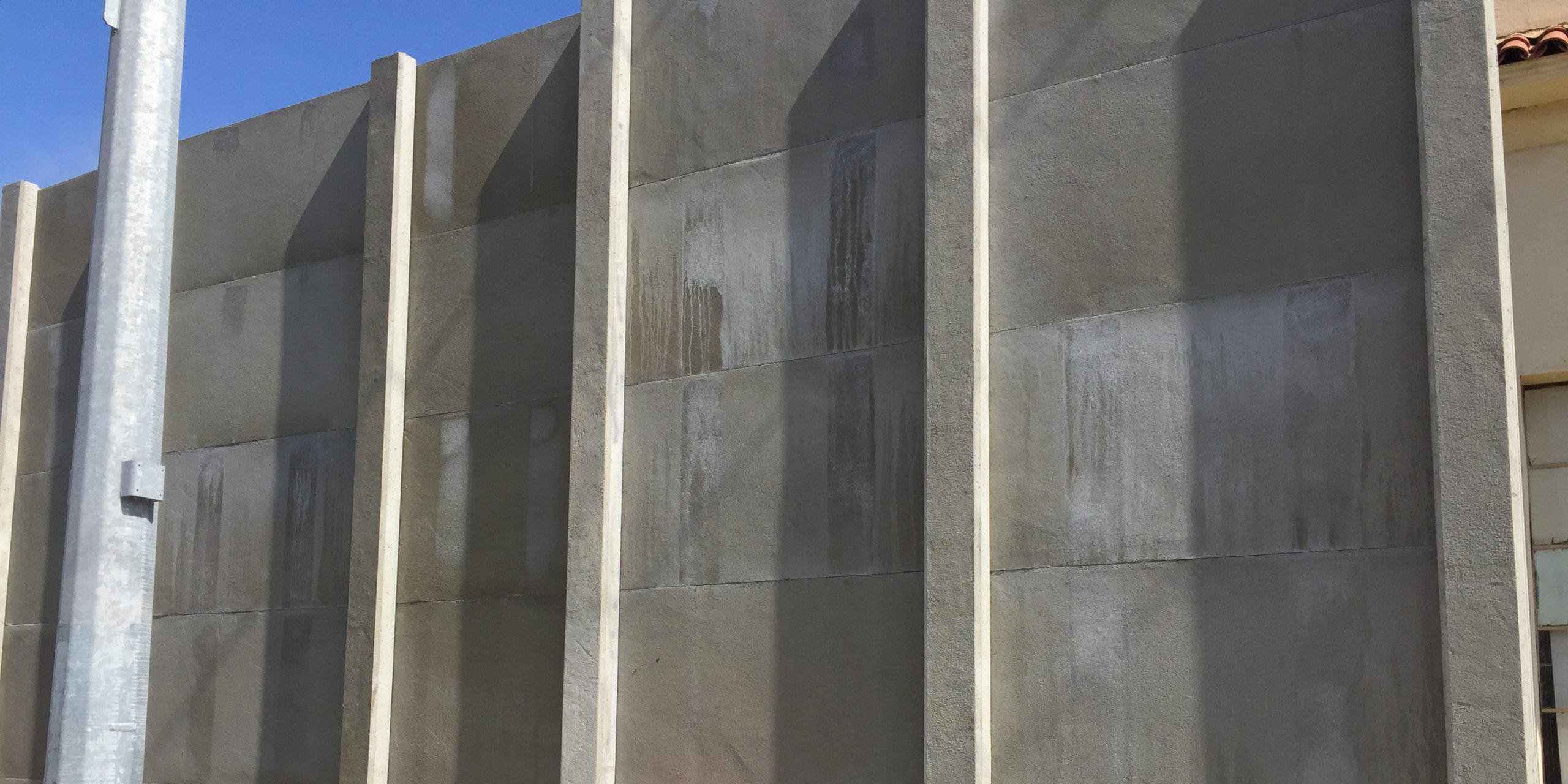
According to the Cybersecurity and Infrastructure Security Agency (CISA), a multi-layered approach to physical security is essential for safeguarding electrical infrastructure. The first line of defense begins with deterrence, featuring the installation of Defender Walls. Walls such as this provide ballistic and line of sight protection as physical barrier to enhance the overall security posture of substations.
In addition to the initial barrier provided by Defender Walls, further security measures can be incorporated. Surveillance cameras, access gates, motion sensors, and adequate lighting can be strategically deployed around these walls. This layered approach maximizes the effectiveness of security investments, enabling facilities to concentrate resources on protecting their most critical assets from potential ballistic attacks and other threats.
Broader Implications of Rising Threats
The implications of escalating physical threats to the energy grid are far-reaching. As the EV market and data centers continue to expand, the demand for reliable energy supply intensifies, exacerbating the long lead times for essential equipment like transformers. Simultaneously, the increasing rate of physical attacks, alongside the rising price of copper, creates a risk-laden environment.
Defender Walls are vital component of the entire approach to the security of substations and related facilities. By acting as a physical barrier against trespassing, theft, and attacks, these walls form a crucial part of a comprehensive security strategy. As threats to the energy grid continue to grow, investing in robust physical security measures like Defender Walls is not just prudent—it is imperative for ensuring the safety and reliability of the nation’s energy infrastructure.
Non-revenue water (NRW) refers to water that is abstracted, treated and supplied, but which is lost or not billed to customers, essentially representing lost revenue for cities and water utilities. This can occur due to various factors, including leaking pipes, unauthorized consumption, metering inaccuracies, and administrative errors.
In Georgia, NRW poses significant challenges as both aging infrastructure and water scarcity continue to be a pressing concern. With an increasing population and fluctuating climate conditions, managing NRW is critical for both economic viability and environmental sustainability.
The NRW Regulatory Framework in Georgia
The regulations surrounding NRW in Georgia are primarily governed by the Georgia Environmental Protection Division (EPD), which operates under the Department of Natural Resources. The EPD has established regulations aimed at monitoring and managing NRW effectively, promoting accountability among water utilities.
One of the key regulations requires utilities to submit annual water loss reports. This mandate, part of the 2010 Water Stewardship Act, ensures that local governments and water providers supplying populations of over 3,300 must provide detailed assessments of their water loss, including NRW. The reports must outline the percentage of water lost, the reasons for the loss, and the strategies implemented to mitigate these losses.
This transparency is essential for developing sustainable, resilient water supply networks—and for fostering trust among consumers and policymakers alike.
Incentives for Improvement
To encourage Georgia utilities to reduce NRW, the state offers various incentives and resources. For example, the EPD provides technical assistance and training programs focused on best practices for water loss management.
Utilities may also receive funding opportunities for upgrading infrastructure, such as leak detection technologies or advanced metering systems. These investments not only help reduce NRW but also improve overall service delivery.
Georgia is aligned with the American Water Works Association (AWWA) standards, which provide comprehensive guidelines for water loss control. These guidelines encourage utilities to adopt a systematic approach to identifying, quantifying, and reducing NRW. The AWWA emphasizes the importance of regular audits, proactive maintenance, and community engagement in addressing water loss.
Challenges and Future Directions
Despite these regulations and incentives, challenges remain. Many utilities, particularly smaller ones, may struggle with limited financial resources and technical expertise. As a result, they may find it difficult to implement the necessary changes to reduce NRW effectively.
Additionally, the diverse geography and varying climate across Georgia present unique challenges in managing clean water distribution systems.
Looking ahead, the future of NRW management in Georgia will likely involve increased collaboration among stakeholders, including state agencies, local governments, and community organizations. By fostering a collective commitment to reducing NRW, Georgia can enhance its water supply sustainability and resilience.
As technology continues to evolve, the integration of smart water management systems will become increasingly important. These systems can provide real-time data on water usage, leaks, and system performance, enabling utilities to respond more quickly and effectively to issues.
Conclusion
In summary, the regulations surrounding non-revenue water in Georgia are pivotal in addressing water loss and ensuring sustainable water management.
By enhancing transparency, providing incentives for improvement, and fostering collaboration among stakeholders, Georgia is helping pave the way for a future where every drop of water is accounted for and valued.
As we continue to navigate the challenges of water scarcity, understanding and managing NRW will be essential for protecting this vital resource for generations to come.
Next
When it comes to telecommunications and other utility infrastructure product design, manufacturers typically focus their innovation and improvement resources on three factors: weight, strength, and cost. But there’s a vitally important fourth design element that often gets lost in the mix, and that’s safety.
Among handhole options, Duralite is a lighter, stronger alternative to traditional polymer concrete. And the engineering that goes into its weight savings translates into increased safety through every stage of the product lifecycle—including installation, logistics, and manufacturing.
Whether manufacturing, packaging, transporting, lifting, or maneuvering handholes in the field, the lighter the load the better. With Duralite, the loads being handled are significantly lighter than polymer concrete—up to 75% lighter.
Safety and Speed at the Installation Site
When it comes to installing a handhole, the reduced load results in a faster process, leading to reduced time spent on the jobsite. Faster installation means fewer chances for hazardous incidents and serious injuries. Every minute saved contributes to a safer work environment.
Duralite handholes are engineered to save time and mitigate risk at every stage—from transport and installation to manufacturing and distribution.
Safety at the Manufacturing Plant
Safety is built into every step of the manufacturing process for Duralite. The process is machine-based and highly automated. More automation means there’s less of an inherent risk of injury when compared to a manual plant environment which can be prone to human error.
Most polymer concrete handholes are manufactured in a highly manual environment, which leaves increased room for miscalculation, mishandling, and a higher frequency of accidents and possible injury.
Safety at the Distribution Facility and Throughout the Supply Chain
Our focus on safety extends beyond manufacturing to the supply chain and distribution process. Due to its relatively lower weight, Duralite handholes are engineered for easy stacking and shipping, which in turn decreases the risk of products toppling over during shipping. Lighter weight also eliminates the use of heavy equipment to maneuver the handholes around a storage facility, which reduces the risks of accidents that come with operating heavy machinery.
Safety at the Jobsite for Contractors and Work Crews
A lighter weight handhole offers immediate safety benefits for contractors. Easier-to-maneuver material reduces physical strain, the risk of back injury, along with the risk and severity of repetitive injuries to the hands and fingers that can occur when covers are dropped onto handhole bodies.
Duralite handholes further reduce the risk of jobsite hazards and safety incidents simply due to the fact that there’s less need to bring heavy equipment out onto the installation site. Less heavy equipment lowers the possibility of incidents involving excavator trucks, such as work crew members being struck or run over.
Safety Means Peace of Mind for Customers and End Users
Duralite handholes are engineered to exceed the most stringent ANSI SCTE 77 standards for structural integrity, plus they’re third-party tested to ensure public safety. This not only raises confidence and brings peace of mind to contractors and distributors, but end users from civil engineers and consultants to infrastructure specialists.
Safety Plus Sustainability
In addition to increasing safety, handhole weight reduction decreases transportation emissions to allow for more efficient loads and reduces fuel consumption on job sites. Smaller vehicles and lighter machinery such as pickup trucks can be used instead of heavy duty equipment, which contributes to lower overall carbon emissions. Duralite handholes are 100% recyclable and manufactured using 65% recycled materials.
Safety Without Compromise
Through every step of the supply chain process, our lighter handholes increase safety without sacrificing strength. From manufacturing to distribution to installation and public use of our infrastructure, Duralite is the lighter, safer, stronger choice.
Heat waves, forest fires, changing weather patterns—all are important reasons to consider fire resistance standards when choosing underground utility access enclosures and the steps to take earlier in the process to mitigate potential danger and damage.
Protecting what’s inside the enclosure from the start results in less operator and maintenance time in the field, which automatically increases safety across the board.
Protecting critical underground infrastructure
With much of our modern-day energy and communications utility networks housed under our feet, there is an intrinsic need to protect this critical underground infrastructure from the damage of fire.
While handholes provide the perfect access point to allow service providers easy access for installation and maintenance on utility/fiber networks, these same handholes can become weak points within the network should there be a dramatic above-surface event.
The increase of wildfire activity and temperature heat waves in recent years should concern installers and asset owners, but these nature-based activities can also serve as an educational opportunity: when fire resistance is factored into the selection of an underground enclosure product, especially in high-risk areas, the project is already off to a strong start.
Flammability testing guidelines
Often overlooked in the well-known ANSI/SCTE 77 are the established guidelines for flammability testing (section 6.5) and internal equipment protection (section 6.6).
Under these guidelines, flammability is defined as the likelihood/rate at which a product would burn or ignite, while internal equipment protection measures the serviceability of the underground enclosure through the lens of how the internal equipment would be protected from a fire on top of the box.
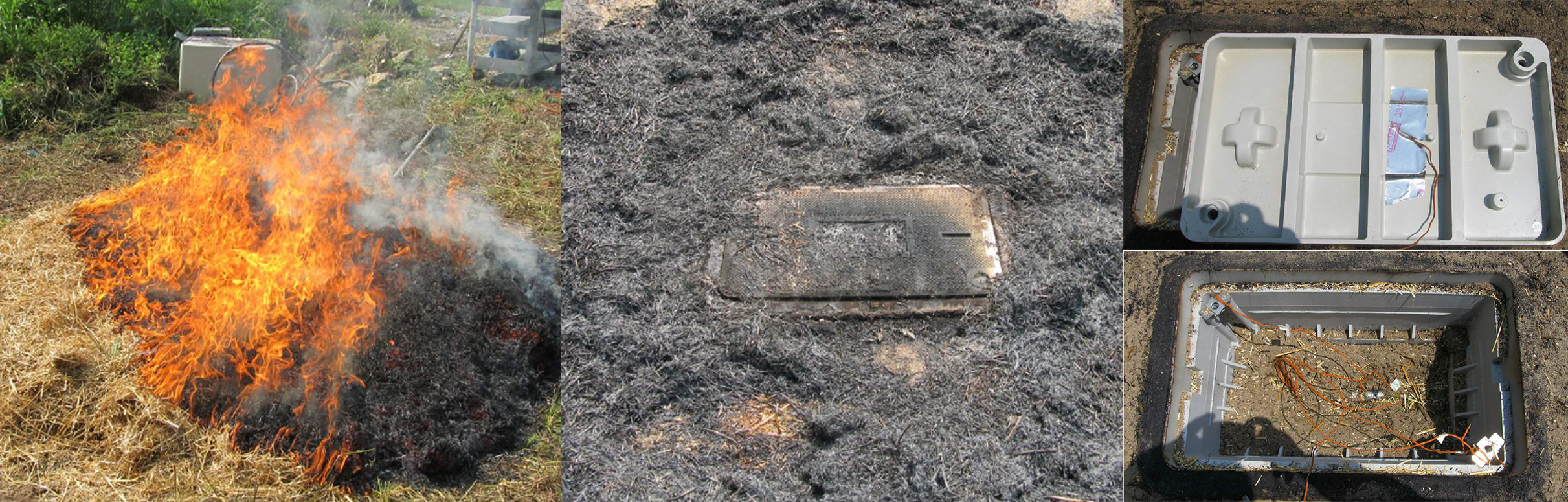
In other words, testing is carried out on an enclosure installed underground, traditionally by burying the enclosure, covering it with hay, then igniting the hay and measuring how the product performed.
Flammability testing is conducted in accordance with ASTM D635, while the internal equipment protection test is completed following the U.S. Department of Agriculture, Rural Utilities Service, 7 CFR 1755.910 – (e), 3 xiii, requirement A. Both tests are market-agnostic, meaning that everything is tested to these standards, regardless of end use. Certain markets will require potential additional tests, but these are the primary testing requirements for all handholes.
Selecting a fire-resistant underground utility access enclosure
When choosing an enclosure, it is important to understand that plastic and plastic derivatives will melt, while concrete and composites will not. To protect your utility assets from fire in a high-risk environment, we recommend enclosures made of non-plastic material or a composite.
It’s all about product performance, product placement, and making the right product choice.
Duralite® enclosures exceed all requirements for flammability testing and internal equipment protection, which is a key aspect in product selection to protect underground assets from potential fires and heat waves.
When tested to brushfire temperatures of over a thousand degrees, Duralite enclosures maintain an internal temperature that keeps underground utilities safe and working.
These products are third-party tested to the standards provided in GR-902-CORE, Issue 2, Section 3.15, Fire Resistance Requirement R3-86 [72]; SCTE 77 2023, Section 7.6, Internal Equipment Protection Test; and USDA RUS 1755F 910 (PE 91) (7 CFR Ch. XVII (1-1-12 Edition), Paragraph XIII.
Learn more
Flame-resistant Duralite is the safe choice to protect underground utilities from high temperatures and keep customers connected. Click here learn more about the lightweight Duralite product line.
In the foundational world of rail transport, where any delay incurs significant costs, efficient and reliable infrastructure is crucial. Oldcastle Infrastructure’s StarTrack Rail Crossing Systems have provided over 30 years of dependable performance. With their robust, modular designs, these systems not only simplify installation but also significantly reduce operational disruptions. This efficiency is vital, as it helps prevent traffic delays and supports smooth operations, ensuring punctual and reliable transportation solutions.
The core advantage of StarTrack systems lies in their modular design. Traditional rail crossing installations typically span several days, requiring extensive planning and leading to significant service interruptions. In contrast, StarTrack’s modular panels can be installed swiftly—often over a single weekend. This drastic reduction in downtime is not just a logistical achievement; it represents a shift towards greater respect for time and resources in rail infrastructure projects.
The speed of installation also brings substantial economic benefits. By minimizing labor costs and reducing the need for prolonged traffic management, StarTrack systems offer a cost-effective solution that appeals to both small municipal bodies and large-scale industrial operations. This efficiency is further enhanced by the system’s design, which allows for individual modules to be replaced without the need to overhaul the entire crossing, thereby simplifying maintenance and extending the lifespan of the rail infrastructure.
Another significant advantage of the StarTrack system is its robust supply chain strategy. Recognizing the challenges often associated with long lead times in traditional rail crossing projects, StarTrack has optimized its production and inventory processes. By coordinating four major manufacturing plants, Oldcastle Infrastructure ensures a ready supply of modules, prepared to be deployed as soon as projects commence. This readiness not only positions StarTrack as a reliable partner in urgent or time-sensitive projects but also helps alleviate common supply chain bottlenecks faced by the industry.
Safety remains at the forefront of the StarTrack design philosophy. The high-strength concrete used in the modules guarantees durability against the physical stresses of rail traffic, while the inclusion of standard, easily replaceable accessories ensures that maintenance does not lead to extended downtimes. These features collectively enhance the safety profile of rail crossings, making them less prone to failures and accidents.
The StarTrack Rail Crossing Systems represent a significant step forward in the modernization of rail infrastructure. By combining speed, efficiency, safety, and adaptability, StarTrack is setting new standards for what is possible in rail crossing technology. As the industry looks to future challenges, from increased traffic to the need for sustainable solutions, StarTrack continues to innovate, ensuring that rail remains a vital and viable component of global transportation infrastructure for decades to come. Visit our StarTrack Rail Solutions page to explore our innovative solutions and see how we’re enhancing rail transportation.
In the realm of electrical transmission and distribution (T&D) systems, safeguarding infrastructure against blast, fire and ballistic hazards is of paramount importance. The introduction of products like Oldcastle Infrastructure’s TruFireWalls™ and Defender Wall into the market marks a significant stride in fire, blast and ballistic mitigation strategies for electrical infrastructures. These advanced wall systems are specifically designed to address the unique challenges posed by transformer fires & ballistic attacks, offering robust protection that goes beyond traditional methods.
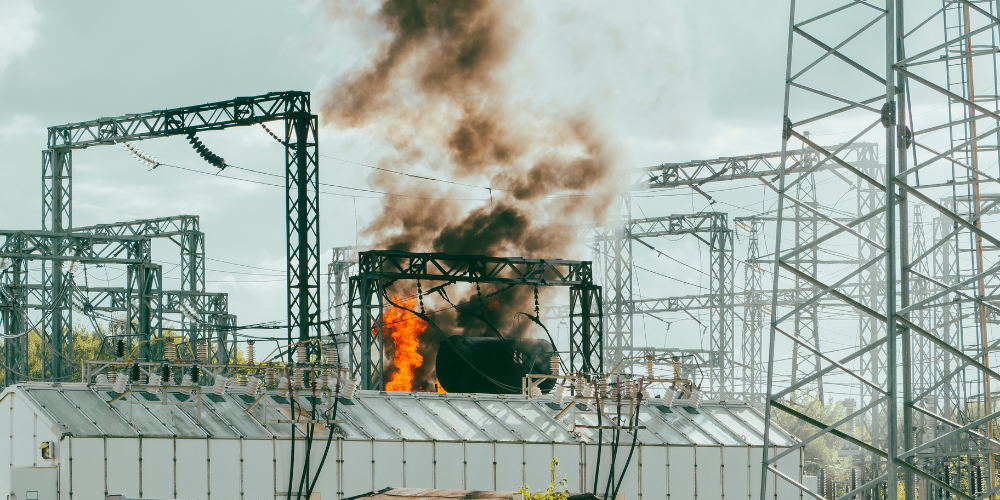
TruFireWalls™, with their exceptional fire resistance, are engineered to withstand the extreme conditions typical of transformer oil fires. These modular walls not only offer superior fire containment capabilities but also provide significant structural integrity even under the most severe conditions, ensuring that the vital components of the electrical grid are shielded from potential fire-related damages.
Similarly, the Defender Wall system brings an additional layer of safety and reliability. Crafted with the needs of electrical infrastructures in mind, these walls are designed to offer both fire, blast and ballistic resistance, making them an ideal choice for environments where the risk of explosions or ballistic attack is a concern. Their robust construction helps in containing the blast and ballistic impacts, thereby protecting nearby assets and reducing the risk of cascading failures within the transformer yard.
The deployment of TruFireWalls™ and Defender Wall systems in transformer yards represents a proactive approach to risk management in electrical T&D systems. These solutions not only underscore a commitment to safety and resilience but also contribute to the overall reliability and sustainability of the electrical grid.
As the electrical T&D infrastructure continues to evolve, integrating advanced safety solutions like TruFireWalls™ and Defender Wall becomes increasingly crucial. Their inclusion in the design and retrofitting of transformer yards not only enhances the safety and durability of these critical facilities but also aligns with the broader objectives of ensuring uninterrupted power supply and protecting the investment of these critical assets.
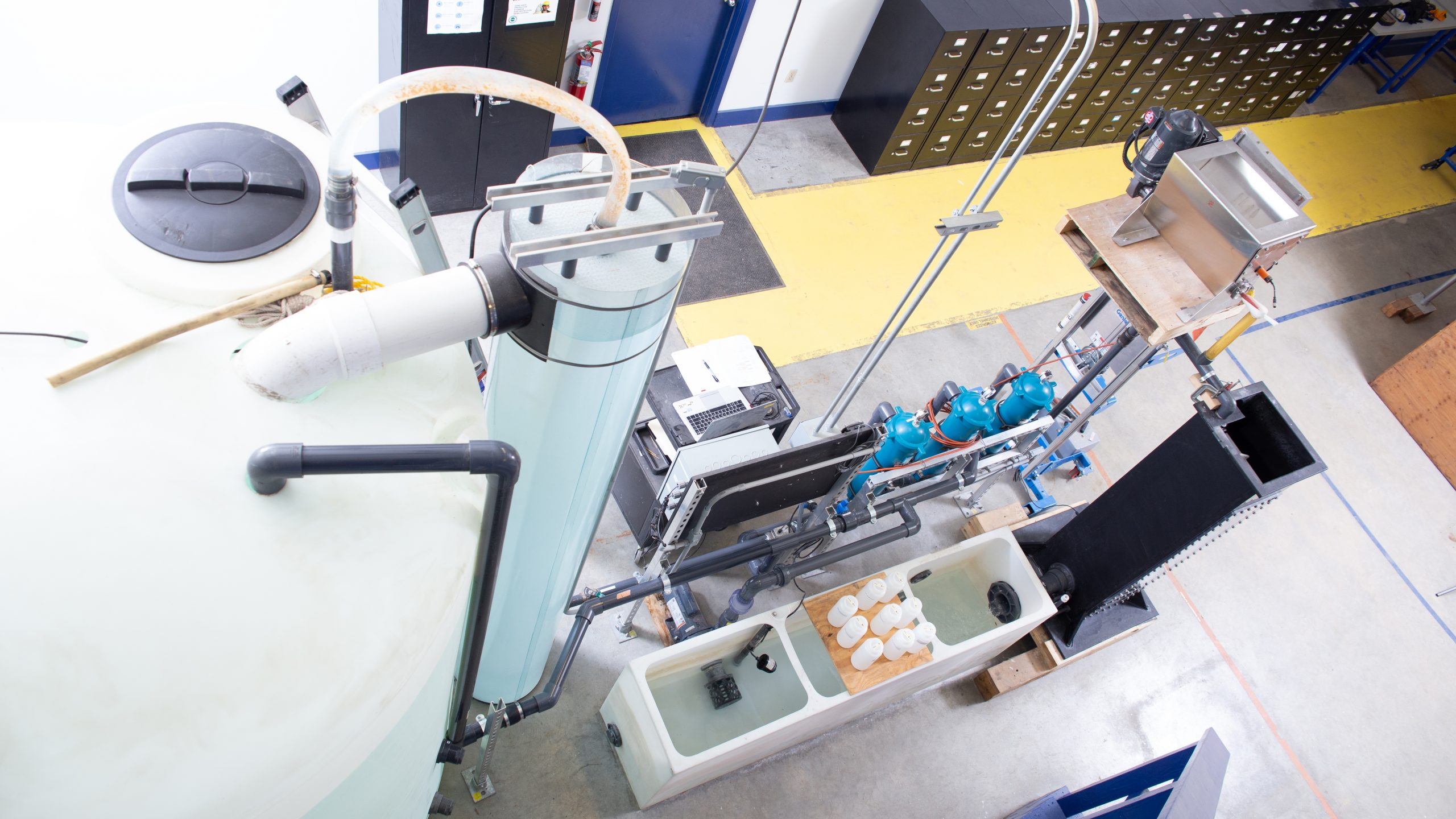
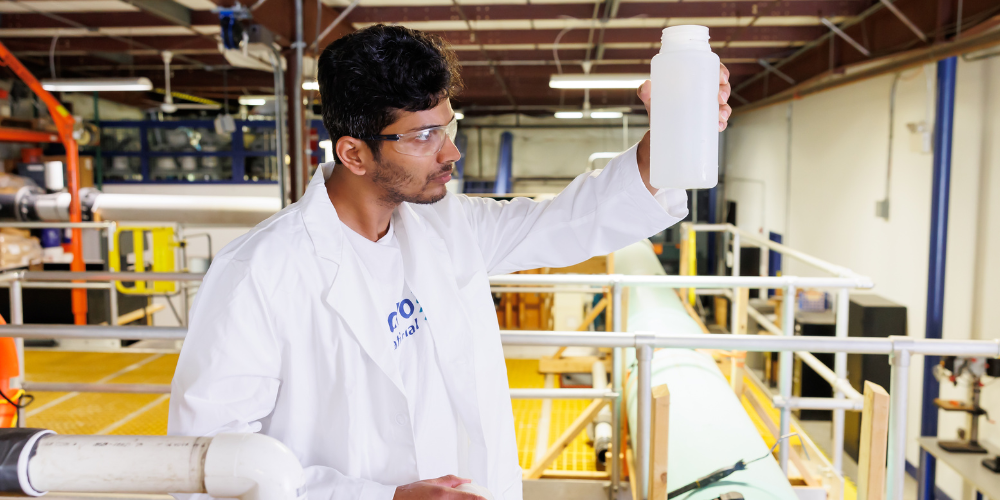
Oldcastle Infrastructure has made significant investments in water research capabilities, including the acquisition of two companies centered around their hydraulics labs.
What’s going on in these laboratories, and why are they so important? And how do they help to advance solutions that solve global water challenges?
Solving water infrastructure challenges through innovation
Improving the world’s water infrastructure requires innovative products, and Oldcastle’s hydraulics laboratories are at the center of this research and development.
These labs allow for an expert understanding of the scientific principles of fluid mechanics, opening possibilities in a wide range of markets and applications. From the smallest stormwater quality manhole to the largest municipal wastewater treatment plant, the fundamental processes of solid-liquid separation are the same regardless of scale or purpose.
The result of this commonality is that labs like those in Oldcastle’s Portland, Maine facility can leverage knowledge gained in one market, such as stormwater management, to develop improved solutions in another market, like wastewater treatment.
New product development can get a head start when the seed for innovation can be imported from an adjacent technology.
Certified compliance and proven performance
Outside of new product development, hydraulics laboratories serve two key testing functions.
Protocol testing verifies that equipment will comply with the stringent requirements set forth by regulatory bodies. The results of these tests assure regulators and the public that the treatment technology performs as claimed and is safe for implementation in the built environment.
The Oldcastle Water Lab (OWL) in Mississauga, Ontario has years of experience navigating the intricacies of regulatory test protocols for a wide range of stormwater treatment technologies ranging from hydrodynamic separators to cartridge filters to engineered biofiltration systems.
Performance testing, on the other hand, pushes equipment beyond its recommended limits. The valuable data gained by this experience allows CRH’s engineers to understand how the equipment behaves under extreme conditions. The results of these tests can then be incorporated into the next generation of products, improving overall reliability and system performance.
To put water treatment systems through Protocol and Performance testing, a best-in-class lab needs:
- A large-scale water reservoir: A substantial water supply, temperature controlled and recirculated, is essential for conducting high flow rate experiments.
- Advanced filtration systems: Maintaining water cleanliness is critical for accurate testing and test protocol compliance.
- Configurable tank systems: The ability to configure tanks as a single unit or separate compartments offers maximum flexibility for various testing scenarios.
- An expert team: The real value of a hydraulics lab is in the expertise of the people designing the tests, interpreting the data and applying the findings.
From prototype to product
The development of effective water treatment technologies is an iterative process and the testing described above is just one part of the whole journey.
Just as full-scale tests are important for proving system efficacy, bench-scale experiments like media columns, scale models and small-scale test tanks, allow for initial concept validation and identification of factors influencing performance.
Once these small-scale “proof-of-concept” systems are working as desired, they can then be scaled up and tested at full scale within the same facility.
Finally, an integrated analysis lab is essential for interpreting test data from experiments at any scale. Equipment like balances, sieves and filters along with hydrometers and spectrophotometers allow for detailed analysis of water samples, providing a clear picture of a technology’s effectiveness in removing both solid and dissolved pollutants.
Bringing this analysis expertise in-house allows the team working on the product to learn and adapt as quickly as possible.
Investing in a sustainable future
At the forefront of sustainable water management, hydraulic labs embody Oldcastle Infrastructure’s commitment to pushing the boundaries of innovation and ensuring the reliability of water treatment technologies.
This continued investment in hydraulics R&D isn’t just a strategy; it’s a pledge to future generations to manage our water resources wisely and sustainably.
Through these efforts, Oldcastle Infrastructure, as a key part of CRH, is not merely tackling today’s water management challenges but is also laying the groundwork for a future where water resources are safeguarded, showcasing the power of blending scientific exploration with practical application.
Next
Reflecting on my experiences in the utility sector over the years, I’ve experienced the challenges and imperatives of addressing our aging infrastructure amidst the escalating threats of climate change. The resilience of our utility systems is increasingly tested by the more frequent and severe weather events, highlighting an urgent need for strategic adaptation and fortification.
Our utility networks, the very backbone of daily life and economic stability, are aging. Constructed decades ago, this infrastructure wasn’t designed with the current climatic extremes in mind. When faced with hurricanes, floods, and wildfires, the vulnerabilities of these systems are starkly exposed, underscoring the potential risks to public safety and community well-being.
Climate change compounds these challenges, acting as a multiplier of the existing vulnerabilities. The impacts of a compromised power grid extend far beyond inconvenience, posing significant risks to public safety and economic stability. There’s urgency in our efforts to modernize and reinforce utility systems as the consequences of inaction loom large and potentially catastrophic.
In response to these daunting challenges, we’re actively exploring innovative solutions to reinforce and modernize our utility infrastructure. Drawing inspiration from successful initiatives in other regions, such as the comprehensive grid hardening efforts undertaken in Florida, we’re considering similar strategies to enhance the resilience of our own systems. The move towards underground utility installations, for instance, represents a promising approach to shield our power lines from the destructive forces of nature, thereby enhancing the overall robustness of our utility network.
In this critical endeavor, collaboration with industry partners like Oldcastle Infrastructure proves invaluable. Cutting-edge solutions, ranging from advanced materials for underground utilities to smart grid technologies, play a crucial role in our quest to build a more resilient and sustainable utility network. These technologies not only bolster the durability of our infrastructure but also improve its efficiency and sustainability, aligning with our broader goals of environmental stewardship and community protection.
This journey toward infrastructure resilience is underscored by a shift from reactive disaster response to proactive planning and adaptation. The insights gained from past experiences and the successes in other regions highlight the necessity for a forward-thinking approach. By prioritizing investments in infrastructure hardening and embracing innovative solutions, we can better prepare our utility systems to withstand the challenges of a changing climate.
As we move forward, we must collectively commit to modernizing and reinforcing our aging utility infrastructure, recognizing the critical role it plays in ensuring the safety and well-being of our communities. By embracing innovation and strategic investments in resilience, we can safeguard our utility systems against the inevitable challenges posed by climate change, ensuring a reliable and sustainable energy future for generations to come. Find out how Oldcastle Infrastructure can help you on this quest with our utility distribution solutions.
Sustainable stormwater management: a new philosophy
Moving beyond the traditional approach of swiftly diverting water away from urban landscapes, the philosophy of stormwater management is increasingly about embracing the natural cycle of water to enhance the resilience and sustainability of our cities.
The core of this new approach lies in viewing stormwater not as a challenge that must be overcome but as a valuable resource that can be harnessed to benefit urban ecosystems.
This philosophy is rooted in the principles of capturing, storing, and judiciously using stormwater, turning what was once considered a nuisance or even a hazard into a pivotal element of urban infrastructure.
It’s about understanding and leveraging the processes of water retention, detention, and infiltration to manage surges during heavy rainfall, thereby mitigating the risk of flooding and contributing to the replenishment of groundwater.
Flexibility and adaptability are key
Flexibility and adaptability are key in addressing the diverse challenges of urban water management, and modular stormwater solutions – such as the StormCapture® and CUDO® storage systems – stand at the forefront of this approach. These systems are designed with versatility in mind, capable of being tailored to a wide range of urban settings, from small-scale installations to comprehensive stormwater management strategies. The ease of installation and minimal maintenance requirements of these systems make them a practical solution for cities looking to enhance their stormwater management practices.
CUDO systems represent a significant advancement in the field of stormwater management. Their ability to effectively manage water through retention, detention and infiltration, coupled with their user-friendly design, positions them as a vital tool in the civil engineer’s toolkit. These systems cater specifically to the shallow detention market, offering a solution where traditional, deeper systems may not be feasible. The integration of CUDO systems into urban landscapes exemplifies the synergy between functionality, efficiency, and environmental stewardship, embodying the principles of sustainable urban development.
Stormwater storage builds urban resilience
The implications of adopting systems like CUDO extend far beyond stormwater management. They play a crucial role in the broader context of urban resilience, contributing to the development of green infrastructure such as rooftop gardens and urban parks. This integration of natural elements into the urban fabric not only aids in stormwater management but also enhances the aesthetic and ecological value of urban spaces, improving the quality of life for city residents.
As cities evolve, the integration of innovative stormwater management solutions will be paramount in addressing the challenges of urbanization and climate change. The vision for the future is one where urban infrastructure works in harmony with the natural world, fostering resilient, sustainable, and vibrant communities. This journey towards sustainable urban development requires a collaborative effort to embed nature-based solutions into the fabric of urban planning, ensuring a harmonious balance between human habitation and the environment.
The path towards sustainable urban development is paved with opportunities to rethink our approach to stormwater management. By embracing innovative solutions, cities can turn the challenge of stormwater into a strategic asset, enhancing urban resilience and sustainability for generations to come.
Next
In the complex arena of product certification, Underwriter Laboratories (UL) provides two critical designations that guide stakeholders in assessing product safety and quality: UL Listed and UL Recognized. These marks are not merely labels but are pivotal indicators of a product’s compliance with rigorous safety standards, embodying the depth of testing and validation each product undergoes.
The UL Recognized Mark: Integral Components for Complex Systems
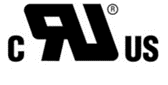
The UL Recognized designation is specifically allocated to products that are intended to function as essential components within larger systems. These items are crucial for the system’s overall safety and functionality but are not certified for use as independent, final products. This designation highlights the role of these components in contributing to the comprehensive safety and reliability of the systems they are part of, underscoring their specialized application and the targeted safety assurances they provide.
The UL Listed Mark: A Symbol of Complete Product Assurance
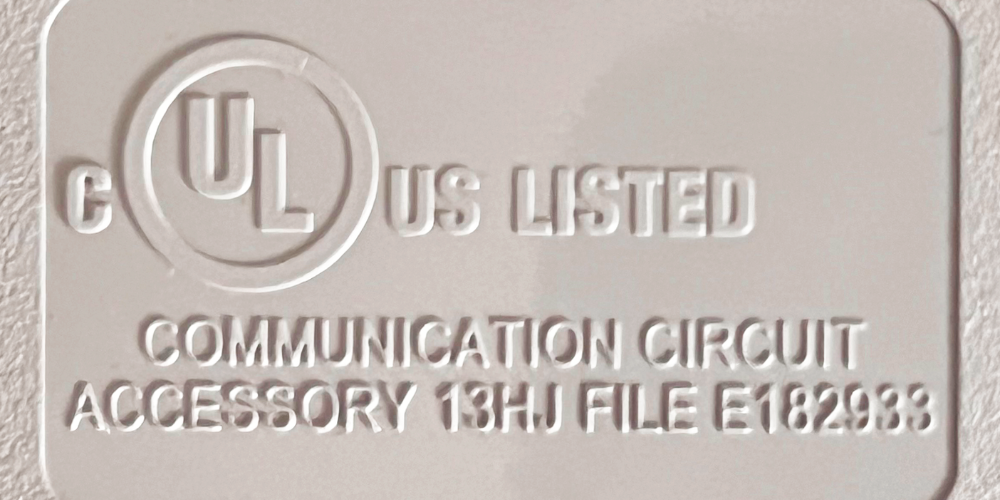
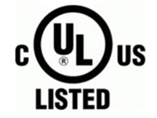
In contrast, the UL Listed mark signifies that a product has undergone and passed exhaustive testing, affirming its safety and durability for standalone use. This mark goes beyond a mere emblem; it is a declaration of the product’s intrinsic quality and reliability, founded on thorough evaluation against stringent standards. An exemplary illustration of the UL Listed mark’s importance can be seen in products like Oldcastle Infrastructure’s Primex enclosures, which not only meet but surpass the established criteria, thereby certifying their capability to function as reliable, final products across various applications.
These enclosures carry the UL Listing mark, which encompasses the UL logo, ISO country codes, relevant testing standards, and Oldcastle Infrastructure’s unique UL file number. This detailed marking provides a layered assurance, attesting to the product’s adherence to international standards, its proven quality, and traceability back to Oldcastle Infrastructure’s stringent testing and quality assurance protocols.
| UL Listed Mark Example |
UL Recognized Mark Example |
 |
 |
Beyond Certification: The Wider Implications of UL Listing
The value of obtaining a UL Listing extends far beyond the certification itself. Regulatory bodies and jurisdictions frequently favor products that carry the UL Listed mark, associating them with superior quality, safety, and compliance. This preference facilitates the approval and permitting process, particularly for critical infrastructure components such as Oldcastle Infrastructure’s Primex enclosures, making them the go-to choice for projects requiring the highest safety and quality standards.
UL Listed and UL Recognized marks are more than just certifications; they reflect Oldcastle Infrastructure’s relentless pursuit of excellence. Through meticulous testing and a steadfast commitment to global standards, Oldcastle Infrastructure reassures customers of the unmatched quality and safety of its products. This commitment paves the way for smoother project executions and fosters lasting trust, positioning Oldcastle Infrastructure as a leader in delivering products that not only meet but redefine industry benchmarks for safety and quality.
In our ever-evolving battle against climate change, the resilience of our utility infrastructure is being put to the test like never before. I’ve seen firsthand how extreme weather events are challenging the very backbone of our communities—our power grids. Drawing from my experiences and what we’ve observed in places like Florida and Detroit, it’s clear that a shift towards proactive engagement and strategic foresight is not just necessary; it’s imperative.
Take Florida, for example. The state’s journey, especially in the aftermath of hurricanes, is a powerful testament to the value of preparedness. Following the devastation caused by Hurricane Wilma, a Florida utility provider embarked on a transformative grid hardening initiative. With an investment surpassing $3 billion, the focus was to enhance the resilience of the power grid to withstand the fury of nature. This wasn’t just about rebuilding; it was about reimagining our approach to infrastructure, making it not just resistant but resilient in the face of hurricanes. Benefiting all Floridians, this initiative significantly reduced outage durations and improved the reliability of power supply, showcasing the effectiveness of readiness and adaptation.
Parallel to Florida’s strides, we see Detroit beginning to chart a similar course. Faced with its unique climatic challenges, notably severe winter storms, Detroit is on the brink of a significant infrastructural evolution aimed at fortifying its grid’s resilience. While the specifics of Detroit’s plans are still taking shape, the underlying intent mirrors that of Florida’s success: to proactively strengthen the infrastructure against the specific weather challenges it faces.
These narratives, drawn from the front lines of our fight against climate-induced adversities, underscore a broader theme of resilience and innovation. It’s about more than just weathering the storm; it’s about ensuring our communities remain vibrant and operational, come what may. The stories of Florida and Detroit serve as beacons of hope and blueprints for a future where our utility infrastructure can stand resilient against the caprices of nature.
As we navigate the complexities of a changing climate, the importance of preemptive action and strategic investment in our utility infrastructure cannot be overstated. It’s a call to action for all of us—utility providers, policymakers, communities—to rally together and champion the cause of resilience. By drawing inspiration from the successes of Florida and Detroit and leveraging the power of innovation, we can ensure that our power grids are not just prepared for the next storm but are built to thrive in the face of it.
In this ongoing journey towards resilience, I invite you to learn more about how we can support your community in this endeavor through our utility distribution solutions. Our efforts are geared towards not just addressing the immediate challenges but setting the foundation for a sustainable and resilient energy future. Together, we can turn the tide against climate change and light the way forward for generations to come.
In the dynamic world of infrastructure and construction, my path led me to become the Director of Product Management and Regulatory Affairs at Oldcastle Infrastructure. Recently, this role has grown to encompass Business Development for the Stormwater division. This evolution mirrors the industry’s growing focus on adopting and integrating transformative technologies and methodologies to address complex challenges in the water industry. My position represents not just a title, but the confidence entrusted in me and the teamwork that’s reshaping our sector. It places me at the heart of our shared goal to drive innovation and sustainable practices forward.
My path to Oldcastle Infrastructure was not just a career move but a deepening of my commitment to environmental stewardship, particularly in the realm of water conservation. Aware of the challenges posed by the arid conditions in Southern California, my true potential to effect change crystallized after joining Oldcastle Infrastructure. My focus on stormwater management evolved from an interest into a professional calling, underscored by the critical need for sustainable solutions within the infrastructure sector.
Here, my journey into stormwater management became a collaborative venture, marked by significant growth and learning. The mentorship and support from colleagues were instrumental, fueling my passion and driving our shared vision. This nurturing environment not only helped me navigate challenges but also enriched my leadership skills and innovative thinking, emphasizing the importance of community and ecosystem protection through our work.
Looking ahead, I see a future brimming with opportunities for women in this evolving field. The industry is at the cusp of a transformative era, with technology and sustainability at its heart, opening doors to groundbreaking innovation and leadership. To women aspiring to join this impactful field, my advice is rooted in my own experiences: Embrace your unique perspectives, actively seek mentorship, and commit to lifelong learning. Challenges are inevitable, but they are the steppingstones to personal and professional growth.
Celebrating the achievements of women in construction is not just about recognition; it’s a call to action for a more inclusive, forward-thinking, and eco-conscious future. By championing change and supporting one another, we have the power to dismantle barriers and redefine industry standards.
This moment is more than a time for reflection—it’s an opportunity to envision the limitless possibilities that lie ahead. It’s a call to each of us to lead by example, to drive change, and to uplift one another in our shared pursuit of excellence. As we move forward, let’s stay committed to nurturing an industry that exemplifies diversity, resilience, and ingenuity.
Let’s harness our collective diversity and determination to not only transform our industry but also to leave a lasting impact on the world. I extend an invitation to those ready to embark on this transformative journey: consider building your career with Oldcastle Infrastructure and CRH, where you can grow, make a difference, and contribute to a legacy that benefits our communities. Together, let’s build, innovate, and inspire, creating a sustainable legacy for generations to come.